
How Tarantulas Perceive the World Around Them

Most people look at a tarantula and assume they are experiencing a smaller world than we are.
They sit still for long stretches. They do not scan a room the way a bird does. They do not track faces the way a dog or primate might. They do not react to the world in ways humans instinctively recognize as awareness. So people assume there is not much going on, but that assumption may say more about us than it does about them.
Every animal experiences the world through the senses that matter most to its survival. Humans lean heavily on sight. We build our understanding of reality around sharp images, color, movement, language, and expression. Tarantulas don’t experience the world in that way. Their world appears to be shaped far more by vibration, touch, moving air, and other subtle signals than by the kind of visual detail we rely on every day. Research on spider sensory systems has shown just how refined those non-visual channels can be, especially the hairs that detect air movement and the structures in the exoskeleton that detect strain and vibration.
So the more interesting question is not whether tarantulas perceive less than we do. It is whether they are tuned to parts of reality that we barely notice, or we can’t even begin to perceive.
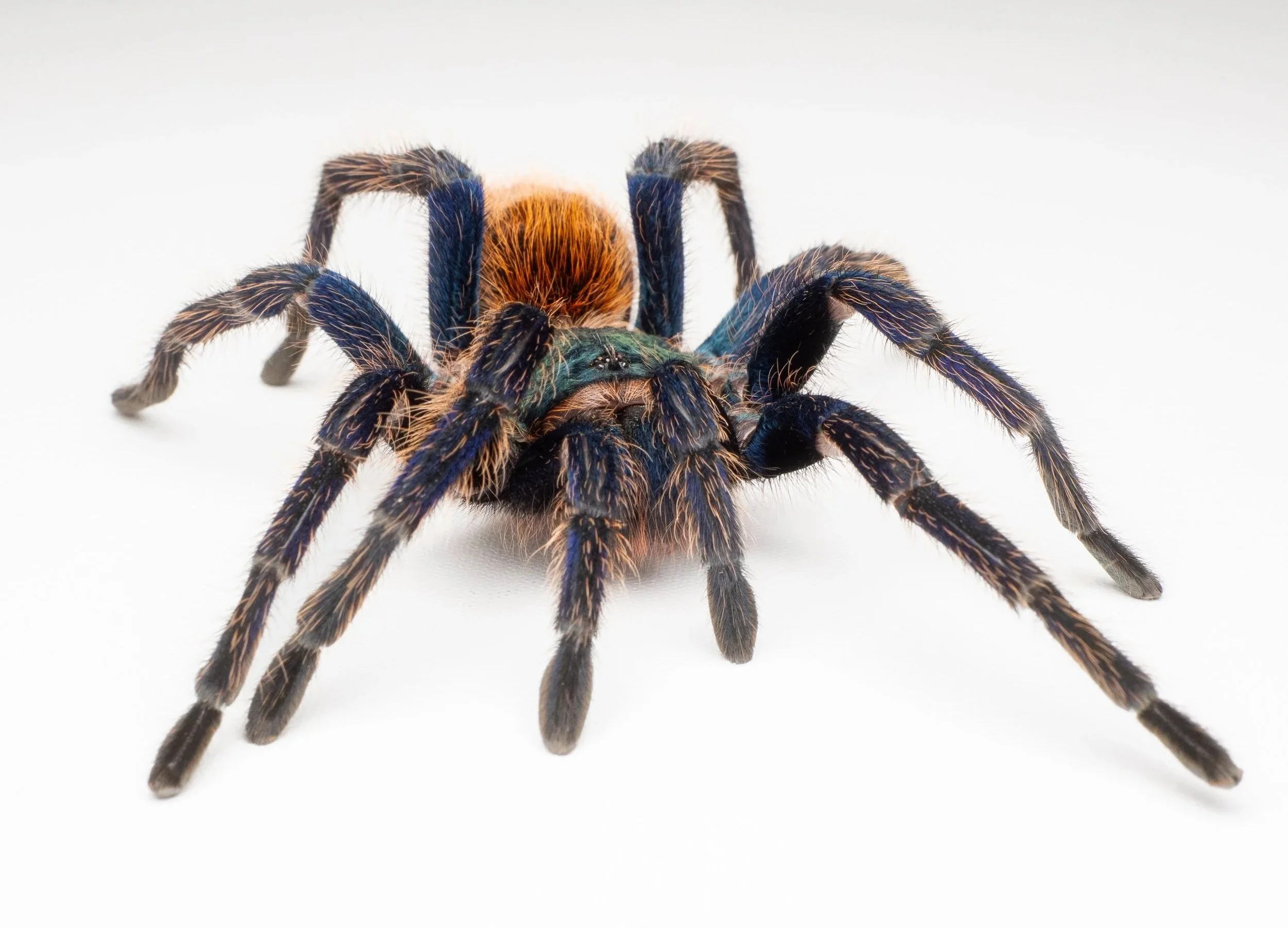
A Different Kind of World
Imagine standing in your own house, only something has changed. At first, not much. The room is still there. The walls, the furniture, the doorway, the window. But almost immediately the things you usually trust begin to lose their importance. Sight is still present, but it no longer leads. The sharp edges of objects, their color, their distance from one another, all of it starts to feel secondary, like scenery in a world being explained by something else.
Now the floor is what speaks first.
A door closes somewhere in the house, and you do not simply hear it. You feel it arrive through the structure beneath you. Footsteps in the next room are no longer just sounds. They have weight. Shape. Pattern. One person moves differently from another, and before they ever appear, you already know something about their size, their speed, their direction. A truck rolls past outside and the walls give a faint shiver. Air shifts at the edge of a doorway before anyone enters. Fabric brushes wood. A curtain stirs. The room begins to dissolve and reassemble itself, no longer defined mainly by what can be seen, but by pulses, currents, pressure, texture, and tiny disturbances moving through it.
And then the change goes deeper.
The world is no longer made of objects separated by empty space. The space itself has become active. Alive with signals. Every surface is carrying information. Every movement sends something outward. What seemed still a moment ago is no longer still at all. The floor hums with distant events. The air ripples with approach. Even silence feels crowded, full of messages too faint or too strange for human senses to name.
This is no longer quite your house as you know it. It is the same house, the same walls, the same space and time, but organized by a different set of truths.
That may be closer to a tarantula’s world than most of us ever stop to imagine.
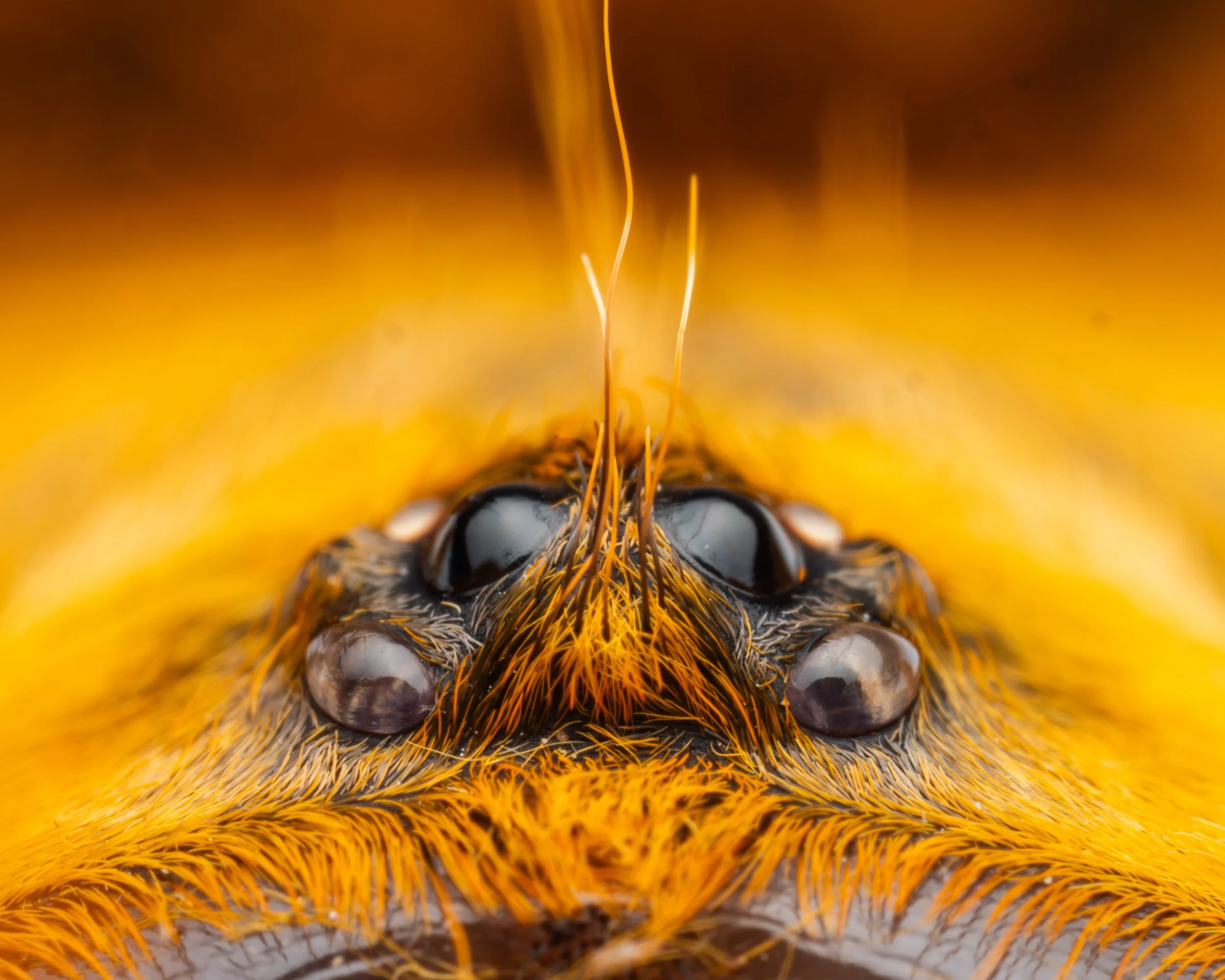
If Not Vision, Then What?
Tarantulas have tiny sensory tools all over their bodies, called setae, that help them gather information from the world around them. Some of the fine hairs on their legs are sensitive to air movement. Other sensory organs help them detect strain and vibration traveling through the ground or through anything they are touching. Put simply, tarantulas are built to notice physical changes in their surroundings that many of us would miss completely.
A tarantula does not necessarily need a sharp, detailed visual picture of the world if the ground beneath them is already telling them that something is approaching, if the air around them shifts in a meaningful way, or if a nearby surface carries the vibration of prey, a threat, or another tarantula.
Vision isn’t useless to them. Tarantulas do have eyes, and older work on Aphonopelma chalcodes found sensitivity to both visible light and near-ultraviolet light. More recent research on tarantula coloration and visual genes has also pushed back against the lazy idea that tarantulas are basically blind animals with decorative eyes. They don’t have the amazing eyesight of jumping spiders, but it would be wrong to act as if sight means nothing to them either. Tarantulas seem to gather information through several senses at once, with touch, vibration, and air movement.
Stillness Does Not Mean Nothing Is Happening
We tend to assume that obvious movement means attention and visible expression means awareness. If an animal is not looking around, changing posture constantly, or reacting in ways we immediately understand, we start to read them as simple or unaware.
Tarantulas really challenge that assumption.
A tarantula standing motionless outside her burrow may not be disengaged from the world at all. She may be reading it in ways our senses are not capable of perceiving. What looks like stillness to us may actually be a highly alert state of waiting, sensing, and sorting information.
A 2026 paper by Alireza Zamani and Rick C. West documented field observations of tarantulas moving to prey-rich areas away from retreats and, in some cases, returning directly to burrows after disturbance. It does not prove that tarantulas think like humans. It simply adds weight to the idea that the old stereotype of tarantulas as little more than automatic ambush predators is too simplistic. Earlier experimental work on Aphonopelma also reported maze learning, avoidance learning, and reversal learning under controlled conditions.
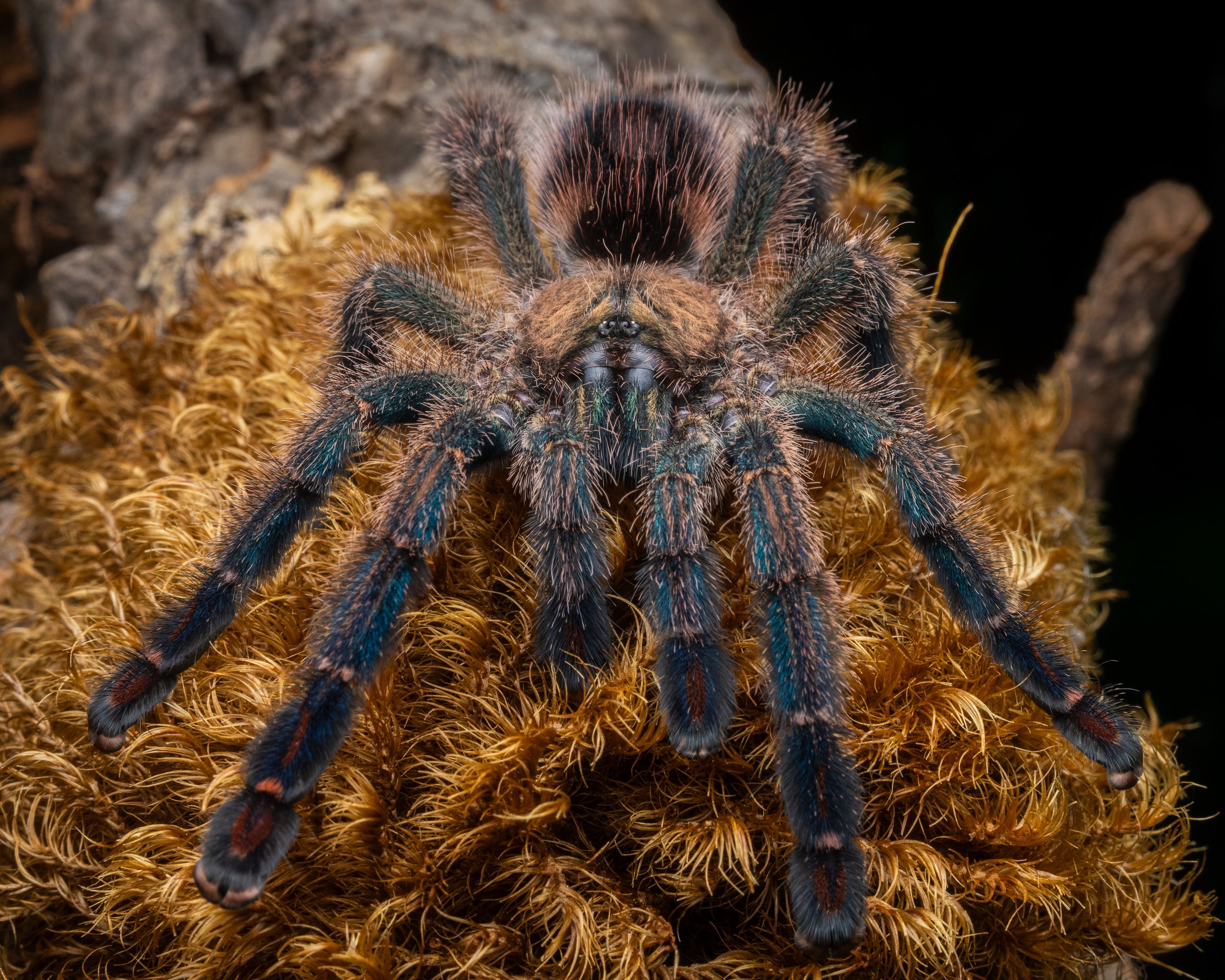
Why We Keep Misreading Tarantulas
Part of the problem is that we do not just observe other animals. We judge them through ourselves.
We are drawn to faces, eye contact, vocal cues, recognizable emotion, and familiar body language. When an animal doesn’t communicate in those terms, we tend to mistake difference for absence. No facial expression becomes no feeling. No obvious visual tracking becomes no awareness. No mammal-like behavior becomes no complexity.
Tarantulas expose how flawed that mindset or assumption can be.
They do not need to resemble us in order to be deeply responsive, highly specialized animals. Their lives unfold in response to signals that matter to them, not signals that are easiest for us to understand.
What This Might Mean in Captivity
I don’t think it is responsible to assume that every vibration, every household sound, or every small environmental change is definitely stressing our tarantulas in ways we cannot comprehend. That is how people panic, overcorrect, and start treating ordinary life like a crisis.
But it is fair to ask better questions or even different questions.
If tarantulas are highly tuned to vibration, moving air, subtle contact, and other cues we barely notice, then it is worth considering whether some parts of captivity may matter more to them than they seem to matter to us. Things like repeated enclosure disturbance or constant heavy foot traffic. What about strong vibration from speakers, appliances, or shelving? Sudden airflow changes, chemical residues from cleaners or perfumes, or even harsh or chaotic lighting.
These things aren’t automatically harmful in every case, they certainly should be living in a static, isolate environment, but maybe we should be careful about assuming that whatever feels minor to us must also be minor to them. Their sensory priorities are not the same as ours.
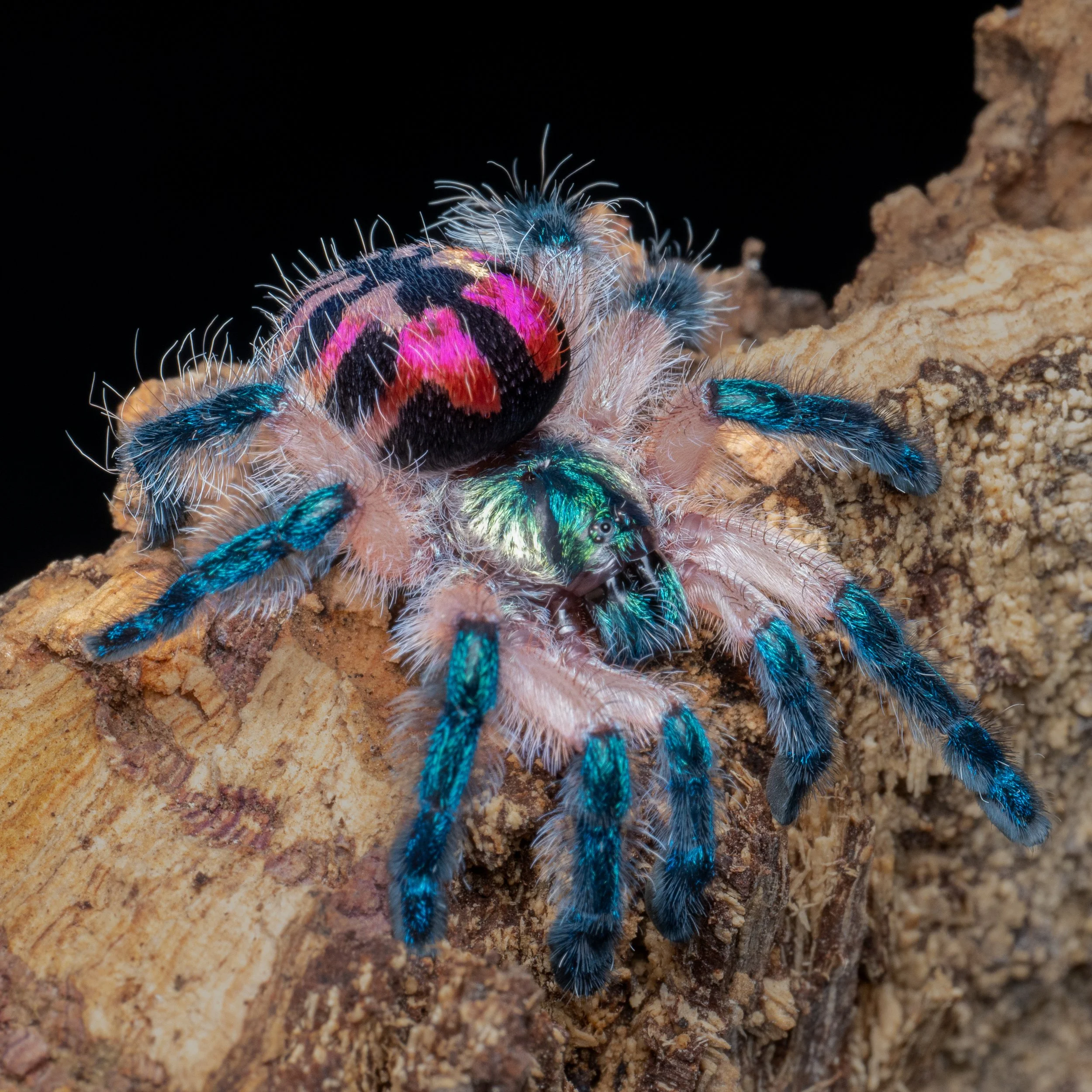
The Limits Are Yours and Mine
Tarantulas are often described as primitive because they do not perform awareness in a language we immediately understand, but maybe what they really reveal is the narrowness of our own factory default settings, so to speak.
We move through life assuming that what we can detect and perceive is a reasonable measure of what is there. Tarantulas make that confidence harder to maintain. Their world appears to be shaped by signals most of us will never feel directly, by forms of information that barely register inside our nervous system, if they even register at all. That does not make their reality smaller than ours. In some ways, it may just make it less flattering to our assumptions.
And that may be one of the most valuable things tarantulas can teach us.
Not that they are mystical or hiding some secret inner philosophy. Just that reality has always been larger than the thin slice our senses hand us. Once you really sit with that, it becomes a little harder to keep judging other lives, other minds, and maybe even other people as though your own way of perceiving the world is universally representitive.
It never was.
Enjoying the free stuff?
If this article taught you something, answered a question, or stopped you from making a terrible enclosure decision, you can support Tarantula Collective here. Donations help fund videos, fieldwork, care guides, photography, and all the work that goes into keeping this site useful and ad-free.
Sources & Further Reading
If you want to dig deeper into how tarantulas and other spiders perceive the world, these are some of the key sources that informed this article. They range from foundational work on spider sensory biology to more recent research on tarantula navigation and behavior, along with the book i read recently that inspired the article’s broader perspective.
Yong, Ed. (2022). An Immense World: How Animal Senses Reveal the Hidden Realms Around Us.
The book that inspired the broader philosophical angle of this article. While it is not focused on tarantulas specifically, Yong’s exploration of animal sensory worlds helped frame the central question behind this piece: whether tarantulas are not perceiving less than we are, but perceiving a different reality shaped by senses we barely notice.
Barth, F. G. (2004). Spider mechanoreceptors. Current Opinion in Neurobiology.
A foundational overview of how spiders detect air movement, touch, and vibration through structures like trichobothria and slit sensilla. This is one of the best sources for understanding the non-visual sensory systems that likely shape much of a tarantula’s experience of the world.
Barth, F. G. (2020). A spider in motion: facets of sensory guidance.
A broader review of how spider movement and behavior are guided by sensory input. Helpful for readers who want a wider look at spider sensory ecology beyond just one kind of receptor.
Dahl, R. D., & Granda, A. M. (1989). Spectral sensitivities of photoreceptors in the ocelli of the tarantula Aphonopelma chalcodes. Journal of Arachnology.
An older but relevant paper showing that tarantula eyes are not meaningless. It supports the point that tarantulas can detect light, including near-ultraviolet wavelengths, even if vision is not their main sensory channel.
Punzo, F. (2002). Reversal learning and complex maze learning in the spider Aphonopelma hentzi. Bulletin of the British Arachnological Society.
An interesting behavioral paper that is worth reading with caution and curiosity. It does not prove human-like cognition, but it does challenge the oversimplified idea that tarantulas are purely automatic, inflexible animals.
Zamani, A., & West, R. C. (2026). Insights Into Spatial Orientation and Cognition in Tarantulas (Araneae: Theraphosidae) Under Natural Conditions, With Notes on Possible Ontogenetic Niche Shifts. Ecology and Evolution.
This is the recent paper that helped inspire parts of the article’s discussion of navigation, spatial behavior, and the possibility that tarantulas use more flexible environmental information than they are usually given credit for. The authors are careful in their claims, which makes it especially useful.
