
How to Feed Spiderlings and Scorplings
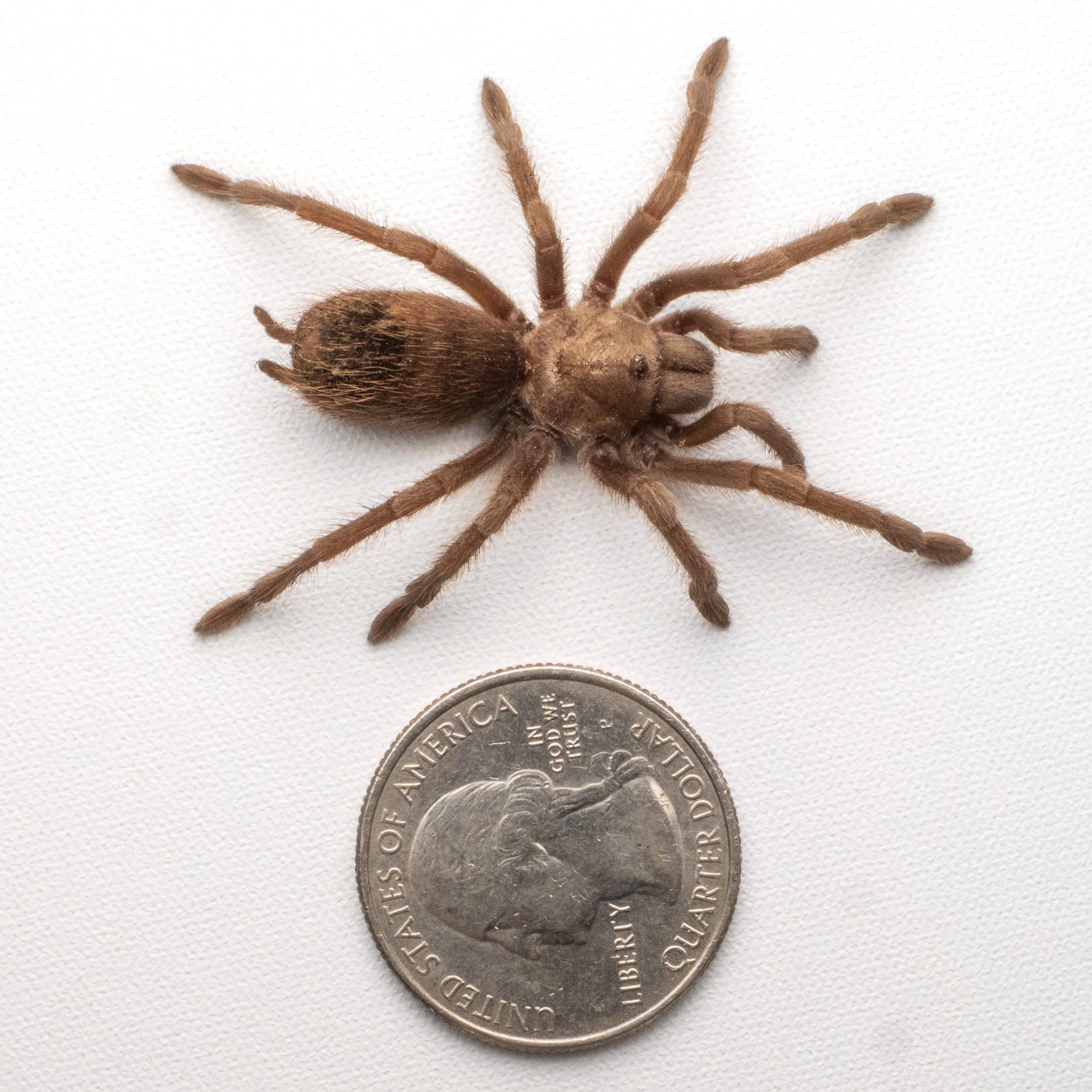
Aphonopelma chalcodes - Arizona Blonde Tarantula spiderling
When most people hear the word “spiderling,” they just think “tiny tarantula.” And technically, that is true. But this stage matters a lot more than people sometimes realize.
A spiderling is a young tarantula that has left the egg sac and started feeding independently. At this point, they are growing quickly, molting often, and still much more delicate than a juvenile or adult. Their exoskeleton is thinner, they can dehydrate faster, and they do not have much margin for error if something goes wrong.
Scorplings are basically the scorpion version of the same thing. After spending their earliest days riding around on their mother’s back through that first molt, they eventually disperse and start hunting on their own. Just like spiderlings, they are tiny, vulnerable, and still developing the coordination and strength they will have later on.
What separates spiderlings and scorplings from juveniles is not just their size. It is how quickly bad husbandry can catch up with them. Missed meals, dehydration, prey that is too large, or a poorly timed feeding attempt can affect them much faster than it would an older animal. That is why feeding slings requires a little more attention and a little more patience.
How Often Should You Feed Spiderlings and Scorplings?
As a general rule, spiderlings should be offered food once or twice a week. They are growing fast, molting regularly, and trying to build body mass, so consistent feeding helps support steady growth and good molts.
That said, I do not think feeding should ever be based strictly on a calendar. The actual body condition of the animal matters more than the day of the week.
With tarantulas, a good rule of thumb is to compare the abdomen to the carapace. If the abdomen is smaller than the widest part of the carapace, they probably need to be fed more often. If the abdomen gets noticeably larger than the carapace, it is time to scale things back a little. Overfeeding does not make them healthier. In fact, an overly fat sling can be more prone to injury from a fall and may run into problems during molts.
Scorplings follow the same general idea. You want the mesosoma to look full, but not swollen. If they are looking thin, increase the feeding. If they are looking overly plump, back off a bit.
The goal here is consistency and moderation, not feeding them every time they look in your direction.
What Should You Feed Them?
Prey size is one of the biggest factors in feeding success at this stage.
A good general rule is that the prey item should be no larger than the body length of the spiderling or scorpling. And by body length, I mean the actual body, not the legs. If you are not sure whether a feeder is too large, go smaller. Smaller is almost always the safer choice.
Some of the best feeder options for slings include:
Pre-killed or freshly crushed small crickets
Large cricket legs for very tiny slings
Flightless fruit flies
Confused flour beetles
Flour beetle larvae
Small roach nymphs
Chopped mealworms or superworms
Very small spiderlings often behave more like scavengers than active hunters, especially early on. A lot of them will readily take pre-killed prey, and honestly, that is often the smarter option anyway. It removes the risk of a live feeder injuring a soft-bodied sling.
Confused flour beetles are a really useful feeder for tiny slings because even if the sling ignores the beetle, there is a good chance they will take the larvae. So you are basically getting two feeding options from one culture.
For extremely small spiderlings, flightless fruit flies are another great option. One trick that helps a lot is putting the fruit fly culture in the refrigerator for about 10 to 15 minutes before feeding. Check on them every 5 minutes or so. Once they are slowed down and lethargic, pull them out and move quickly. They will wake up fast as they warm back up, and then you will be feeding your sling and your entire room.
Tiny tongs or feeding tweezers also make things a lot easier when you are working with pinhead crickets, larvae, or little pieces of worm. I mostly use them to place the prey where I want it. I am not trying to tong-feed the sling directly. At this size, they are usually pretty shy. Just putting the prey on the webbing or near the burrow entrance is usually enough for them to find it once they feel safe enough to come out.
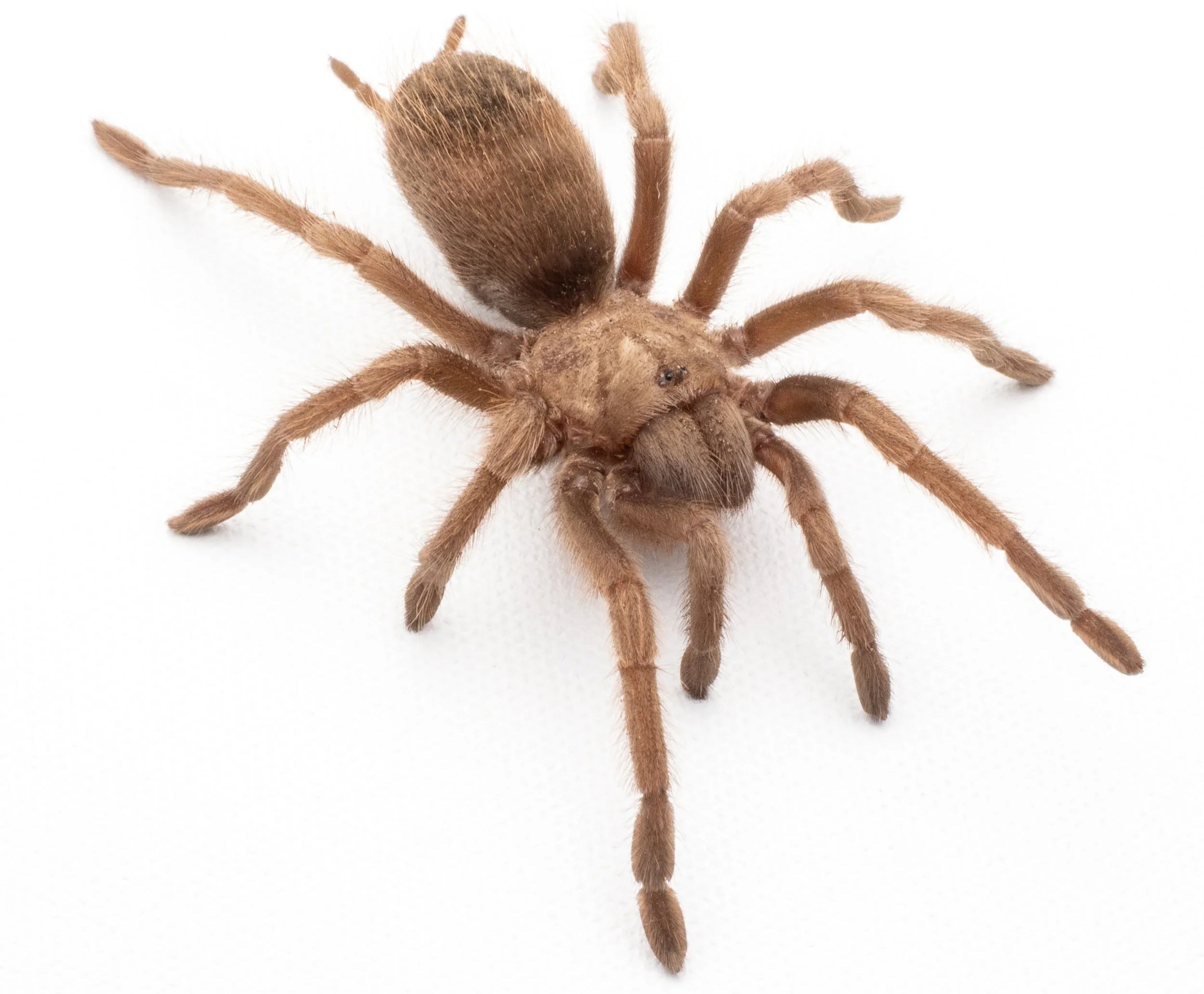
Aphonopelma chalcodes - Arizona Blonde Tarantula spiderling
How to Prepare and Offer Prey
If you are using larger prey items like crickets or mealworms, you can absolutely cut them into smaller sections.
But before you do that, crush the head first.
That is the most humane way to do it, and it also makes the prey safer and easier to manage. You do not want to drop a feeder into a sling enclosure and realize it is still moving around or able to fight back.
No matter what feeder you use, do not leave live prey sitting in the enclosure for long. If it is not eaten, remove it within 24 hours at the latest. Live feeders can injure a spiderling or scorpling, especially if they are nearing a molt. Uneaten prey can also rot quickly in such a small enclosure and lead to mold, mites, and other problems you do not need.
At this stage, keeping things clean and simple goes a long way.
Feeding During Premolt and After a Molt
Because slings molt much more often than adults, you are going to deal with premolt pretty regularly.
When a spiderling goes into premolt, they may stop eating for days, weeks, or even longer depending on the species and size. That is normal. It does not mean something is wrong.
Common signs of premolt in spiderlings include:
Darkening of the abdomen
Duller or faded coloration
Reduced activity
Sealing off the burrow or retreat
Refusal of food
Scorplings can show similar signs. They may become less active, ignore prey, or just look a little dull before a molt. If they are not interested in food, do not try to force the issue. Definitely do not try to force-feed them. Just remove the prey and try again later. Usually checking again in about a week is fine.
After a molt, patience matters.
For spiderlings, wait 24 to 48 hours before offering food again. For scorplings, waiting several days is safer depending on their size. Their exoskeleton needs time to harden, and so do the fangs or stinger. Feeding too soon can result in injuries they do not need to have.
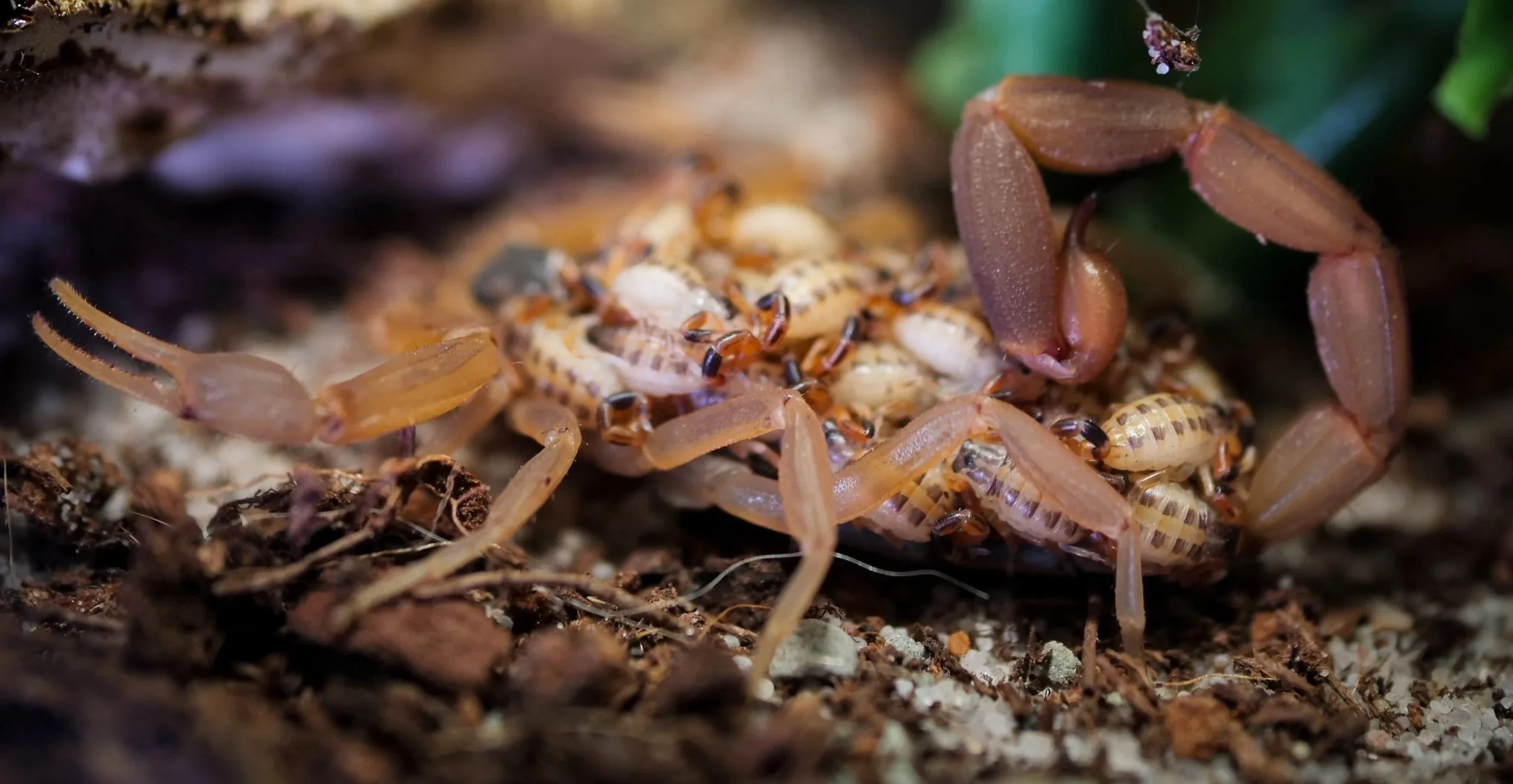
Centruroides vittatus - Striped Bark Scorpion mother with babies (scorplings) on her back
Nutrition and Gutloading
One thing people sometimes overlook is that spiderlings and scorplings get all of their nutrition from their prey. So if the feeders are poorly fed, that can affect the animal eating them too.
Gutloading feeder insects with fresh fruits and vegetables at least 24 hours before feeding them off improves the nutritional value of the meal. Crickets and roaches that have been fed things like dark leafy greens, carrots, squash, or fruit are going to provide better hydration and better micronutrients than insects kept on dry grain alone.
Healthy prey helps build healthy predators. And when you are raising slings that are growing and molting constantly, that matters.
The Biggest Risk at This Stage Usually Isn’t Venom
Feeding spiderlings and scorplings is not hard, but it does require you to slow down and actually pay attention to what you are doing.
At this stage, the biggest risks are usually not venom related. They are human reaction related.
Slings are tiny, fast, and very easy to lose track of. A startled spiderling can bolt out of an enclosure in a split second and disappear into carpet, clothing, or a crack in the floor before you have even fully processed what happened. That is usually the moment people panic, and panic is what causes accidents.
If a sling bolts while you are feeding, stay calm. Do not slam the lid. Do not start flailing around like something horrible just happened. Most spiderlings and scorplings at this size are not dangerous in any meaningful way. Even if they were to bite or sting, they are injecting a very small amount of venom. The real danger is you injuring them by reacting too fast, catching a leg in the lid, or crushing them while trying to get control of the situation.
Move slowly. Be intentional. Think before you act.
One simple thing that helps is feeding with the enclosure low to the ground. That way, if the sling decides to make a run for it, there is less distance to fall. Little choices like that can make a huge difference.
It also helps to have everything ready before you open the enclosure. Have the prey prepared. Have your tongs nearby. Have a catch cup within reach. Know where the lid is going to go. Feeding goes a whole lot smoother when you are not improvising with an open enclosure and a nervous sling.
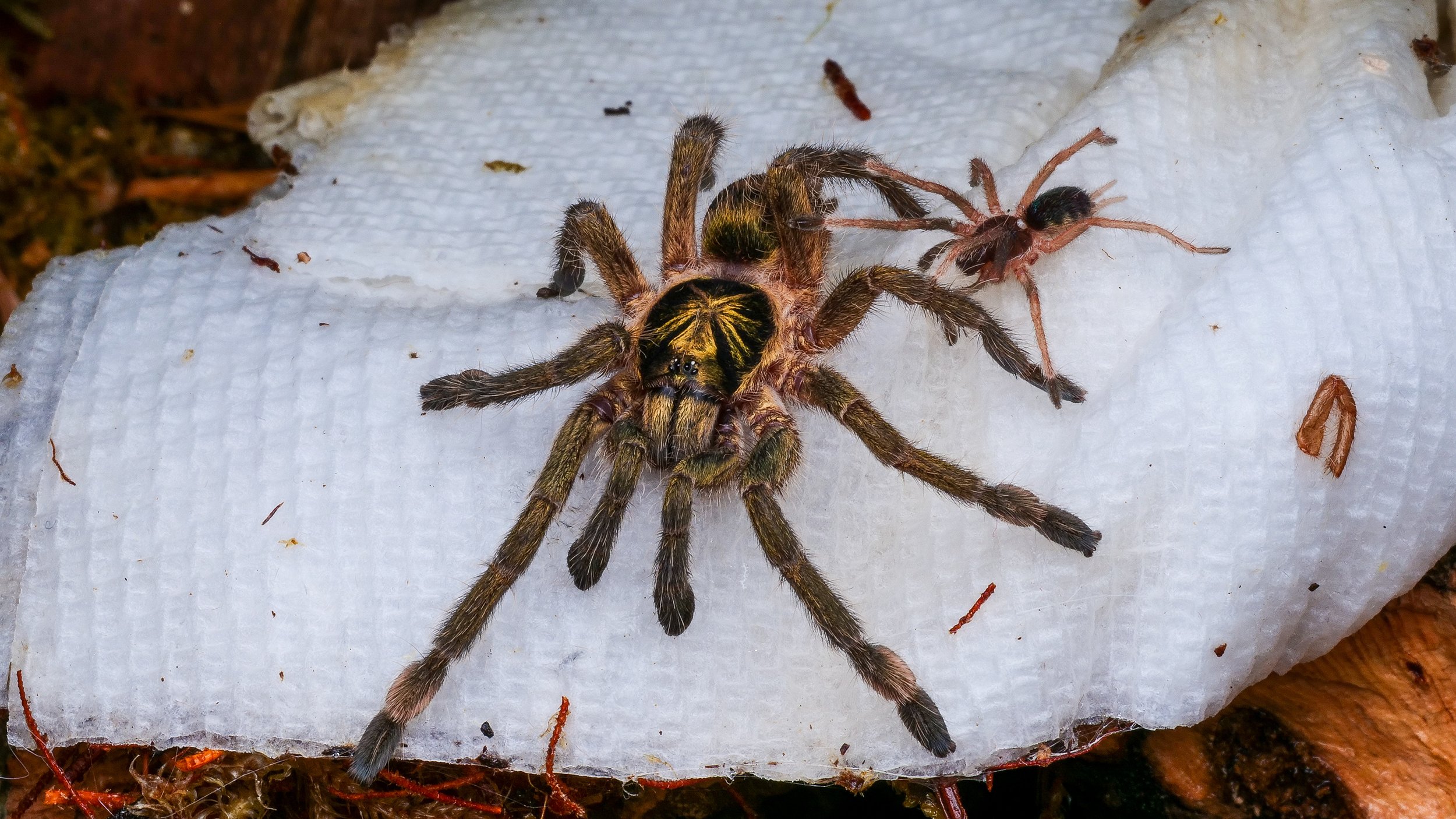
Neoholothele incei - Trinidad Olive Tarantula mom and spiderling
Why Raising Slings Is Worth It
Yes, there are a few annoying parts of this stage.
You are dealing with tiny prey. You are probably going to have a fruit fly escape. At some point a sling is going to refuse food in premolt long enough to make you question whether you somehow forgot how tarantulas work. That is just part of the process.
But raising a tarantula or scorpion from a sling is also one of the most rewarding parts of this hobby. You get to watch every molt, every growth stage, and all those little changes in appearance and behavior as they develop into the animal they are going to become.
And that whole process starts with calm, intentional feeding.
When you stay organized, move slowly, and think ahead, feeding slings is actually pretty simple.
Enjoying the free stuff?
If this article taught you something, answered a question, or stopped you from making a terrible enclosure decision, you can support Tarantula Collective here. Donations help fund videos, fieldwork, care guides, photography, and all the work that goes into keeping this site useful and ad-free.
