
Tarantula science usually doesn’t move in huge, dramatic leaps. Most of the time, it moves one boring paper at a time.
So far, 2026 has already given us a new genus from Peru, a new species from China, a new species from Tanzania, a revision of a messy South American genus, and some very useful field research out of Malaysia that shows why “just keep it humid” is such an oversimplified way to think about tarantula care.
Before we get into it, one quick clarification: when a species is “newly described,” that does not always mean someone just discovered a brand-new spider crawling around last week. Sometimes the spiders were collected years ago. Sometimes they’ve been sitting in museum collections. Sometimes local people or hobbyists have known similar animals existed, but the species had not been formally described in the scientific literature.
Science is slow, but taxonomy is even slower. Tarantula taxonomy moves at the pace an Aphonopelma grows.
A New Genus from Southern Peru: Allpamayu
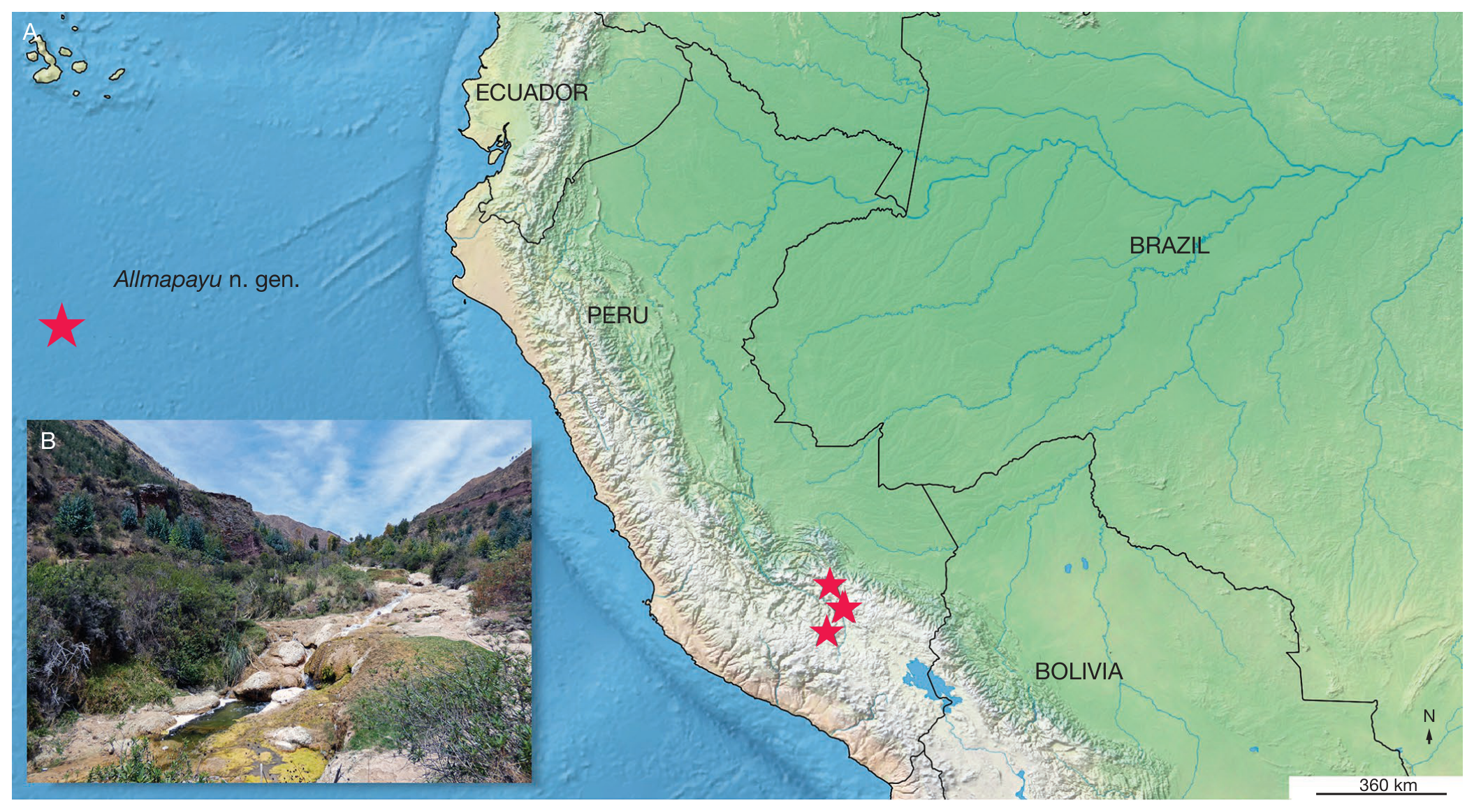
One of the biggest tarantula updates so far this year is the description of a new genus from southern Peru: Allpamayu.
The type species is Allpamayu suyuwixsa, and right now the genus is monotypic. That just means the genus currently contains one described species.
This spider comes from Calca Province in the Department of Cusco, Peru. That part immediately caught my attention because I spent time in the Cusco region a few years ago documenting tarantulas, including species that had not yet been formally described by science. Many of these tarantulas were already part of the local environment, culture, traditions, and beliefs. What was missing is the formal scientific documentation that gives those specific species a name and detailed description.
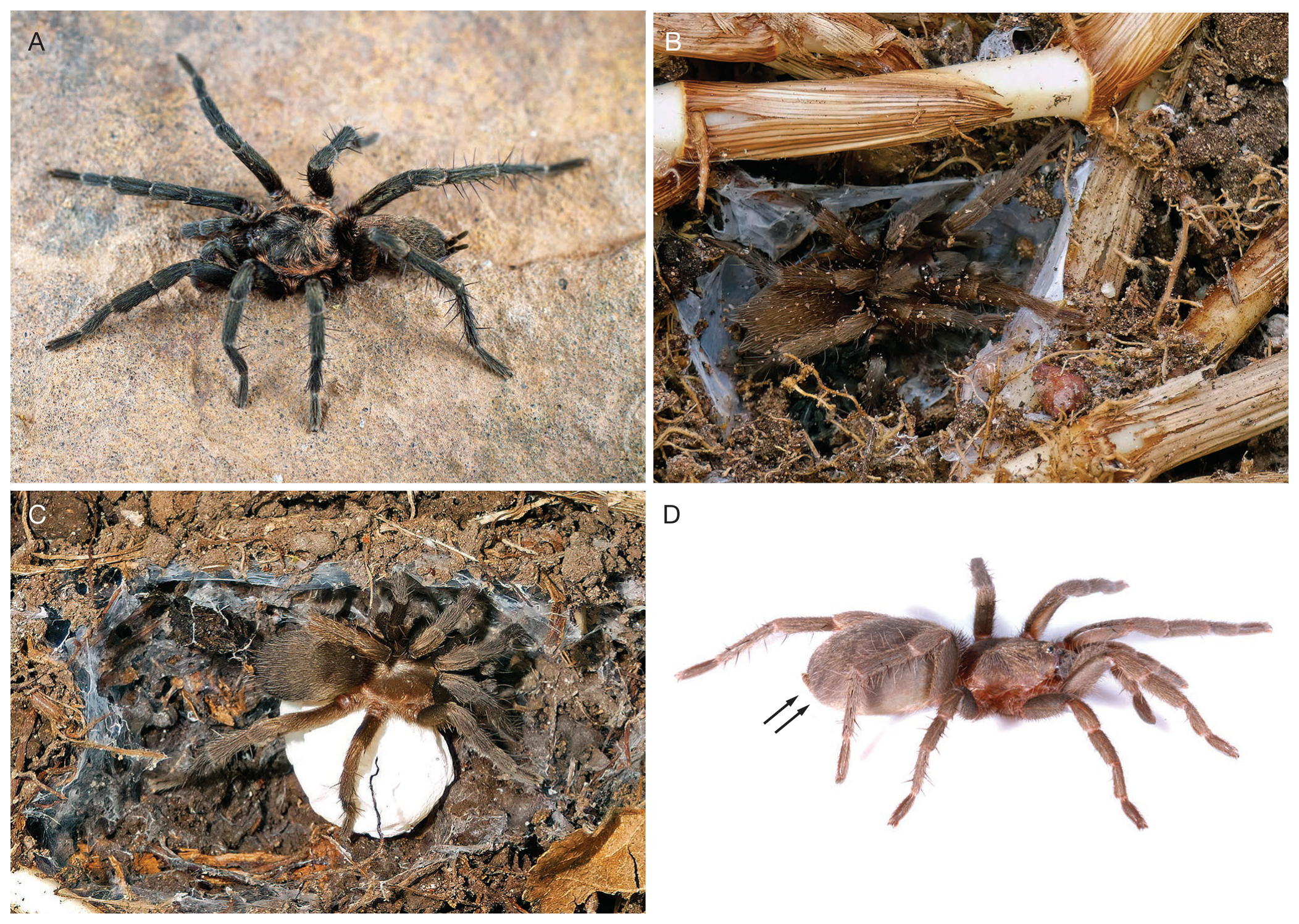
Figure from Beratz et al. (2026), Zoosystema. Used under the article's Creative Commons license.
The Andes, especially regions like Cusco, are full of interesting, localized, and poorly understood tarantulas. Part of the reason is that these areas can be extremely difficult to access. The terrain is often hazardous, with roads clinging to the sides of steep mountains, sometimes nothing more than narrow stretches of dirt and gravel. There can be huge empty areas between villages, and reaching certain habitats may require long, difficult travel through remote landscapes. That isolation makes fieldwork challenging and is why so much diversity remains undocumented. I absolutely treasure the time I spent in Peru, but it is not somewhere I can afford to visit very often, so when an opportunity to go back comes up, I am going to take it. No reason I am mentioning that, just throwing it out there for the universe. Because a new species is always interesting, but a new genus is a much bigger deal.
A genus is the category above species. So when the authors described Allpamayu, they were saying this spider was so different that it needed its own genus.
They placed that new genus within Ischnocolinae, a broader subfamily of tarantulas. Trust me, you don’t need to remember that name unless you really enjoy tarantula taxonomy or it’s on a test. Whipping out that gem won’t impress the ladies and guys like me will give you the old eye roll. The important point is that the spider fit somewhere in that broader group, but it didn’t match any genus already described there.
Peru is full of tarantulas that are still being sorted out. In the hobby, Peruvian tarantulas often show up under locality names or “sp.” names. Some of those animals may eventually match described species or turn out to be something completely different. A paper like this is a gentle reminder that the Andes are preserving tarantula lineages that may have been evolving in isolated habitats for a very, very long time.
A New Chilobrachys from China
From Peru, the story shifts to Asia, where another new tarantula was described this year: Chilobrachys sherwoodae from Yunnan Province in southwestern China.
Chilobrachys are fossorial, heavy webbing, fast-moving, defensive, and really appreciate their privacy, which is why their taxonomy can get messy. These spiders live hidden in burrows, retreats, caves, all manner of crevices. Many of them look pretty similar from the outside. That makes them hard to identify from photos alone.
Chilobrachys sherwoodae was described from both males and females and one of the published images shows a female in a cave. That is visually fascinating and possibly tells us something useful about the kinds of sheltered, humid, protected microhabitats these spiders may use.
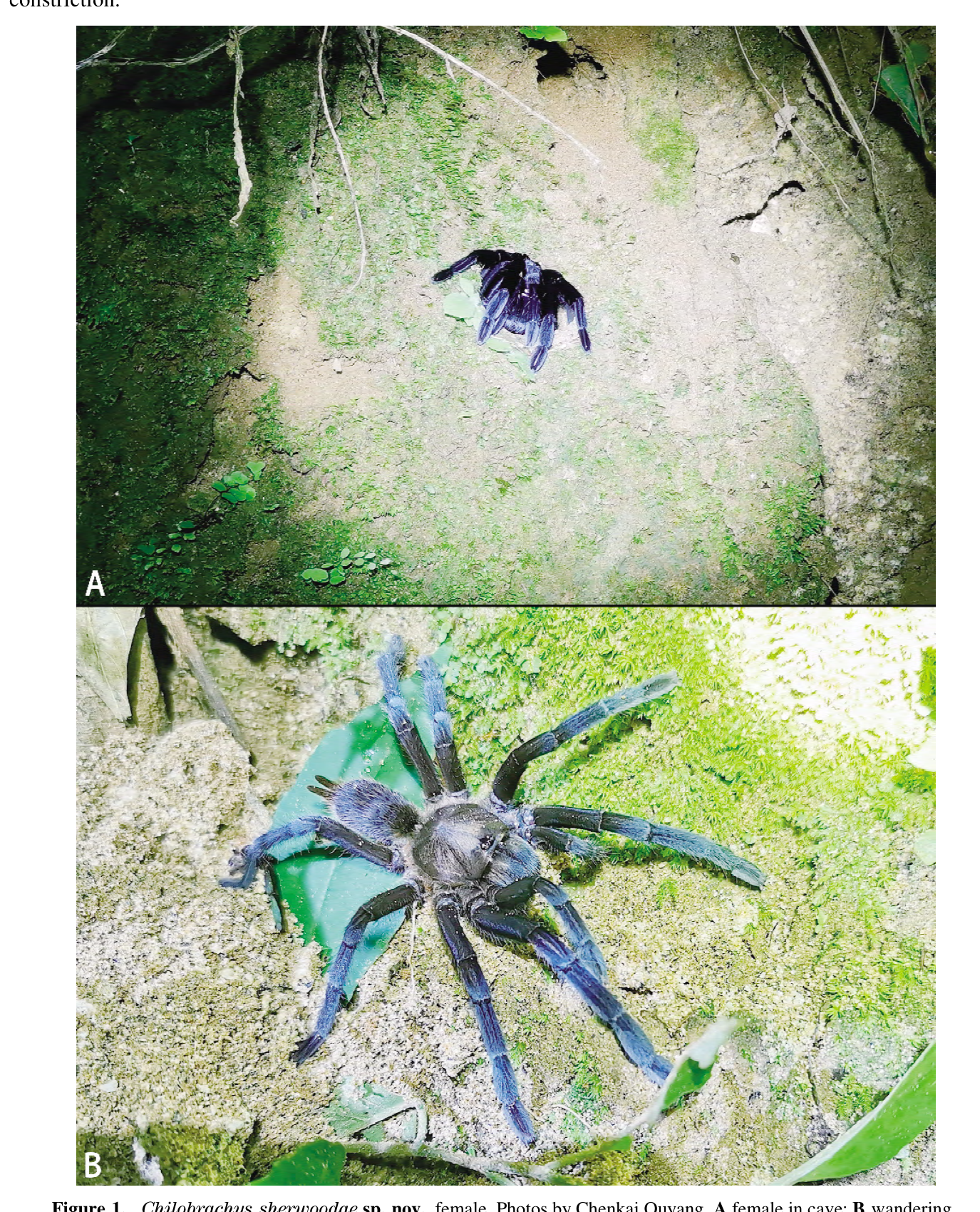
Chilobrachys sherwoodae from Yunnan, China, including a female photographed in a cave-like retreat. Image from Lin, Wang & Li 2026.
The paper also points to a larger issue: some Chilobrachys populations are declining because of habitat loss and human collection.
That part should sound familiar because it seems to be a running theme with every species we discuss. Tarantulas are often long-lived, slow-growing, and tied to specific places. When habitat is destroyed, or when too many mature animals are removed from a small population, they are not built to rebound quickly.
This is where taxonomy and conservation meet. Naming a species gives researchers, conservationists, and governments a clearer target. A spider with a formal name can be studied, tracked, compared, mapped, and potentially protected.
A mystery spider with just a flashy sounding common name is much harder to conserve.
Homoeomma Gets a Much-Needed Cleanup
This one might be kind of boring, but it’s very relevant to hobbyists: a 2026 revision of Homoeomma from Brazil, Argentina, and Uruguay.
The genus Homoeomma has a long and complicated history. Names have been moved around, synonymized, restored, transferred, and reinterpreted for more than a century. That may sound like taxonomic chaos, because I think it is.
In the 2026 revision, researchers reviewed several species and made some fairly important changes.
Homoeomma stradlingi and Homoeomma strabo were treated as junior synonyms of Homoeomma familiare. That means the researchers considered those names to refer to the same species, with H. familiare being the valid name.
Homoeomma nigrum was treated as a nomen dubium. In plain English, that means the name is too uncertain to confidently apply to a recognizable species based on the available evidence.
Homoeomma hirsutum was treated as a junior synonym of Homoeomma montanum. The female of Homoeomma brasilianum was also described.
After the revision, Homoeomma includes 12 valid species distributed across Argentina, Brazil, Chile, Colombia, and Uruguay. Which also just happens to be a list of countries I would really like to visit one day with my camera.
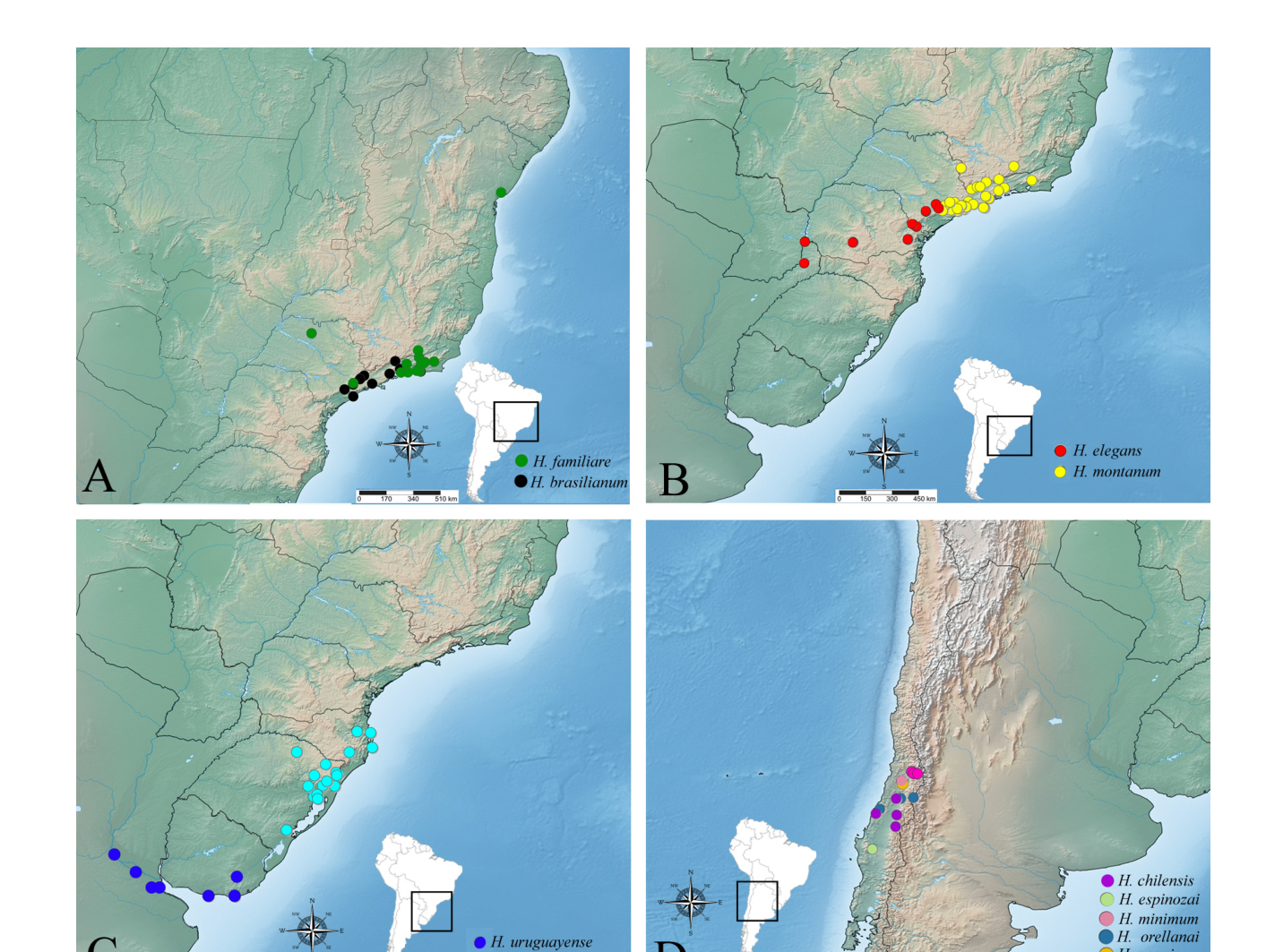
Distribution range of the revised Homoeomma species discussed by Galleti-Lima et al. 2026.
This kind of paper helps explain why old hobby labels can become unreliable over time. I for one am so bad at updating my labels, especially Homoeomma, Euthalis, and Theraphosinae.
A spider will enter the hobby under one name, stay in collections and on websites under that name for years, and then later research shows that the name was misapplied and never should have been included. It can be frustrating when you are trying to keep your labels current, but the goal is accuracy, not convenience.
A Heterothele Revision That Actually Matters to Some Keepers
Another 2026 paper revised the African tarantula genus Heterothele.
For most keepers, this genus probably rings a bell for two species: Heterothele villosella, usually sold as the Tanzanian Chestnut Baboon, and Heterothele gabonensis, often sold as the Gabon Blue Dwarf Baboon.
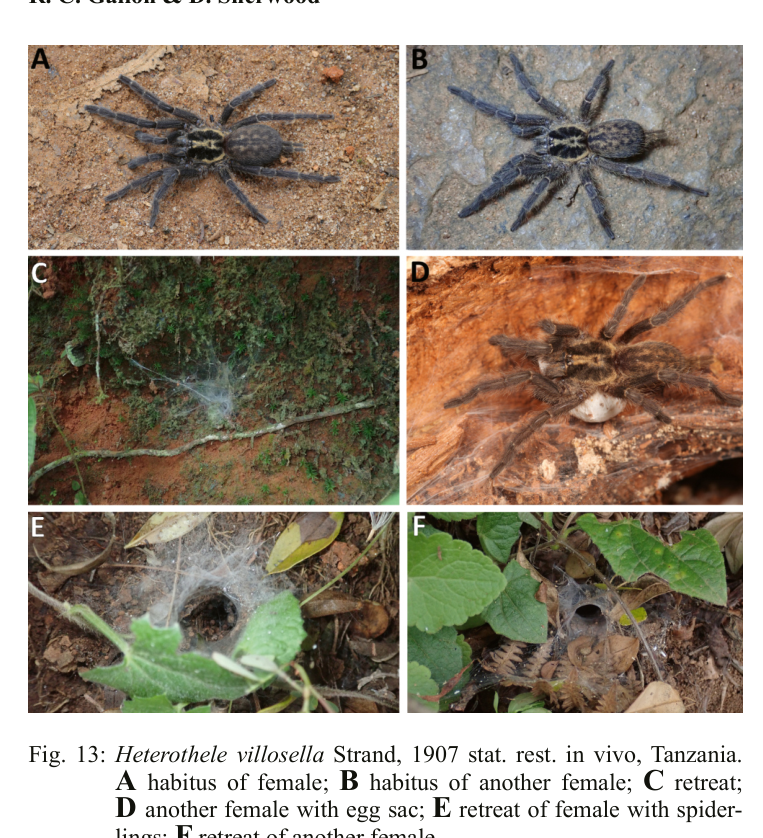
Heterothele villosella, a species known in the hobby as the Tanzanian Chestnut Baboon and restored as valid in the 2026 revision. Image from Gallon & Sherwood 2026.
Both are small African tarantulas that are usually pretty easy to find available in the hobby. They’re fast, web a lot, stay relatively small, and have a reputation for being more tolerant of group setups than most tarantulas. I am saying “more tolerant” very deliberately here. Communal does not mean magic. Cannibalism is still possible, and individual setups are still the safer option if you are not specifically trying to work with groups. I have had varying levels of success keeping this species communally and have ultimately decided it is not something I want to attempt any further, though success is well documented.
The important part of this revision is that Heterothele villosella was restored as a valid species. That name has been used in the hobby for years, though sometimes with uncertainty or as Heterothele sp. “villosella.” This paper does not prove that every spider in the hobby under that label is correctly identified, but it does mean the scientific name itself is usable again.
The paper also keeps Heterothele gabonensis as a valid species, but it removes Heterothele longipalpis from synonymy and treats it as valid again. The rest of the revision is mostly taxonomic cleanup. Heterothele affinis was synonymized with H. honesta. Heterothele ogbunikia was treated as a species inquirenda, which basically means its identity still needs more work, from what I can understand. Heterothele atropha and Heterothele decemnotata were treated as nomina dubia (more fun to say than type), meaning those names can’t be confidently applied to recognizable species based on the available material.
The paper also described a new species from Tanzania, Heterothele maxima, but I wouldn’t expect to see them showing up in the pet trade anytime soon, so don’t get your hopes up.
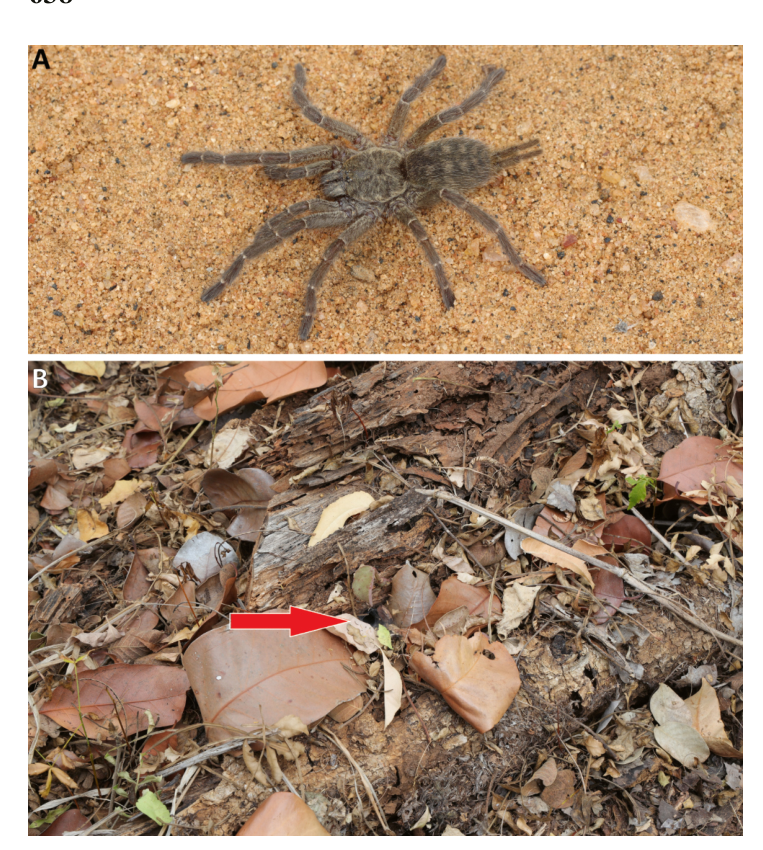
Retreat of an unidentified Heterothele species in Tanzania, showing the kind of webbed structure these spiders may build under natural cover. Image from Gallon & Sherwood 2026.
The Malaysian Papers: Why “Humidity” Is Not Enough
The most keeper-relevant research I have saved for last. It is these two Malaysian papers on Coremiocnemis cunicularia and Chilobrachys andersoni from Penang Island. These papers take us out of vague care sheet language and into real habitat data!
We have been told to “Keep them humid.” and “Give them deep substrate.” I have told you that, I have been told that myself. But that leaves out a lot, because tarantulas don’t live inside a humidity number. They couldn’t. Numbers are abstract concepts, and tarantulas are physical animals with a very limited understanding of decimal points. They live in a burrow, on a slope, in a specific type of soil, under a canopy, at a certain elevation, with a specific temperature range and moisture level around them and these papers give us a much better look at all of that.
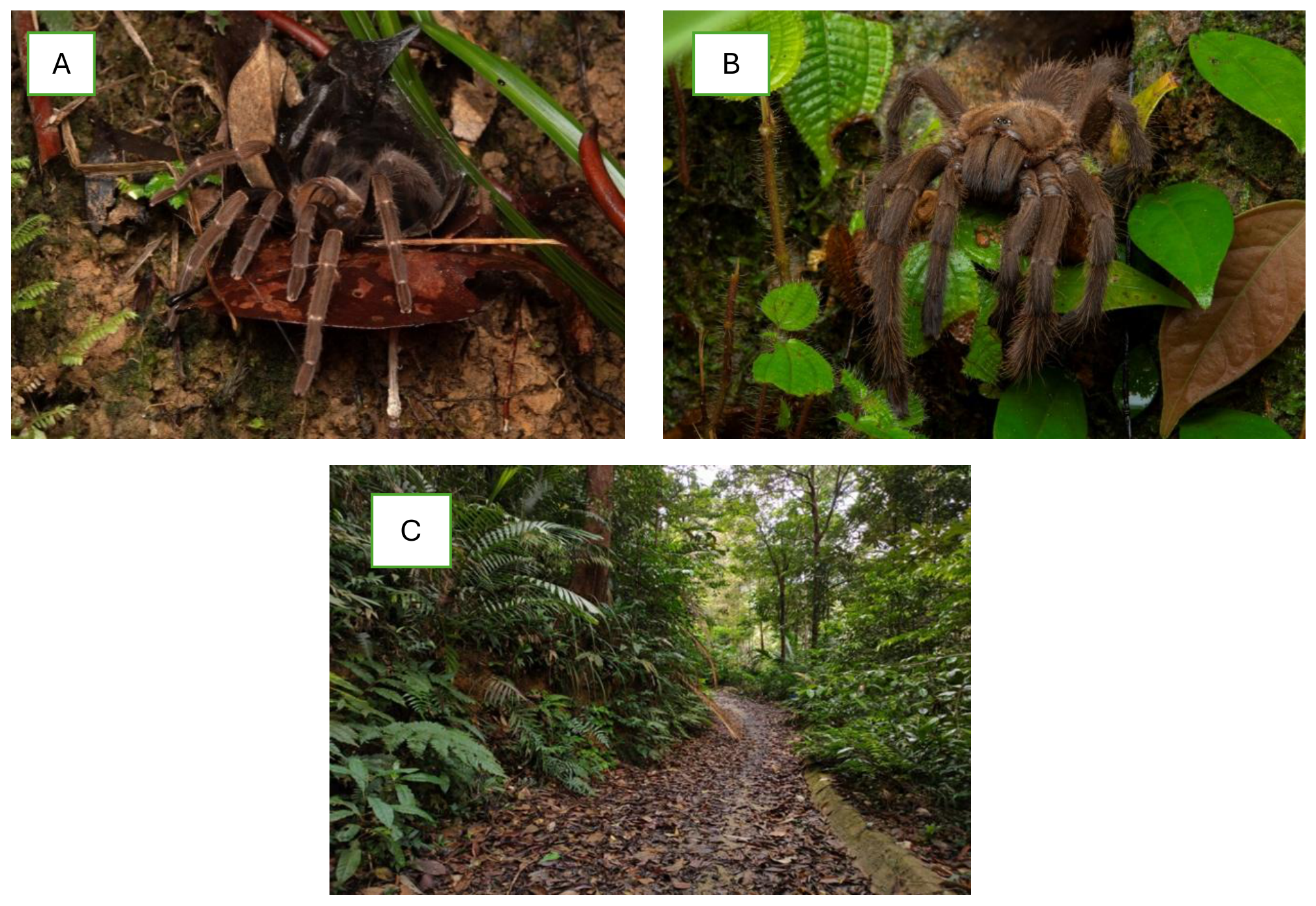
Adult Coremiocnemis cunicularia and Chilobrachys andersoni at their burrow entrances, with typical sloped forest habitat shown below. Image from Razak et al. 2026.
Same island, different lives
One study looked at microhabitat preferences of Coremiocnemis cunicularia, no common name I am aware of, and Chilobrachys andersoni, known in the hobby as the Burmese mustard tarantula, across several sites on Pulau Pinang. They’re both terrestrial tarantulas from the same island and even share the same general region, but they were not using their environments in the same way.
Coremiocnemis cunicularia was found at higher elevations, mostly in hill and upper dipterocarp forest. A dipterocarp forest is a Southeast Asian rainforest dominated by tall canopy trees from the dipterocarp family. I had to look that up so I figured you might have to as well. The average altitude for their burrows was about 687 meters, or roughly 2,255 feet. The soil temperature around their burrows averaged about 24°C, or roughly 75°F and the surrounding temperature averaged about 25°C, or about 78°F.
Chilobrachys andersoni was found lower down, mostly in lowland dipterocarp forest. The average altitude for their burrows was about 140 meters, or roughly 460 feet. The soil temperature around their burrows averaged about 28°C, or roughly 83°F and the surrounding temperature averaged about 28°C, also around 83°F.
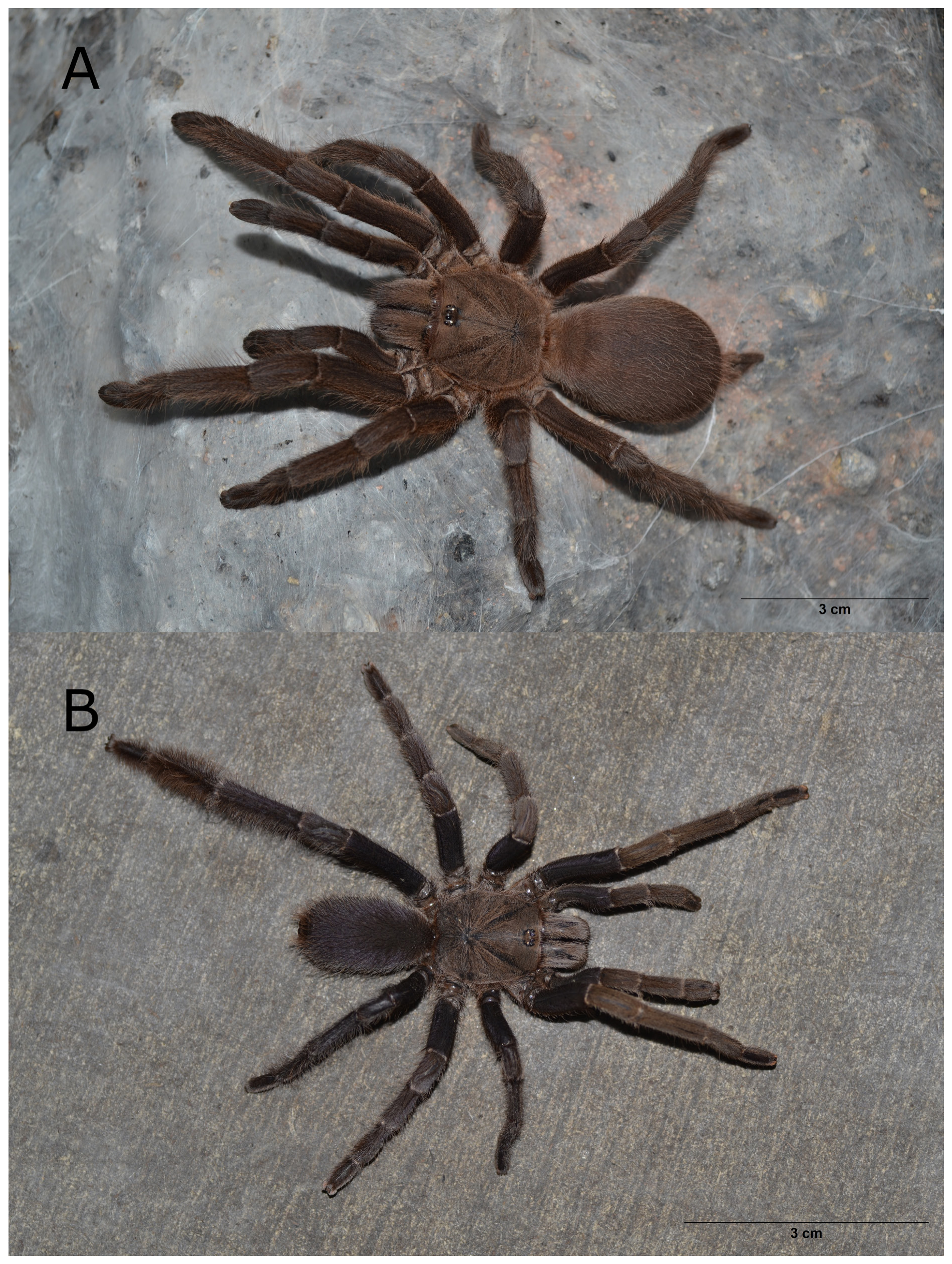
Adult female Chilobrachys andersoni and adult female Coremiocnemis cunicularia. These two Penang Island tarantulas were associated with different elevations, temperatures, and microhabitat conditions. Image from Razak et al. 2026.
These are both Malaysian fossorial tarantulas from the same island, but one prefers cooler, higher-elevation forest, while the other likes the warmer lowland forest. Which is why he have to be careful when we refer to “Asian fossorials” like they are all the same type of spider with identical preferences and needs. Even two burrowing species on the same island can be using different sections of the environment. They even found differences in burrow entrance size, entrance height, distance from trails, and plant richness near the burrow, even though the canopy cover and surrounding humidity were not significantly different between the two species.
The surrounding humidity was similar, but the spiders were still using different habitats. Elevation, temperature, soil conditions, and habitat structure give us a much fuller picture of exactly what these species need, so we can better replicate their environments in captivity.
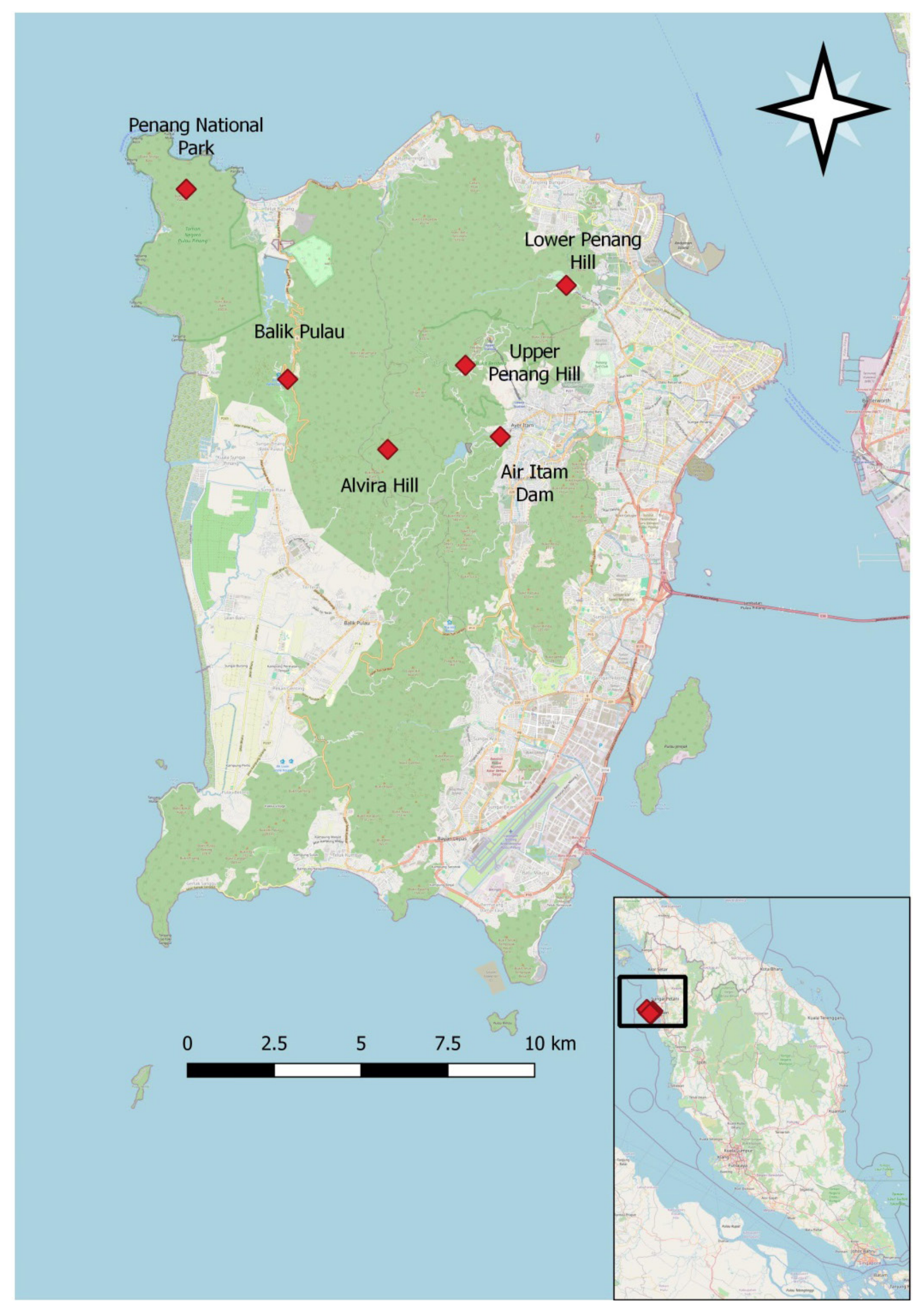
Study sites on Pulau Pinang, Malaysia, where researchers compared the microhabitats of Coremiocnemis cunicularia and Chilobrachys andersoni. Image from Razak et al. 2026.
Soil tells another part of the story
The other Malaysian paper looked more closely at soil preference and burrow structure.
The researchers collected 30 soil samples near Coremiocnemis cunicularia burrows and 30 near Chilobrachys andersoni burrows. They looked at moisture content, pH, soil type, sand, silt, and clay. Soil near Coremiocnemis cunicularia burrows averaged about 22.2% moisture. While soil near Chilobrachys andersoni burrows only averaged about 11.4% moisture.
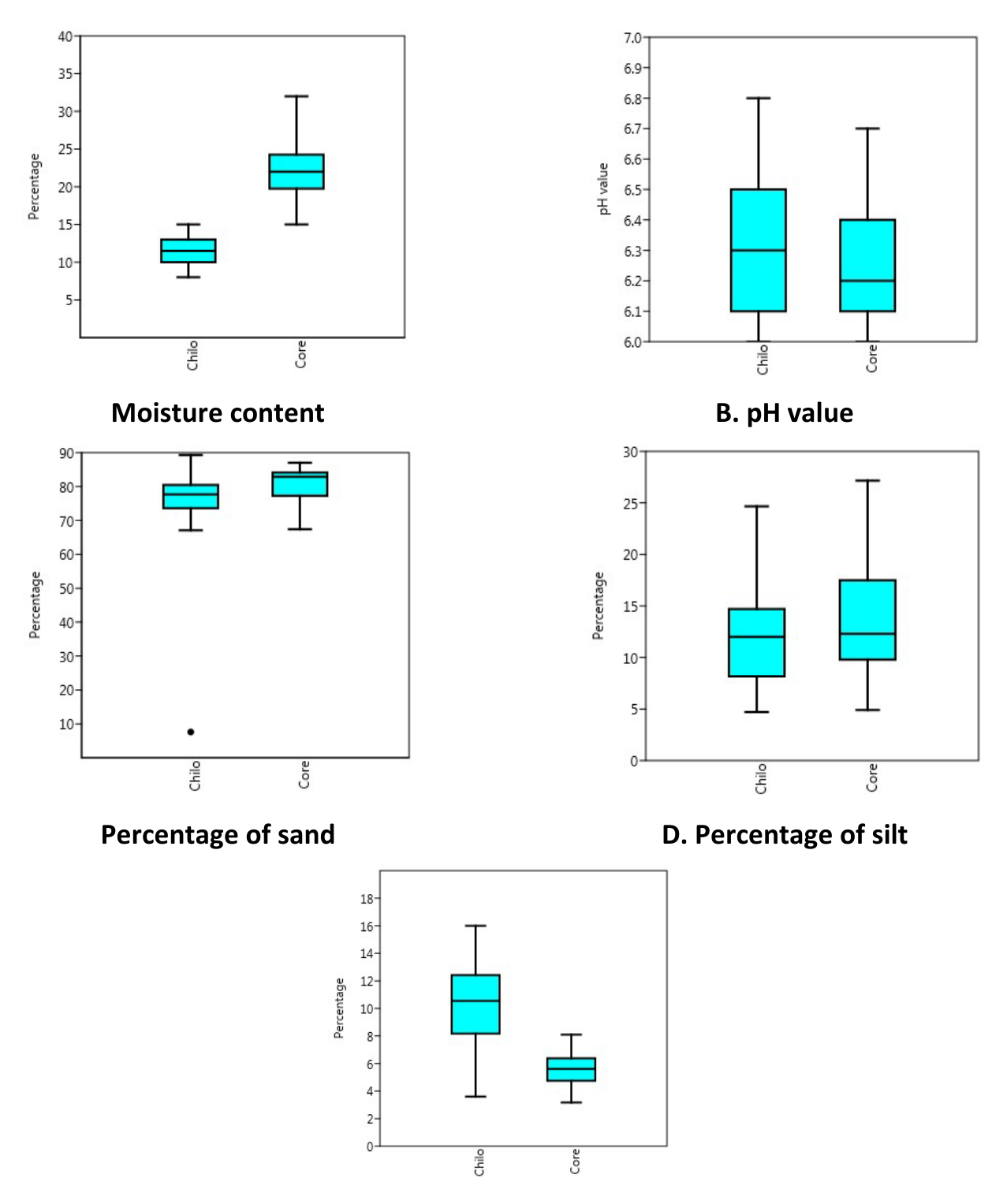
Soil characteristics measured near the burrows of Coremiocnemis cunicularia and Chilobrachys andersoni, including moisture, pH, sand, silt, and clay percentages. Image from Razak et al. 2026.
I am not advocating we should turn every enclosure into a soil lab, just that the word “humid” is doing a lot less work than people think it is. Because the study also found that Coremiocnemis cunicularia was mostly associated with loamy sand, while Chilobrachys andersoni was mostly associated with sandy loam. I know that sounds like the same thing and I feel like there is some witty pop culture reference I could make here, but it just isn’t coming to be. Suffice it to say, loamy sand is sandier and drains faster, while sandy loam has more fine material, holds together better, and can retain moisture differently. The pH values were similar, but moisture content and clay percentage were significantly different.
Substrate is more than filler at the bottom of an enclosure. It has structure. It holds moisture. It compacts. It dries. It supports or collapses around a burrow and for a fossorial tarantula, that kind of thing is super important.
The burrows were different too
The burrow casts from the soil paper are some pretty cool visuals. The adult Coremiocnemis cunicularia burrow was described as U-shaped with a basal chamber near the end. It measured about 4.0 cm wide, 51.2 cm long, and 39.6 cm deep which is about 1.6 inches wide, 20 inches long, and 15.6 inches deep. You read that right, their burrow is over a foot deep.
The adult Chilobrachys andersoni burrow was more C-shaped. It measured about 4.7 cm wide, 36.5 cm long, and 31.0 cm deep. For us Americans that weren’t properly taught the metric system, that is about 1.9 inches wide, 14.4 inches long, and 12.2 inches deep.
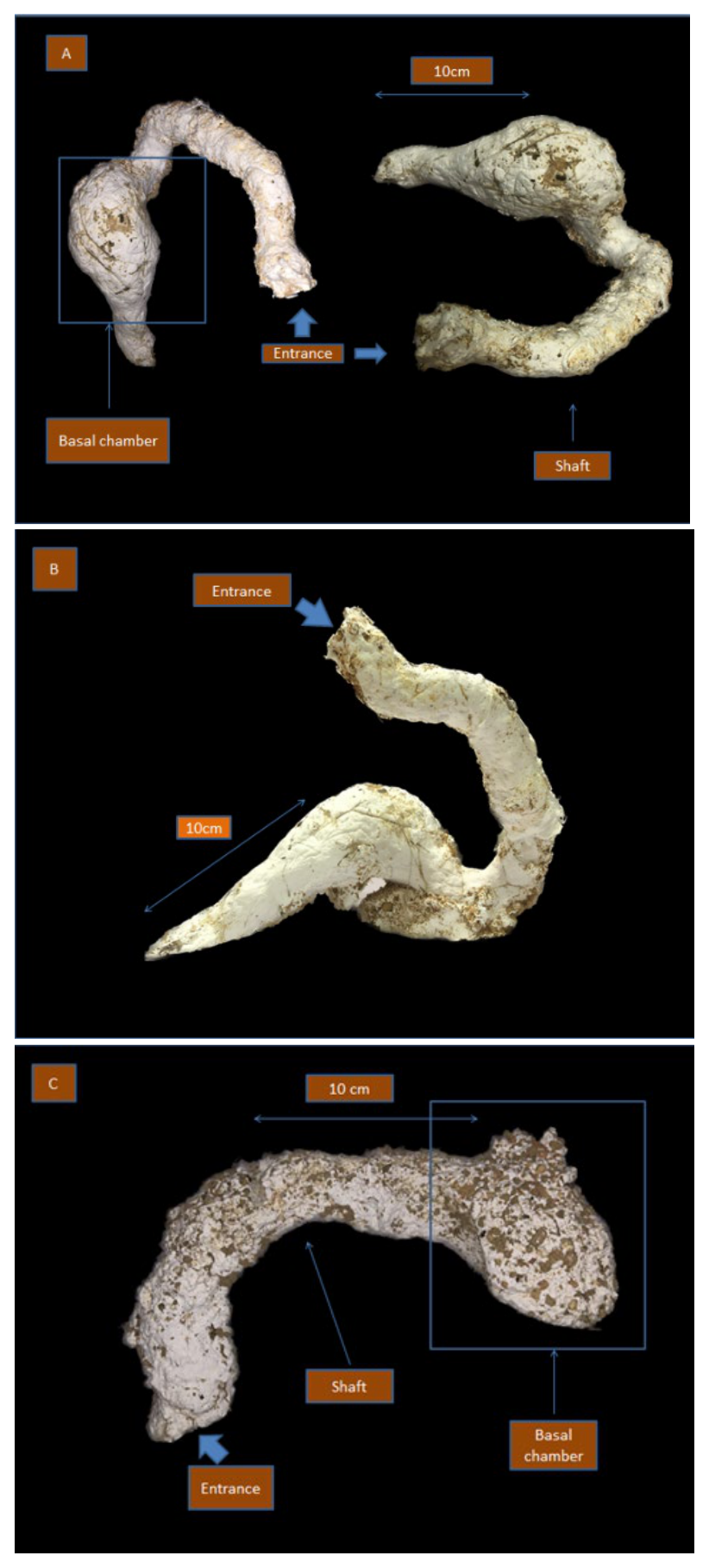
Plaster casts showing the adult burrow structures of Coremiocnemis cunicularia and Chilobrachys andersoni. The Coremiocnemis burrow was described as U-shaped with a basal chamber, while the Chilobrachys burrow was more C-shaped. Image from Razak et al. 2026.
Juvenile burrows were obviously smaller, but the paper did note some differences in their structure. Juvenile Coremiocnemis cunicularia burrows were described as more defined and better shaped. Juvenile Chilobrachys andersoni burrows had coarser walls and appeared to make more use of crevices in the soil.
That is a good reminder that when we keep fossorial species, we’re giving them more than a place to hide. We’re giving them the material they use to build the structure they depend on. So we should choose their substrate wisely.
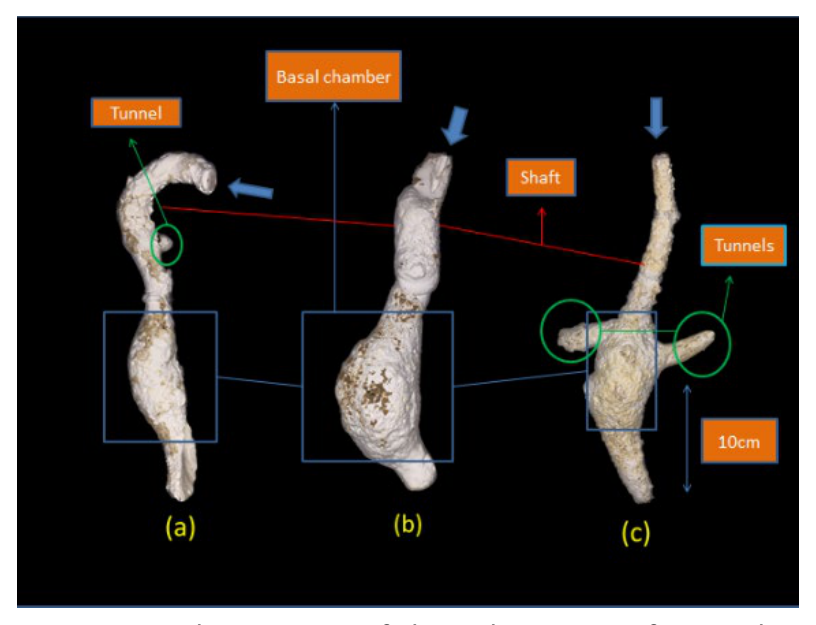
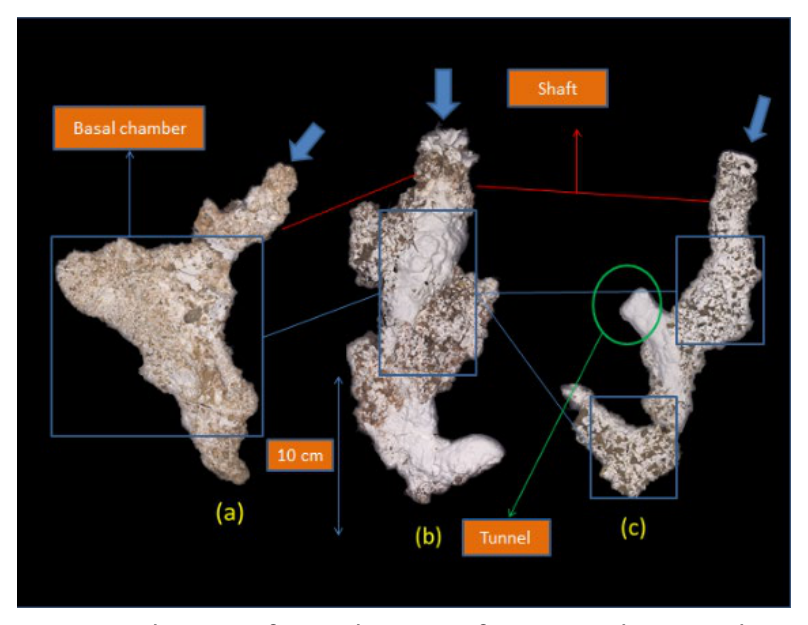
Juvenile burrow casts from Coremiocnemis cunicularia and Chilobrachys andersoni. The paper noted differences in shape, wall texture, and how each species used the surrounding soil structure. Images from Razak et al. 2026.
The Bigger Conservation Point
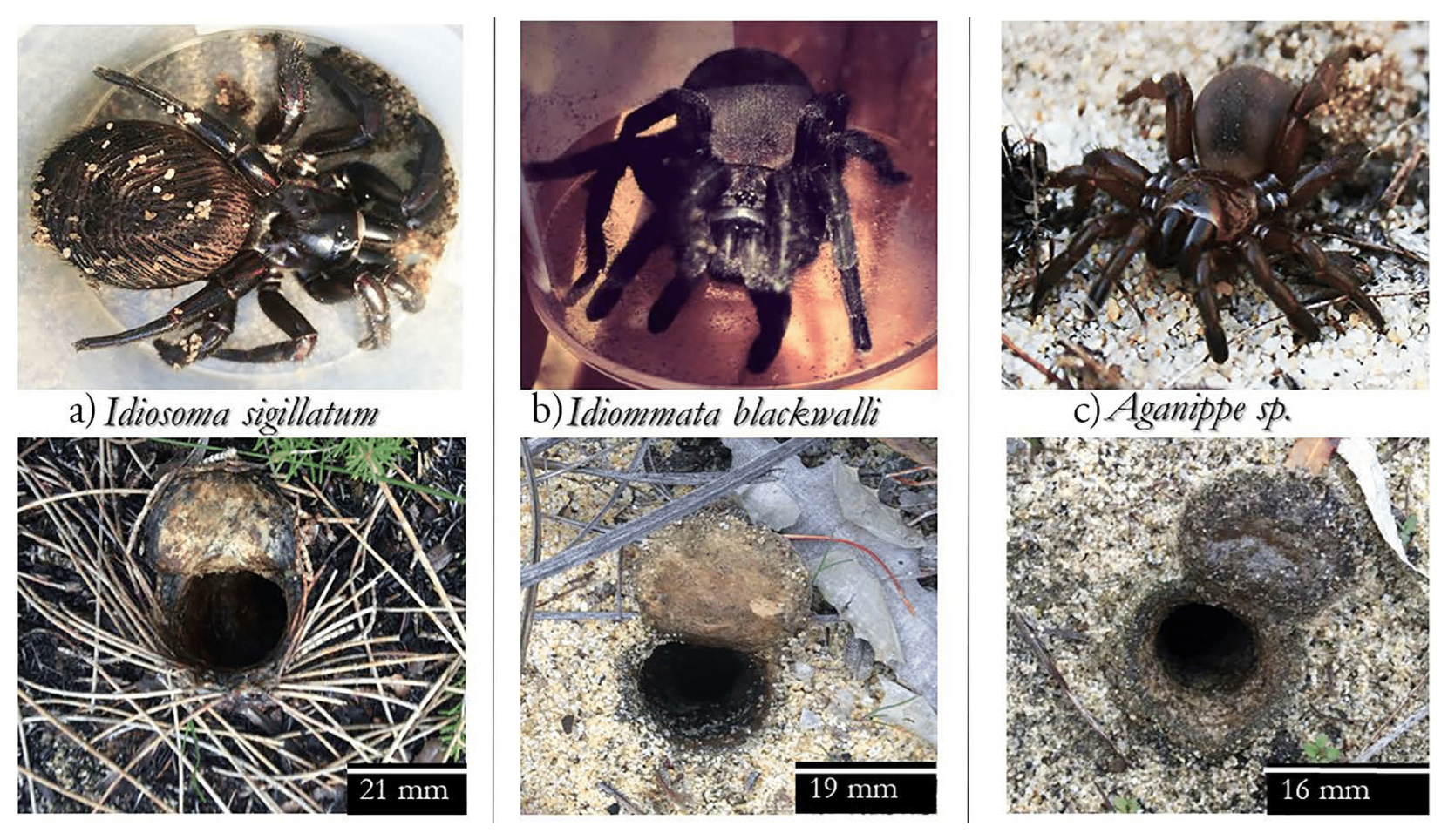
Short-range endemic mygalomorph spiders and their burrow entrances from the Western Australian study. These were not tarantulas, but they share the same broader problem of being long-lived, low-dispersal spiders tied closely to specific microhabitats. Image from Mason et al. 2018.
The Malaysian papers also connect to a broader issue in mygalomorph conservation which I know is something some of you get really tired of me talking about all the time, but I promise it’s important. Many burrowing spiders are long-lived, slow to mature, poor dispersers, and tied to very specific microhabitats and that combination makes them vulnerable when their habitats change quickly.
This has been shown in other mygalomorph research too. In one study on short-range endemic mygalomorph spiders in Western Australia, spiderlings showed specific microhabitat choices. In one species, the spiderlings strongly selected invasive veldt grass, even though that habitat had lower prey diversity and abundance. That kind of situation can create what researchers call an ecological trap, where the animal chooses a habitat based on cues that seem right, but the habitat is actually worse for their long-term survival.

Ecological and landscape traps can occur when animals select habitat based on cues that appear suitable, even when that habitat may be worse for survival. This study focused on short-range endemic mygalomorph spiders in Western Australia, not tarantulas specifically, but the conservation lesson is relevant to burrowing mygalomorphs more broadly. Image from Mason et al. 2018.
I realize that study was not about tarantulas specifically, but I think the lesson applies to burrowing mygalomorphs in general. Because if a spider spends years or decades tied to one burrow, their first choice of where to settle matters. If the wrong cues lead them into a poor habitat, or if the habitat around them changes drastically after they establish, they may wind up with no good options.
Every detail matters to a tarantula. Elevation matters. Soil matters. Plant cover matters. Moisture below the surface matters. The structure of the forest itself matters. And when we reduce a tarantula’s habitat to a temperature range and a humidity number, we miss most of what the animal is actually interacting with in nature.
What This Means for the Hobby
Relax, I am not saying that you need to become a soil scientist, just that we should be more careful with broad care advice.
When we say a tarantula comes from a humid region, that doesn’t tell us what the inside of their burrow feels like. When we say a species is fossorial, that doesn’t tell us what kind of soil they’re using or how deep they dig and definitely not whether they build a simple shaft or a more complex chamber. The more we learn from field studies and documentation, the better our captive care can become. And we aren’t trying to copy nature perfectly. Captivity is always a simplified version of the wild, but good husbandry should be informed by what the animal actually does in nature.
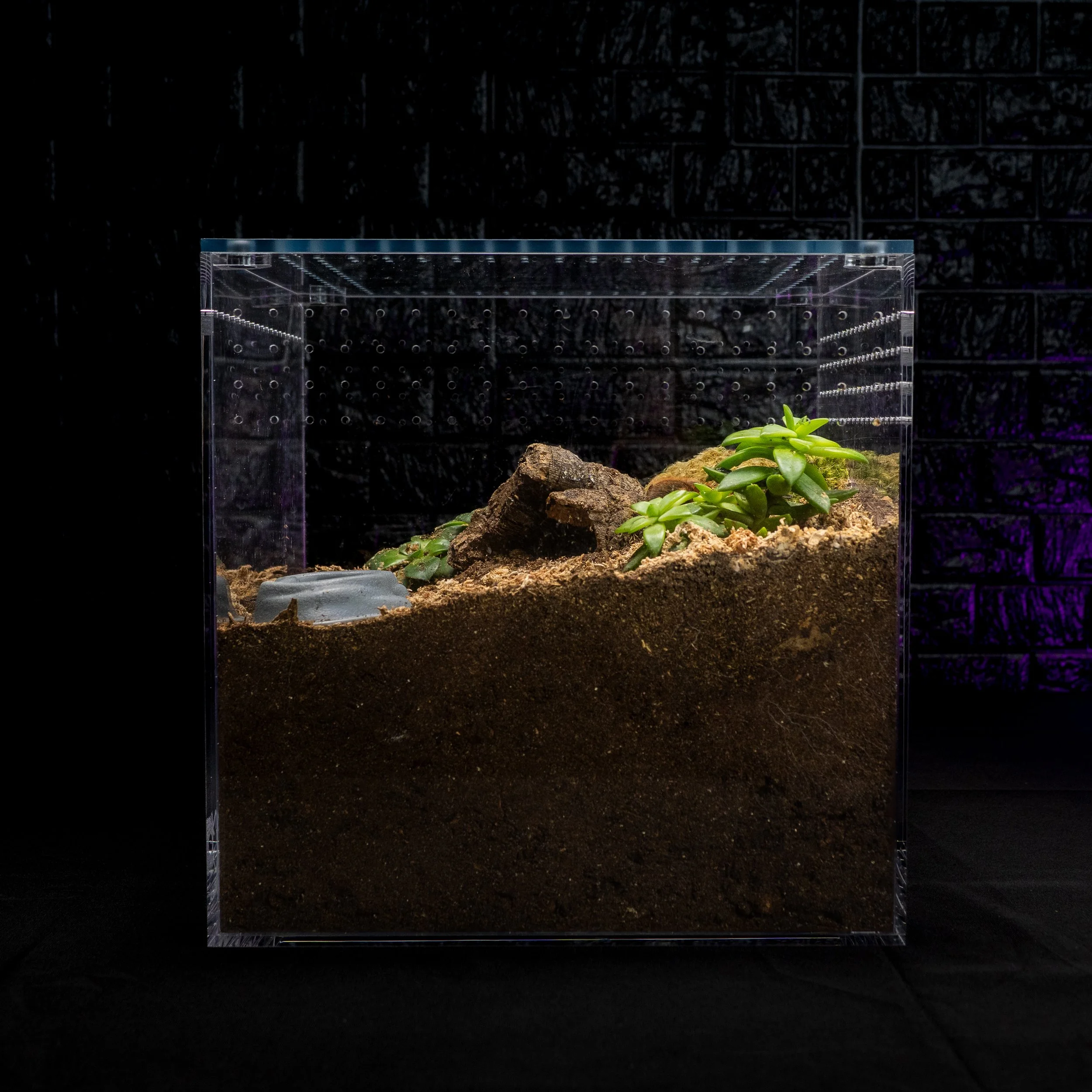
A fossorial tarantula needs enough depth to behave like a fossorial animal. They need substrate that can hold a burrow. They need a moisture gradient, not a swamp. For naturalistic and bioactive keepers, these papers are especially useful because they support something many of us have been saying for years: the details of the microhabitat matter.
The forest matters, but the burrow matters more.
What We Do With This Information
It is easy to read papers like this, update a few labels, make a few care tweaks, and move on about your day. But every one of these studies is a reminder of how much we still don’t know. I mean, there are tarantulas I am caring for right now under temporary names. You might have some species like that as well. There are species in the wild that have never been formally described. There are habitats being destroyed before anyone has had the chance to document what tarantulas might live there. There are museum drawers, in dusty backrooms, full of specimens waiting for someone with the time, training, passion, and probably the most important thing, which is the funding to study them properly.
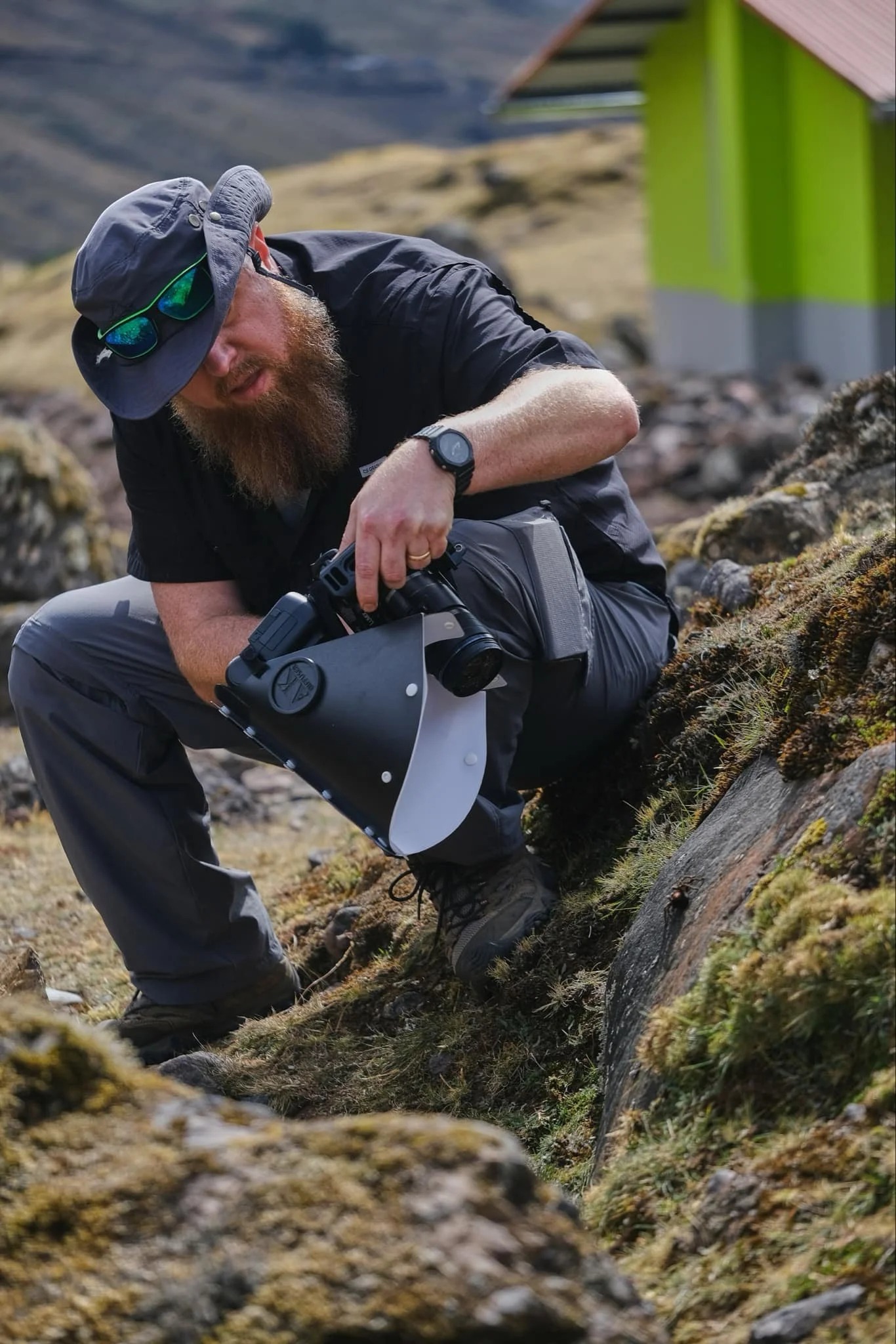
Fieldwork, documentation, and curiosity are all part of the same larger picture. The more we learn about these animals in the wild, the better we can care for them, explain them, and protect them.
Tarantulas have been around for well over 100 million years, and we’re still trying to figure out who many of them are, where they live, how they behave, and what role they play in their ecosystems. That’s exciting, but it should also make us feel some responsibility too.
If you’re young and tarantulas are the thing that got you interested in animals, do something with that. Study biology, ecology, taxonomy. Learn how to read scientific papers and how to ask better questions. The field needs more people who care about spiders before they ever walk into a university classroom.
If you are already in college, there is still so much room here. Arachnology is not some finished subject where all the best discoveries have already been made. Tarantulas and other mygalomorphs are still full of so many unanswered questions and even more unasked questions. Their venoms, silk, burrows, behaviors, distributions, conservation needs, and evolutionary history are all areas where someone could make a real contribution.
And if you are not going to become a researcher, that’s okay, most of us won’t. You can still support the work by supporting researchers and taxonomists when you can. Support museums, field studies, conservation projects, and habitat protection in the places these spiders actually live. Support educational platforms that take this science and make it understandable for regular people.
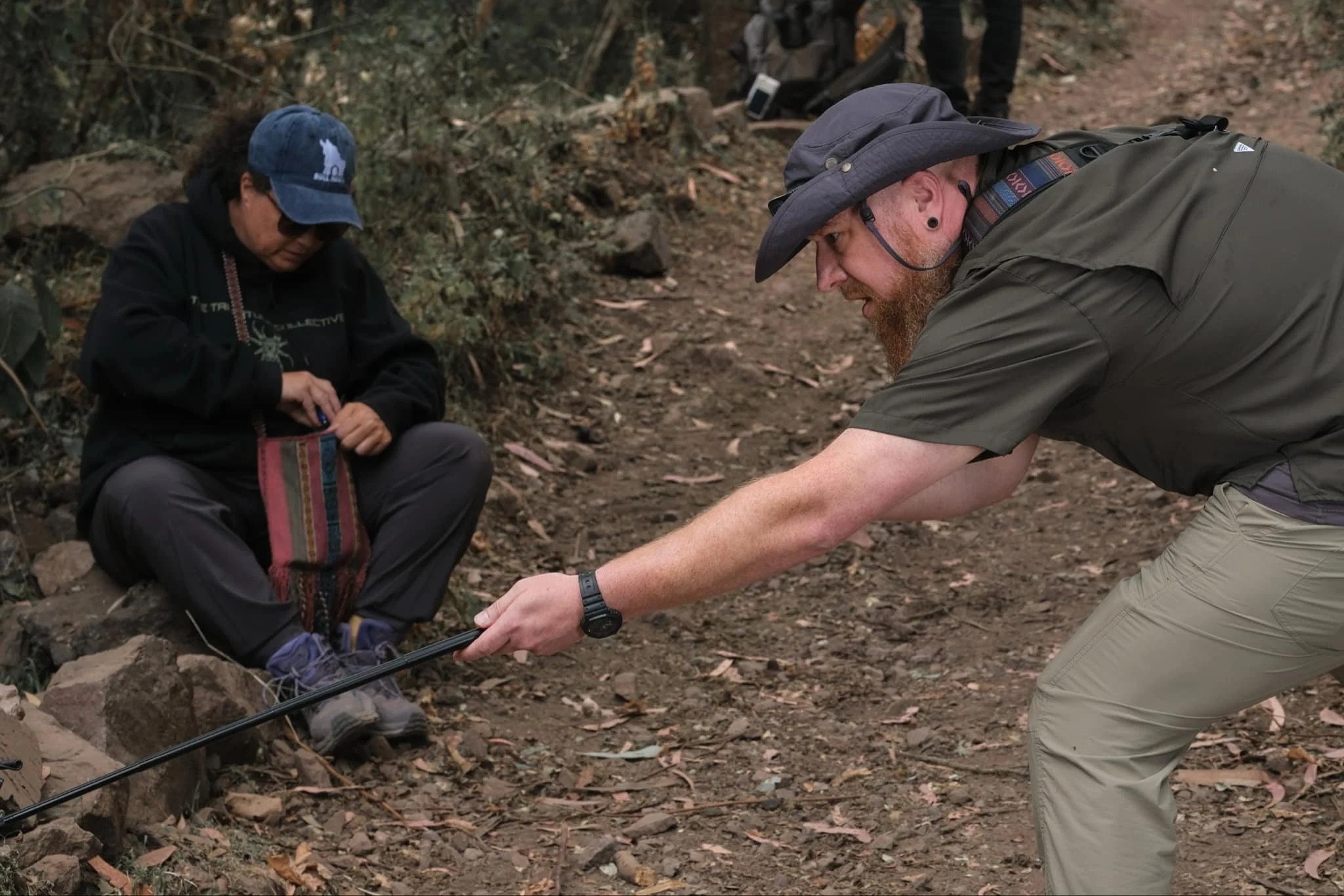
Most people will never read a taxonomic revision. They will never dig through a burrow study from Malaysia or a genus description from Peru. But they might watch a video, read an article, or see a post that makes them care. That is often where conservation starts. People protect what they understand, and they usually don’t understand something until someone takes the time to explain why it matters.
For keepers, the goal should be bigger than just owning some really cool spiders. Having a pet tarantula can be the thing that kicks open the door of curiosity in your mind and makes you wonder about where the animal comes from, what the habitat looks like, why the burrow matters, how the species is classified, and whether the wild population is safe or protected.
The next major tarantula discovery may come from a museum collection, a remote forest, a student project, a local naturalist, or a keeper who got curious enough to start asking better questions. It might be a new species, a new behavior, a conservation problem no one noticed, or even a venom compound with medical potential. We simply don’t know what’s still out there because we haven’t done the work yet.
So when we learn more, we should do better. Better care. Better labels. Better education. Better support for the people studying these animals. Better protection for the places they live. The tarantula hobby should not be the end of the story. It should be the reason more people start paying attention and writing even more stories.
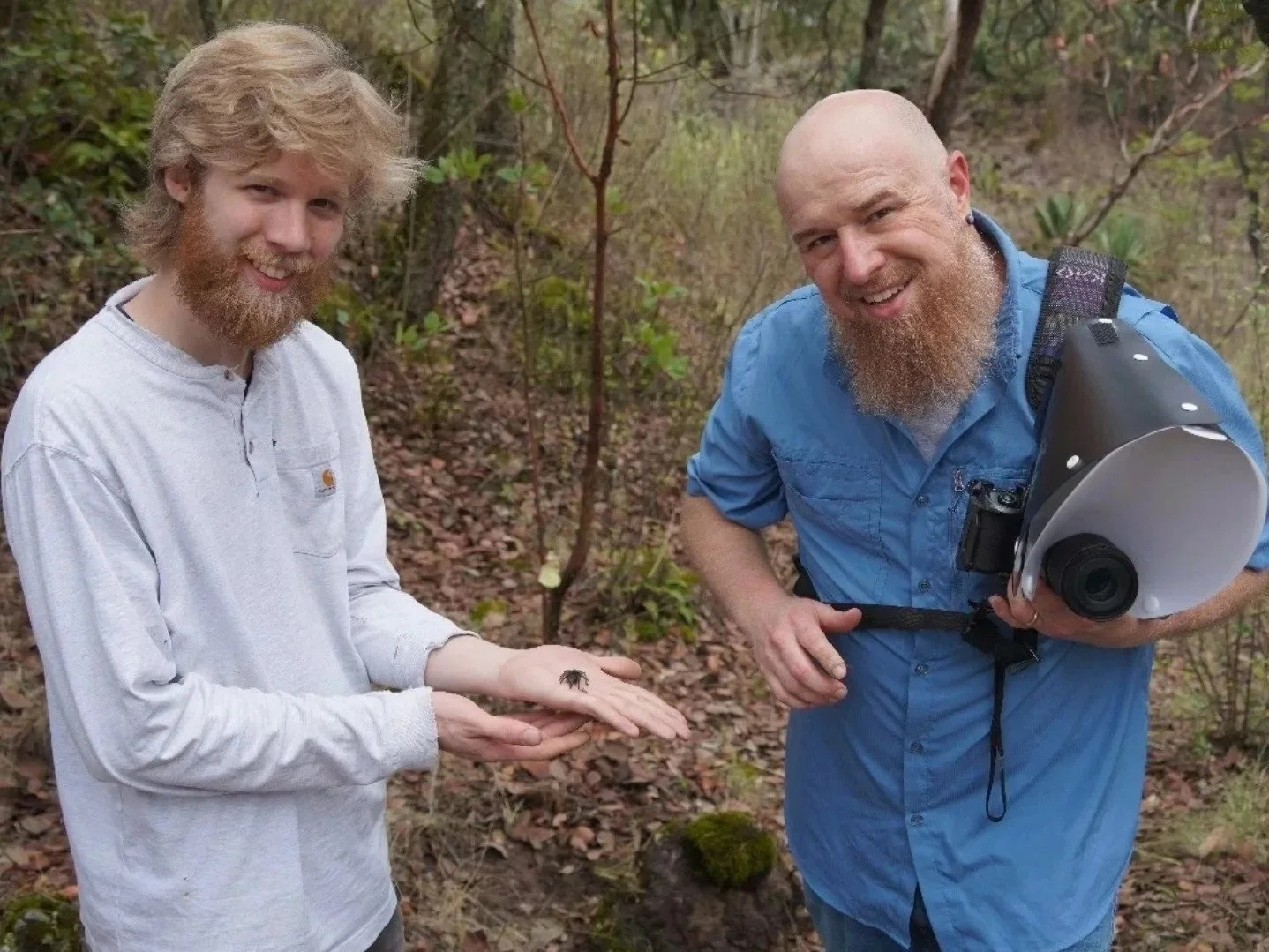
Sources and Further Reading
For anyone who wants to dig into the original research, these are the main papers and resources used for this article. Some are open access, while others may require journal access.
Beratz, M., Ferretti, N. E., Chaparro, J. C., Ochoa, J. A., Allen, J. P., & West, R. C. (2026). A new endemic genus of tarantula (Theraphosidae, Ischnocolinae) from southern Peru. Zoosystema, 48(9), 273–286. https://doi.org/10.5252/zoosystema2026v48a9
Lin, Y.-J., Wang, X.-H., & Li, S.-Q. (2026). A remarkable new species of the genus Chilobrachys Karsch, 1892 (Araneae: Theraphosidae) from Yunnan, China. Acta Arachnologica Sinica, 35(1), 26–36. https://doi.org/10.3969/j.issn.1005-9628.2026.01.004
Galleti-Lima, A., Yamamoto, F. U., Lucas, S. M., Guadanucci, J. P. L., & Brescovit, A. D. (2026). Morphological revision of the species of Homoeomma Ausserer, 1871 (Araneae: Theraphosidae) from Brazil, Argentina and Uruguay. Zootaxa, 5752(2), 211–237. https://doi.org/10.11646/zootaxa.5752.2.3
Gallon, R. C., & Sherwood, D. (2026). Taxonomic notes on the tarantula genus Heterothele Karsch, 1879 (Araneae: Theraphosidae) with a new synonymy, resurrection of H. longipalpis Karsch, 1879, two nomina dubia, and description of a new species from Tanzania. Arachnology, 20(4), 623–639. https://doi.org/10.13156/arac.2026.20.4.19
Razak, I., Shukor, M., Muhammad Nasir, D., Wahab, A. Z., Chai, M. H., & Ahmad, A. (2026). Microhabitat preference of Coremiocnemis cunicularia and Chilobrachys andersoni in Pulau Pinang, Malaysia. Sains Malaysiana, 55(3), 363–374. http://doi.org/10.17576/jsm-2026-5503-01
Razak, I., Shukor, M., Muhammad Nasir, D., Wahab, A. Z., Chai, M. H., & Ahmad, A. (2026). Soil preference and burrow characteristics of two Theraphosidae species in Penang Island, Malaysia. Malaysian Journal of Science, 45(1), 1–8. https://doi.org/10.22452/mjs.vol45no1.1
Mason, L. D., Bateman, P. W., & Wardell-Johnson, G. W. (2018). The pitfalls of short-range endemism: high vulnerability to ecological and landscape traps. PeerJ, 6, e4715. https://doi.org/10.7717/peerj.4715
World Spider Catalog. (2026). World Spider Catalog. Natural History Museum Bern. Accessed June 2026. https://wsc.nmbe.ch/
