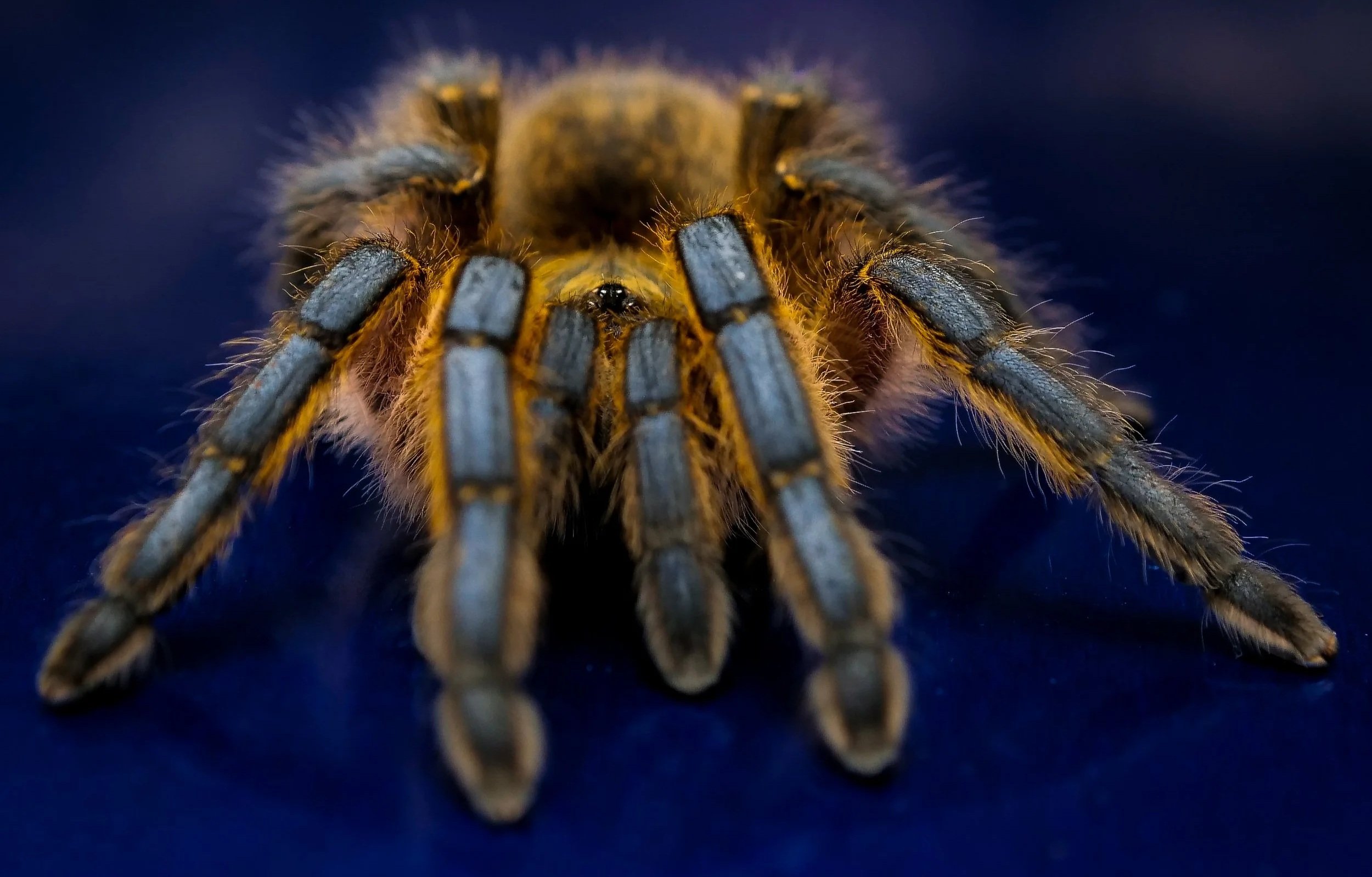
Why Are Some Tarantulas Blue?
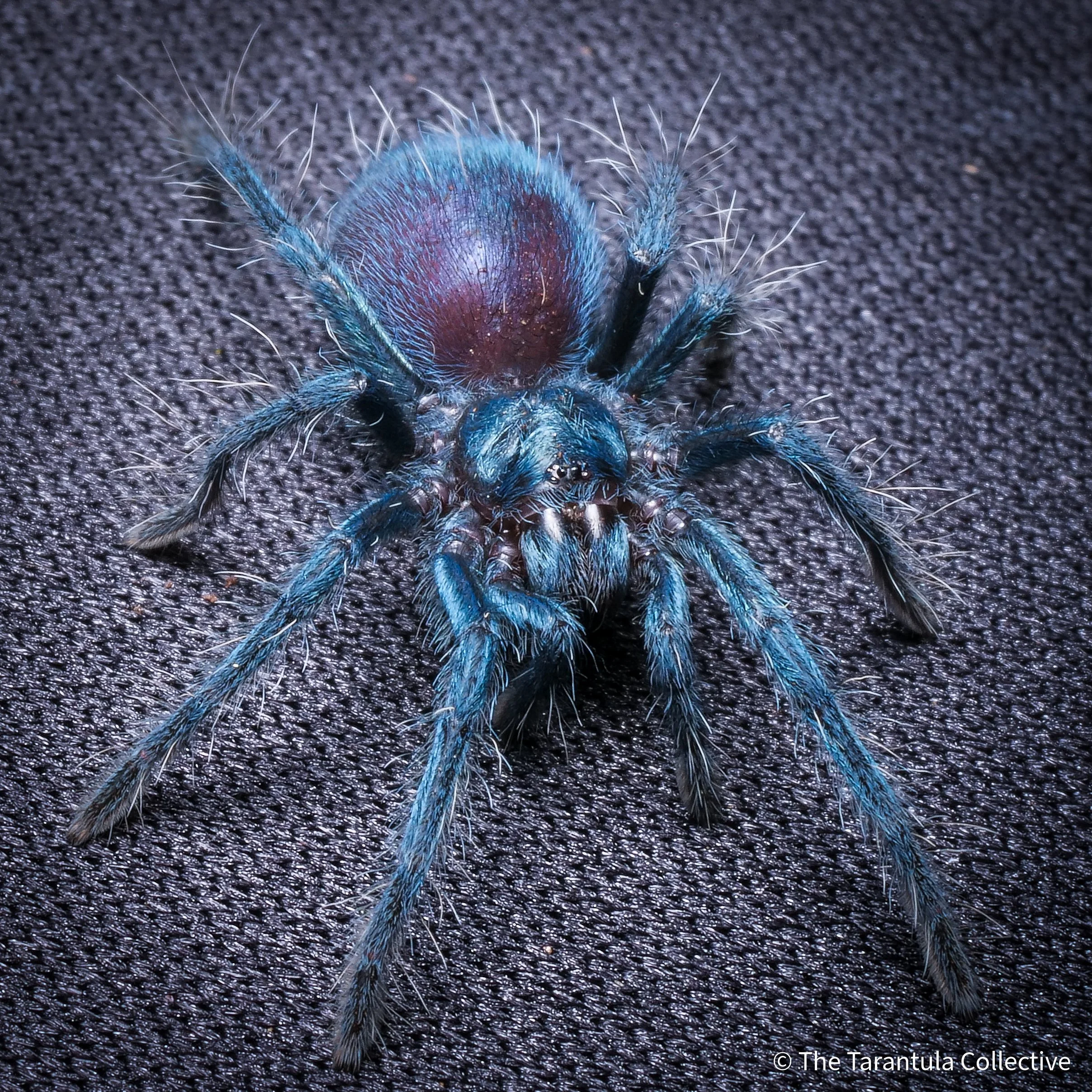
Phormictopus sp Rose Blue spiderling
Blue is a strange color in nature. There are very few truly blue mammals, blue reptiles are uncommon, and even a lot of birds that look bright blue aren’t producing blue pigment in the way most people imagine. In many animals, blue is created by microscopic structures that interact with light instead of a simple chemical pigment sitting in the skin, feathers, scales, or hair. That alone makes blue animals interesting, but then you look at tarantulas.
Tarantulas are ancient ambush predators. A lot of them spend their lives hidden underground, tucked into tree hollows, sitting in webbed retreats, or waiting motionless in the dark until prey wanders too close. They don’t seem like the kind of animals that should be glowing metallic blue, and yet some of the most unreal-looking blue animals on Earth are tarantulas.
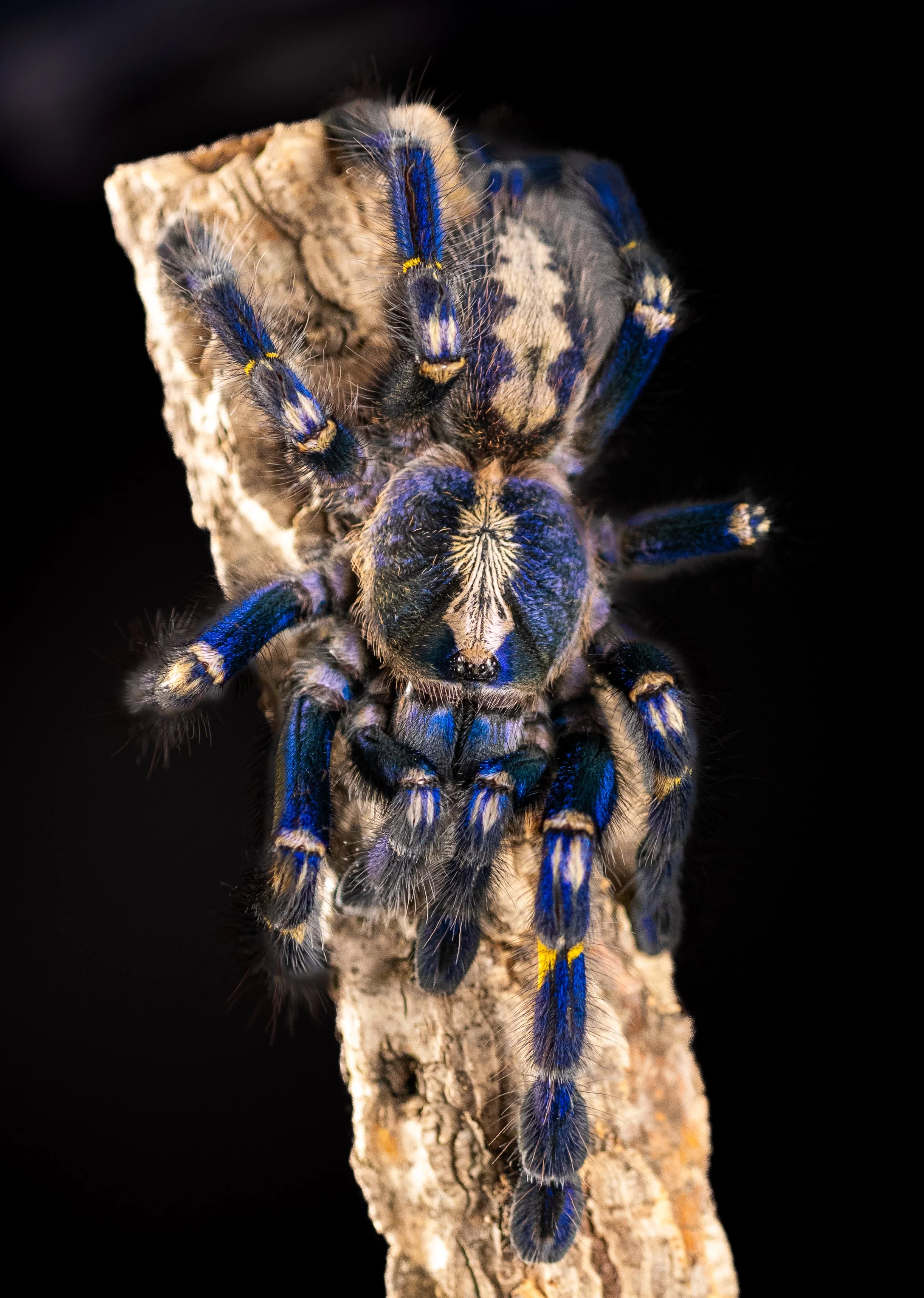
Poecilotheria metallica, the Gooty Sapphire Ornamental, almost looks fake the first time you see one. The blue legs against the black, white, and yellow patterning look more like art than a real animal. The Cobalt Blue Tarantula, now listed in the World Spider Catalog as Melopoeus lividus, is famous for the deep violet-blue coloration though many keepers still call them by their older names Haplopelma lividum and Cyriopagopus lividum. Then there’s Chromatopelma cyaneopubescens, the Green Bottle Blue Tarantula, which combines blue legs, a greenish carapace, and orange abdominal setae into one of the most colorful spiders in the hobby. Monocentropus balfouri brings blue and cream tones from Socotra, while Harpactira pulchripes from South Africa looks like somebody put metallic blue legs on a golden baboon spider and somehow made it work. Don’t ask me, my taste in style is atrocious.
These tarantulas are not especially close relatives. They come from different parts of the tarantula family tree, different habitats, and different continents. Some are arboreal and live in trees, while others are fossorial and spend most of their life deep underground while others can be found mostly living at ground level. That matters because blue coloration in tarantulas is not just one weird feature that showed up in a single species and stayed there. Researchers have been trying to figure out why blue appears across so many tarantula lineages, and the answer is still not clean or simple.
2015 paper published in Science Advances examined blue reflectance in tarantulas using microscopy, spectrophotometry, optical modeling, and phylogenetic reconstruction. The authors found that blue coloration appeared to have evolved independently at least eight times in tarantulas, but evn more interesting is that different tarantulas were producing similar shades of blue using different microscopic structures in their setae, which are the hair-like structures covering their bodies. In other words, evolution didn’t find one single way to make a blue tarantula. She found several.
Most animal colors come from pigments. Pigments are chemical compounds that absorb some wavelengths of light and reflect others, which is how we get many browns, blacks, reds, oranges, and yellows in animals. Blue often works differently. In many animals, blue isn’t produced by a blue pigment at all. It’s structural coloration, meaning the color comes from microscopic physical structures that manipulate light rather than chemical pigments. The sky is a decent comparison. It isn’t blue because there’s blue pigment floating around up there. It looks blue because shorter blue wavelengths of light are scattered through the atmosphere more than longer wavelengths. Blue tarantulas obviously aren’t doing the exact same thing as the sky, but the broader idea is similar enough for a normal person, like me, to understand: the color comes from how light interacts with structure.
In tarantulas, those structures are found in the setae. The 2015 study found that some blue tarantulas use quasi-ordered structures while others use multilayer arrangements, which is the kind of sentence that makes me regret not paying more attention in science class. The basic idea, though, is pretty simple: tiny structures inside the hairs are arranged in ways that bounce certain wavelengths of light back to our eyes. It’s a little like the shifting color you see on a soap bubble, except tarantulas are doing their own version of that inside microscopic structures on their setae. The wild part is that the structures differed between species, yet the reflected color often landed in a narrow blue range around 450 nanometers. That suggests this probably isn’t random decoration. Evolution kept landing on a similar blue even when the microscopic architecture behind it was different. Mother Nature is so fascinating!
There is another weird piece to this: structural colors are often iridescent, meaning the color shifts depending on the viewing angle. Think of a peacock feather or a butterfly wing. Tarantula blue, however, is often more stable from different angles and that has attracted interest from material scientists. A later paper on tarantula-inspired photonics looked at how structures inspired by blue tarantula hairs could help create noniridescent structural color with a wide viewing angle. So this is not just “spider people think blue spiders are pretty.” The structures are interesting enough that researchers have looked at them as models for human technology.
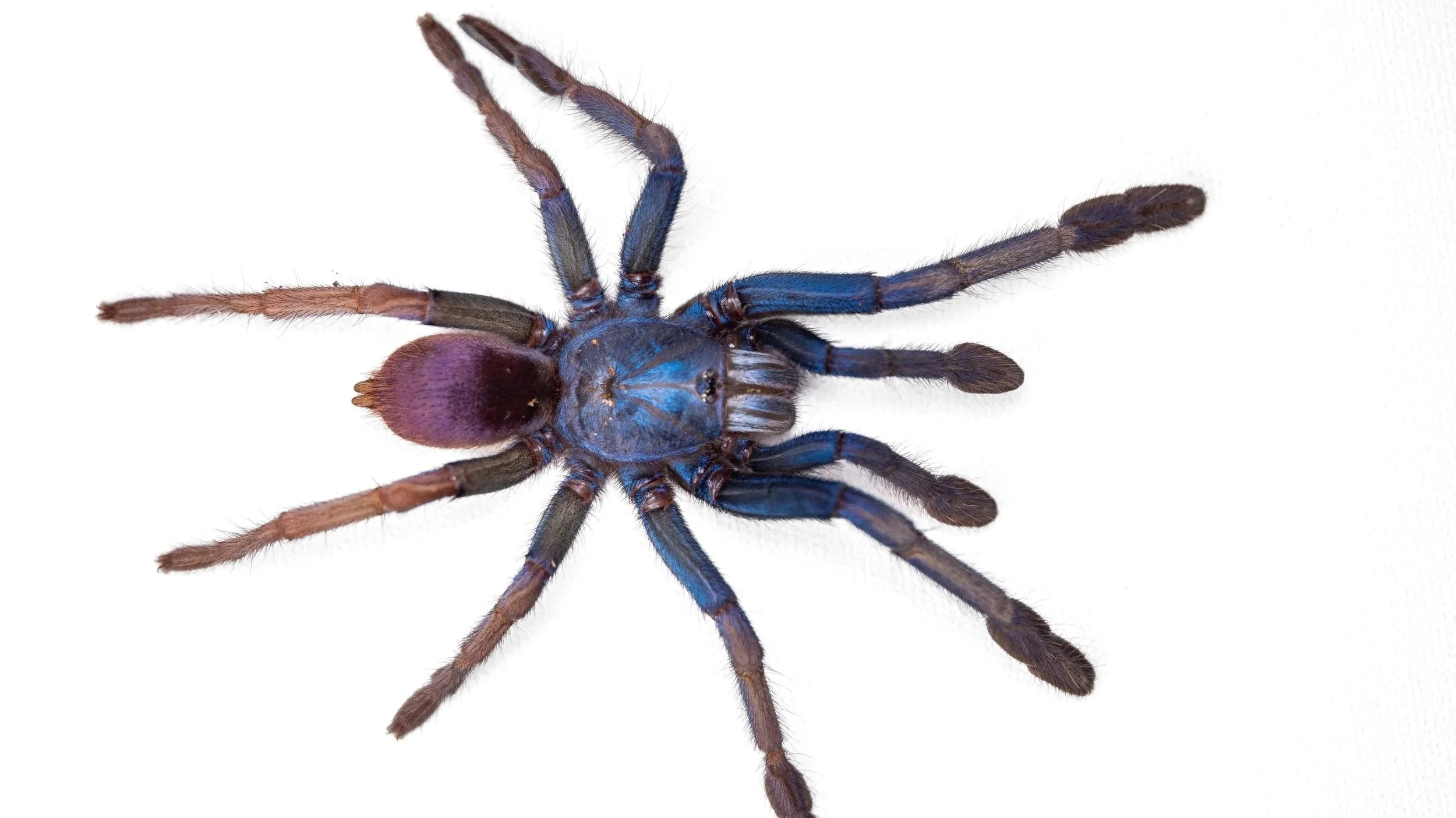
The big question is why any of this evolved in the first place. The older and easier answer was that blue could not matter much because tarantulas were assumed to have poor color vision. If they could not really see the blue, maybe the color was for predators like some king of camouflage. But a 2020 paper in Proceedings of the Royal Society B complicated that idea. Foley, Saranathan, and Piel studied coloration and opsins in tarantulas, and their results suggested tarantulas may not be as visually limited as people often assume. They found evidence of considerable opsin diversity, which raises the possibility that at least some tarantulas may be able to perceive colors, including the bright blue tones on their own bodies. Basically, they found that tarantula eyes may be working with more light-detecting tools than we initially thought. That doesn’t mean tarantulas see color like we do, but it does make the old idea that they’re practically blind to color a lot harder to defend.
The big question is why any of this evolved in the first place and for a long time the assumption was that blue could not matter much to the tarantulas themselves because tarantulas were thought to have poor color vision. If they could not really see the blue, then maybe the color was meant for predators. Maybe it worked as camouflage. Maybe it was just an accidental side effect of whatever was happening inside the setae.
But a 2020 paper in Proceedings of the Royal Society B made that explanation a lot less comfortable. Foley, Saranathan, and Piel studied coloration and opsins in tarantulas. Opsins are light-detecting proteins found in eyes, and different opsins can help animals detect different kinds of light. Basically, the researchers found that tarantula eyes may be working with more light-detecting tools than we expected. So if at least some tarantulas can detect these colors, then blue might not just be something predators see. It could be something other tarantulas see too.
The 2020 study also changed the evolutionary story. The 2015 paper suggested blue coloration had evolved independently multiple times in tarantulas. The later study proposed something slightly different: blue may actually be an ancestral trait in tarantulas that was later lost in many lineages and regained in others. Instead of blue being some weird feature that randomly popped up in a few unrelated species, it may have been present deeper in ancient tarantula history than researchers previously thought.
That does not mean ancient tarantulas were all walking around looking like Poecilotheria metallica. As much as I would love the idea of prehistoric forests full of Gooty Sapphire ancestors, that is not what the paper is saying. But it does suggest blue structural color may be more deeply tied to tarantula evolution than we used to think.
So now you have to ask: what is blue actually doing for them? One possibility is communication. If tarantulas can detect these colors better than we assumed, then blue could play some role in interactions between individuals, including courtship or choosing mates. That idea comes with a giant asterisk because tarantula courtship is heavily based on vibration, touch, chemical cues, and body contact. Anyone who has watched a mature male tapping at a female’s web knows there is a lot more going on than “look how sexy my legs are.”
Visual signals may still matter, but they are probably one part of a much bigger sensory system. Tarantulas experience the world through vibration, touch, air movement, chemical information, and probably more visual information than we used to give them credit for. So if blue is involved in communication, it is likely working alongside all of those other signals rather than replacing them.
Another possibility is camouflage, which sounds ridiculous at first because blue looks so obvious to us. But animals do not evolve to look good under our camera for our Instagram posts. What looks electric blue in a photograph may look very different in a shaded burrow entrance, under forest canopy light, at dusk, or against the strange mix of shadows, bark, moss, and filtered sunlight found in a real habitat.
A color that jumps out to us may not jump out the same way to a bird, reptile, mammal, or another spider. Different animals see different ranges of light, and the lighting environment matters. Blue might help break up the spider’s outline in certain conditions, or it might be less conspicuous in the specific environments where these species evolved. That does not prove camouflage is the answer, but it does keep the idea on the table.
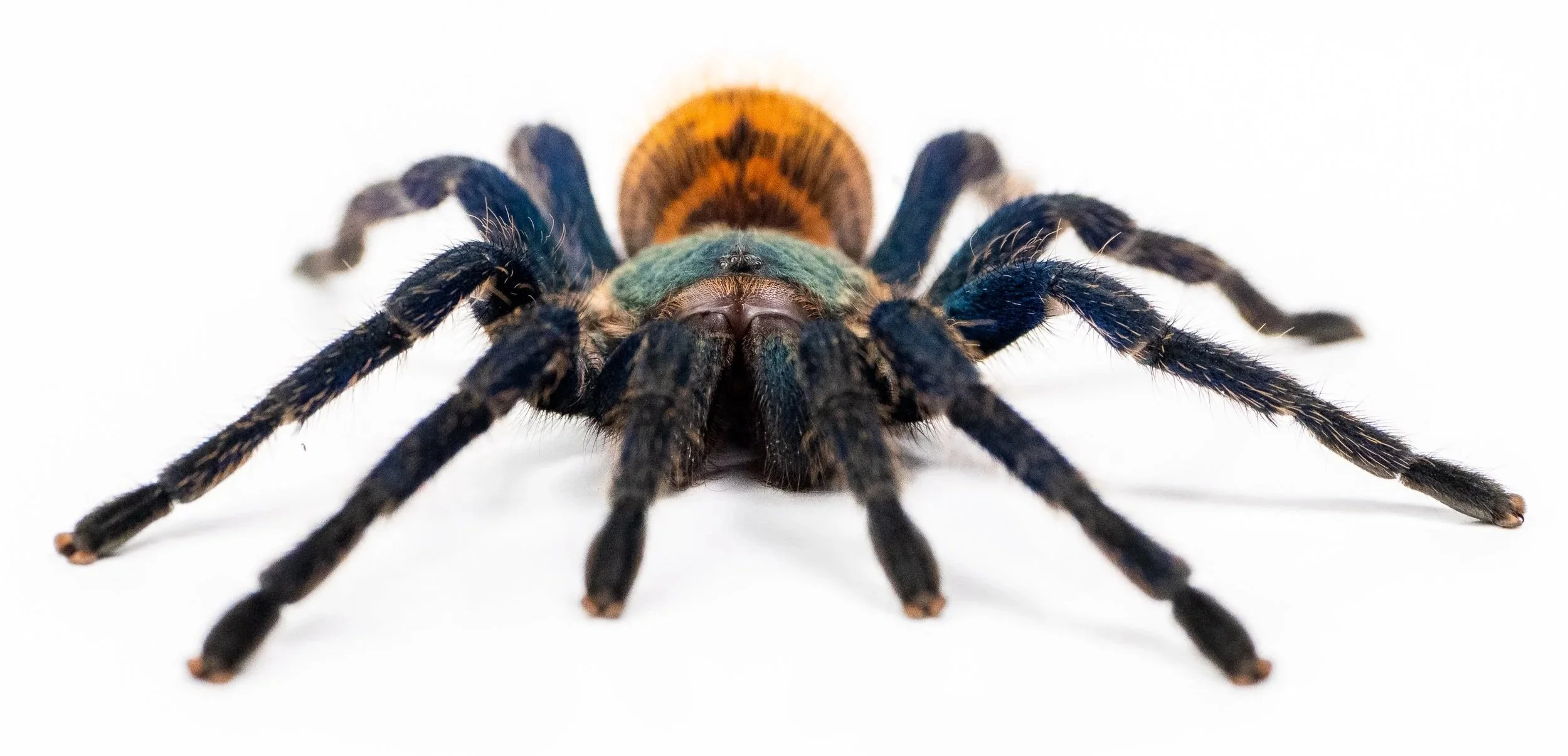
Green coloration may be a little easier to explain. The 2020 study found that green coloration in tarantulas appears to be associated with arboreal species, which makes sense if green helps them blend into leafy environments. That kind of camouflage is called crypsis, which basically means an animal is harder to detect because they blend into their surroundings. A green tarantula living among leaves is not exactly hard to understand, blue is trickier.
The same study found that blue coloration has been lost and gained across different tarantula lineages. Many of the losses were found in New World species from the Americas and in Oceanian lineages, which basically means tarantulas from the Australia, New Guinea, and nearby Pacific island side of the world. Many of the gains were found in Old World groups from Africa, Asia, and Europe. This hints at a much bigger evolutionary story. Blue did not just appear in one corner of the tarantula family tree and stay there. It seems to have shifted, disappeared, and reappeared across different branches as tarantulas spread, diversified, and adapted to very different environments.
In one lineage, blue might help with communication. In another, it might reduce visibility under certain lighting conditions. In another, it might be tied to the physical properties of the setae themselves, with the visible blue being part of a structure that evolved for some other reason. Evolution does not care whether the explanation is clean enough for my article. She only cares whether something works well enough to stick around.
That is what makes blue tarantulas so interesting to me. They do not fit neatly into the way most people think about spiders. A lot of people still imagine tarantulas as brown, black, hairy, ground-dwelling animals that live in holes and scare people in old horror movies. Then you see Poecilotheria metallica, Harpactira pulchripes, Monocentropus balfouri, or Chromatopelma cyaneopubescens, and that mental image falls apart pretty fast.
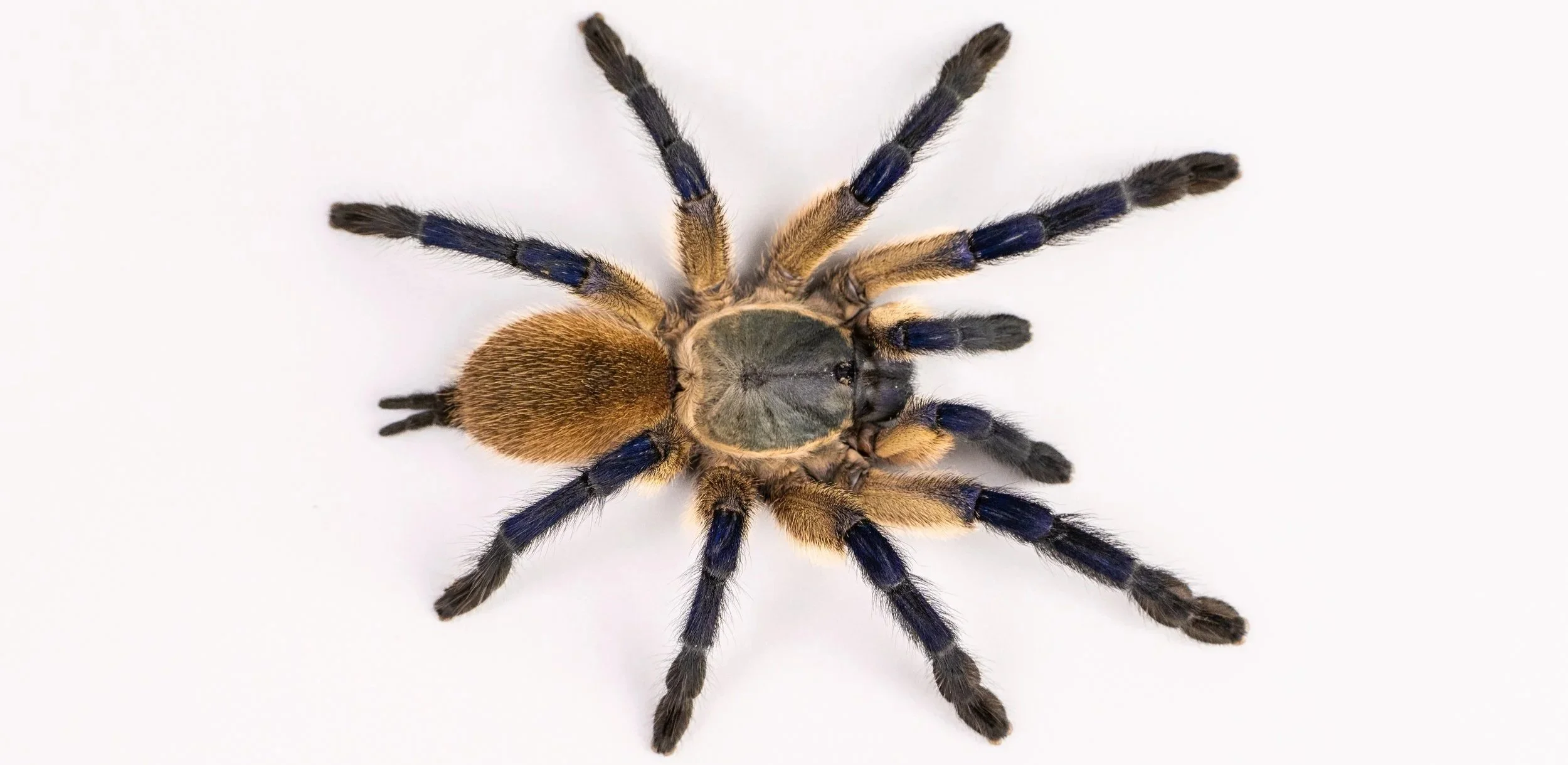
Blue tarantulas are not just pretty animals for the hobby. They are a biological puzzle sitting in plain sight. Their coloration has been studied by evolutionary biologists, optical physicists, and material scientists, and we still do not have one clean answer for why so many tarantulas ended up blue or why that blue can be so consistent across species with very different microscopic structures.
Somewhere in the evolutionary history of these spiders, natural selection started working with light itself. Maybe blue helped them hide. Maybe it helped them communicate. Maybe it does several things depending on the species. Maybe the answer is different across lineages, which would honestly be the most “biology” answer possible. For now, what we know is that some tarantulas evolved microscopic structures capable of bending light into shades of blue, and the more researchers study that color, the less it looks like a simple accident of nature.