
Are Tarantulas Actually Happy in Captivity?
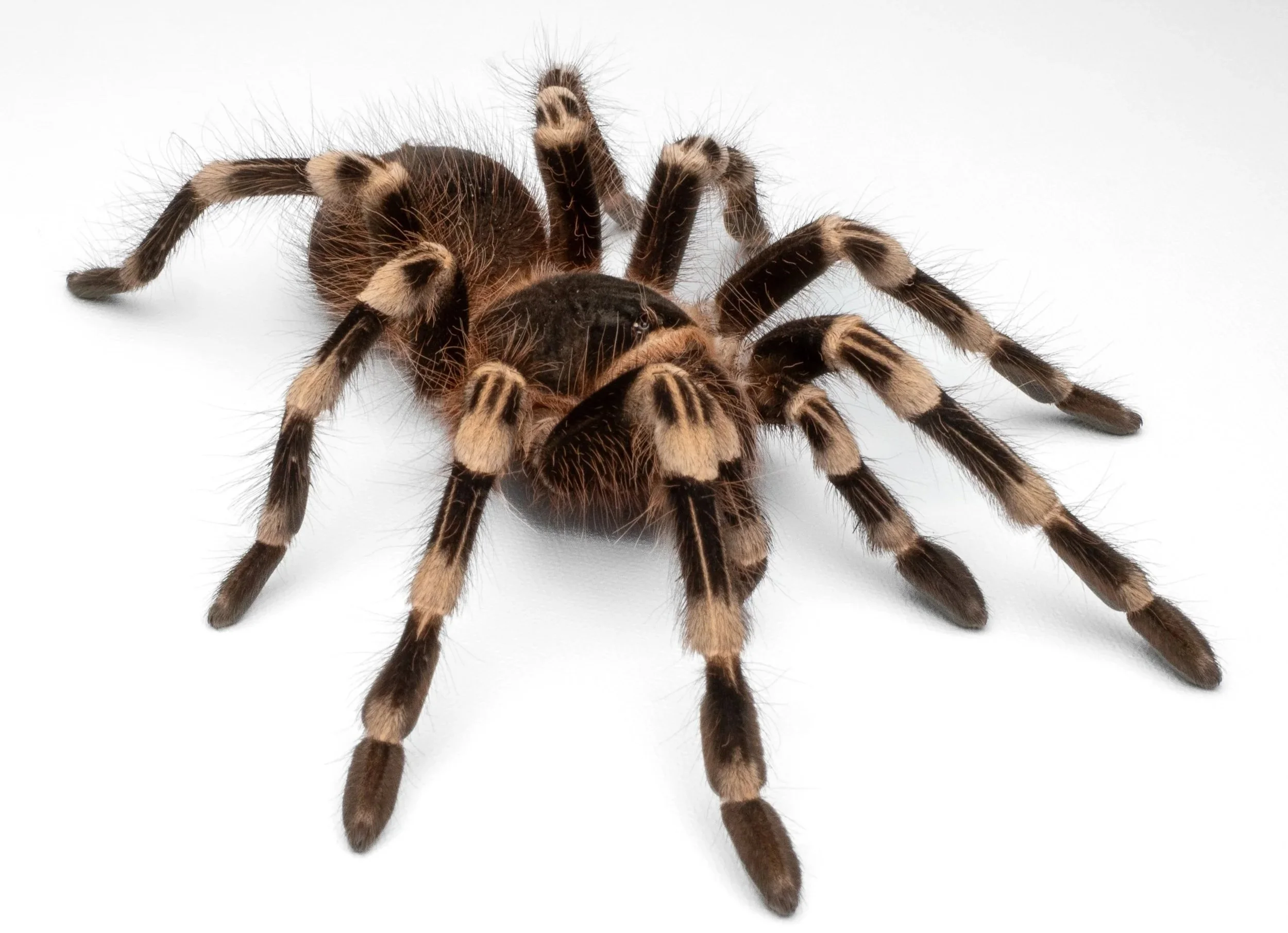
Acanthoscurria geniculata - Brazilian White Knee Tarantula
Are tarantulas happy in captivity?
That sounds like a simple question, but it is probably the wrong question.
The problem is that tarantulas do not experience the world the way we do. If we try to judge them by human emotions, or even by mammal standards, we are probably going to misunderstand what they actually are. Tarantulas are not social, expressive animals that wag their tails, seek affection, or wear their feelings on their sleeves. They are solitary predators with a very different biology and a very different relationship to their environment.
So the better question is not whether a tarantula is “happy” in the way we usually define happiness. The better question is whether they are experiencing good welfare: low chronic stress, stable health, and the ability to perform the kinds of behaviors their biology is built for. That is much closer to how animal welfare scientists approach these questions in the first place.
What Do We Mean by “Happy”?
When people say an animal looks happy, they are usually thinking of mammals. A dog sees you and gets excited. A parrot seeks attention. A rat plays, explores, and interacts socially.
That is not how tarantulas work.
Animal welfare science does not usually try to measure “happiness” directly. Instead, it looks at things like physical condition, stress, behavioral flexibility, and whether the animal can carry out species-typical behaviors in an appropriate environment. Wild Welfare’s guidance on managed invertebrates makes this point clearly: welfare is about whether the animal’s needs are being met, not whether it displays emotions in a way humans find familiar.
That distinction matters even more with invertebrates. Heather Browning’s work on animal sentience argues that welfare questions should be grounded in evidence of subjective experience, stress responses, and behavior, not whether an animal looks emotionally expressive to us. In other words, the fact that a tarantula does not smile, cuddle, or act excited does not tell us much about whether its life is going well or badly.
Can Tarantulas Feel Pain?
This is where things get more complicated.
We know arthropods have nociception. That means they can detect and respond to harmful stimuli. That part is well established. But nociception is not the same thing as pain. Nociception is the detection of damage or potential damage. Pain, at least in the scientific sense, usually refers to a subjective negative experience.
Jonathan Birch and colleagues’ 2021 review for the UK government found strong enough evidence of sentience in cephalopods and decapod crustaceans to justify precautionary protection in law. That report helped establish a widely used framework for evaluating sentience-related evidence in non-human animals.
When it comes to spiders and tarantulas specifically, the evidence is much thinner. A 2023 review of pain-related behavior in arthropods concluded that there is evidence consistent with pain in crustaceans, insects, and, to a lesser extent, spiders. That is about as far as the evidence goes right now. It does not justify confidently saying tarantulas feel pain the same way mammals do, but it also does not justify dismissing the possibility.
So the honest answer is this: we do not currently have strong direct evidence that tarantulas experience pain in the same way mammals do, but we also do not have enough evidence to say they definitely do not. Because of that uncertainty, the most ethical approach is a precautionary one. If an animal may be capable of negative experiences, we should avoid causing unnecessary stress and harm.
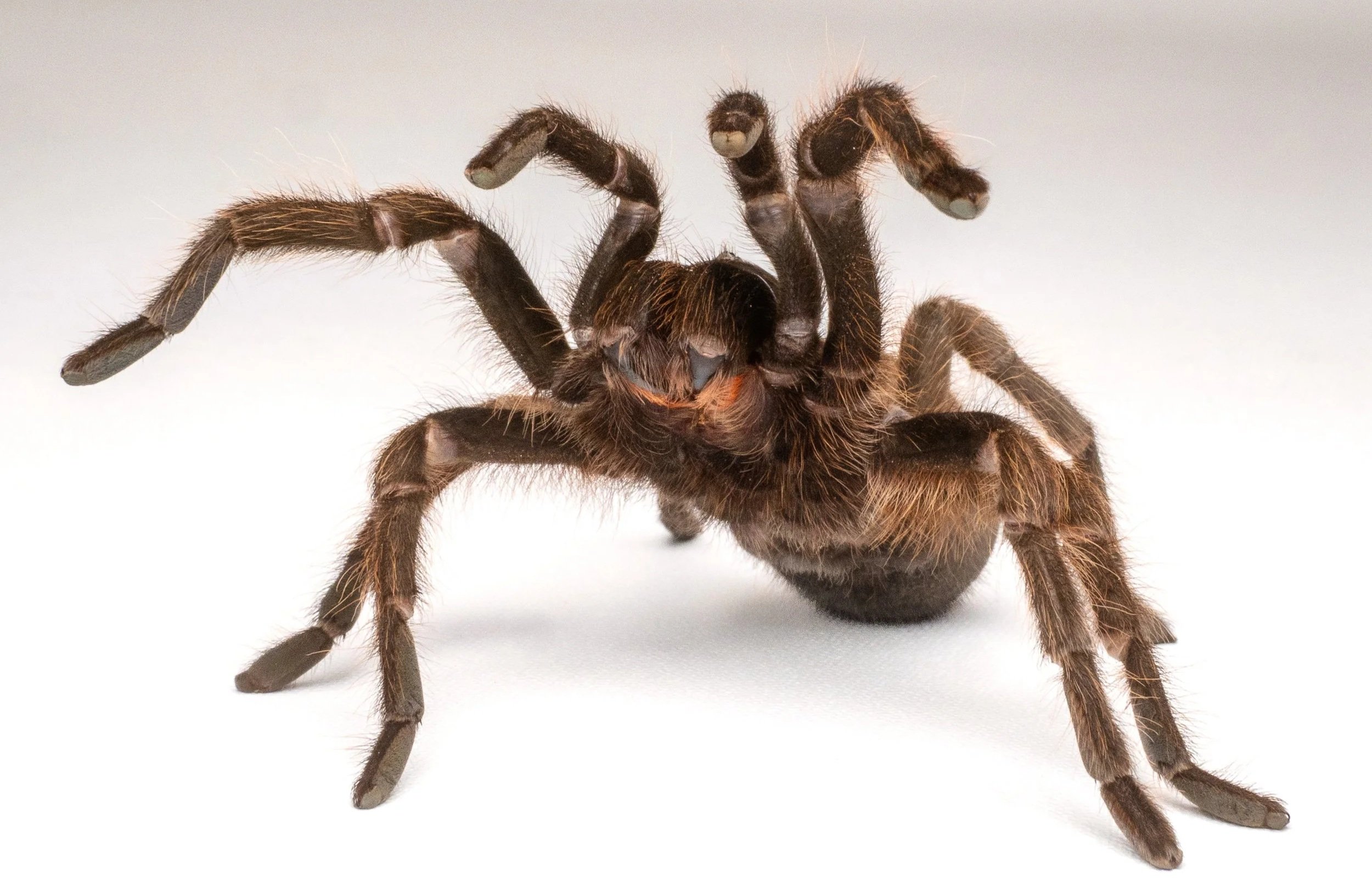
Aphonopelma hentzi - Texas Brown Tarantula
What Does Life Look Like in the Wild?
We tend to imagine wild animals as living richer, fuller, more exciting lives simply because they are free. But for many tarantulas, especially terrestrial and fossorial species, life in the wild is not exactly a constant adventure.
Female mygalomorph spiders are often highly sedentary and may spend most, if not all, of their lives in or around a single burrow. Research on mygalomorph burrows describes females as sedentary, long-lived animals that spend most of their lives inside those retreats, with wandering adult males being the obvious exception.
That matters when we evaluate captivity. If an animal’s natural life already revolves around one secure location with a stable microclimate, limited movement, and an ambush-based hunting strategy, then a well-designed enclosure may match those ecological conditions more closely than people assume.
That does not mean captivity is automatically perfect. It means the idea that a tarantula must be miserable simply because it is not roaming across a vast landscape does not fit the biology of many species.
Captivity vs. the Wild
In the wild, tarantulas deal with predation, parasites, prey shortages, seasonal instability, drought, flooding, and habitat disturbance. In captivity, when they are kept properly, many of those pressures are reduced dramatically.
A well-kept tarantula has reliable access to water, appropriate environmental conditions for the species, a hide or retreat, and freedom from predators. From a welfare standpoint, that can matter more than whether the enclosure looks “boring” to a human observer. Wild Welfare’s invertebrate welfare guidance emphasizes that managed care should focus on meeting biological needs and minimizing chronic stressors.
If the enclosure provides appropriate substrate depth, ventilation, hydration, retreat space, and the right general environmental conditions for the species, then from a welfare standpoint that tarantula is likely living a biologically stable life.
On the other hand, bad husbandry absolutely can undermine welfare. Chronic dehydration, overheating, repeated unnecessary disturbance, inappropriate humidity, lack of shelter, or an enclosure that prevents normal posture or natural behavior can all create stress. The fact that a tarantula is quiet does not mean they are fine. Stillness is what tarantulas do, so welfare has to be judged by biology and setup, not by whether the animal looks expressive.
The Human Projection Problem
We tend to undervalue animals that do not look like us, and spiders are a perfect example of that. Research in psychology has shown that people often give stronger moral consideration to animals they see as more relatable, more intelligent, or more human-like, while strange-looking animals tend to get less sympathy.
Spiders also trigger a very specific kind of human bias. Research on attentional bias has shown that humans, including young children, detect spiders unusually quickly compared with many other visual stimuli, which helps explain why they so often trigger fear or disgust.
At the same time, people also project mammal emotions onto tarantulas when it suits them. They assume boredom, loneliness, sadness, or a desire for companionship. But there is no strong evidence that tarantulas experience complex social-emotional states the way many mammals do. They are solitary predators adapted for survival, not social bonding.
So we make both mistakes at once: we undervalue them because they look alien, and we misunderstand them because we try to turn them into tiny furry people with eight legs.
So, Are Tarantulas Happy?
Here is the honest answer.
We do not have evidence that tarantulas experience happiness in the mammalian sense.
We also do not have strong evidence that a properly kept tarantula in a stable, appropriate enclosure is experiencing chronic suffering.
What we do know is that they detect harmful stimuli, respond to stressors, require specific environmental conditions, and generally do best when those conditions are met. That is why the ethical goal of tarantula keeping is not to make them “happy” in the human sense. The ethical goal is to provide stability, minimize chronic stress, and respect their biology.
If you are keeping a tarantula in a way that replicates the basic features of its natural microhabitat, avoids chronic disturbance, and meets its environmental needs, then from a scientific welfare perspective you are probably doing what matters most.
Not emotionally enriching them in the way you would a dog.
Not socially fulfilling them in the way you would a parrot.
But giving them a biologically appropriate, safe, and stable life.
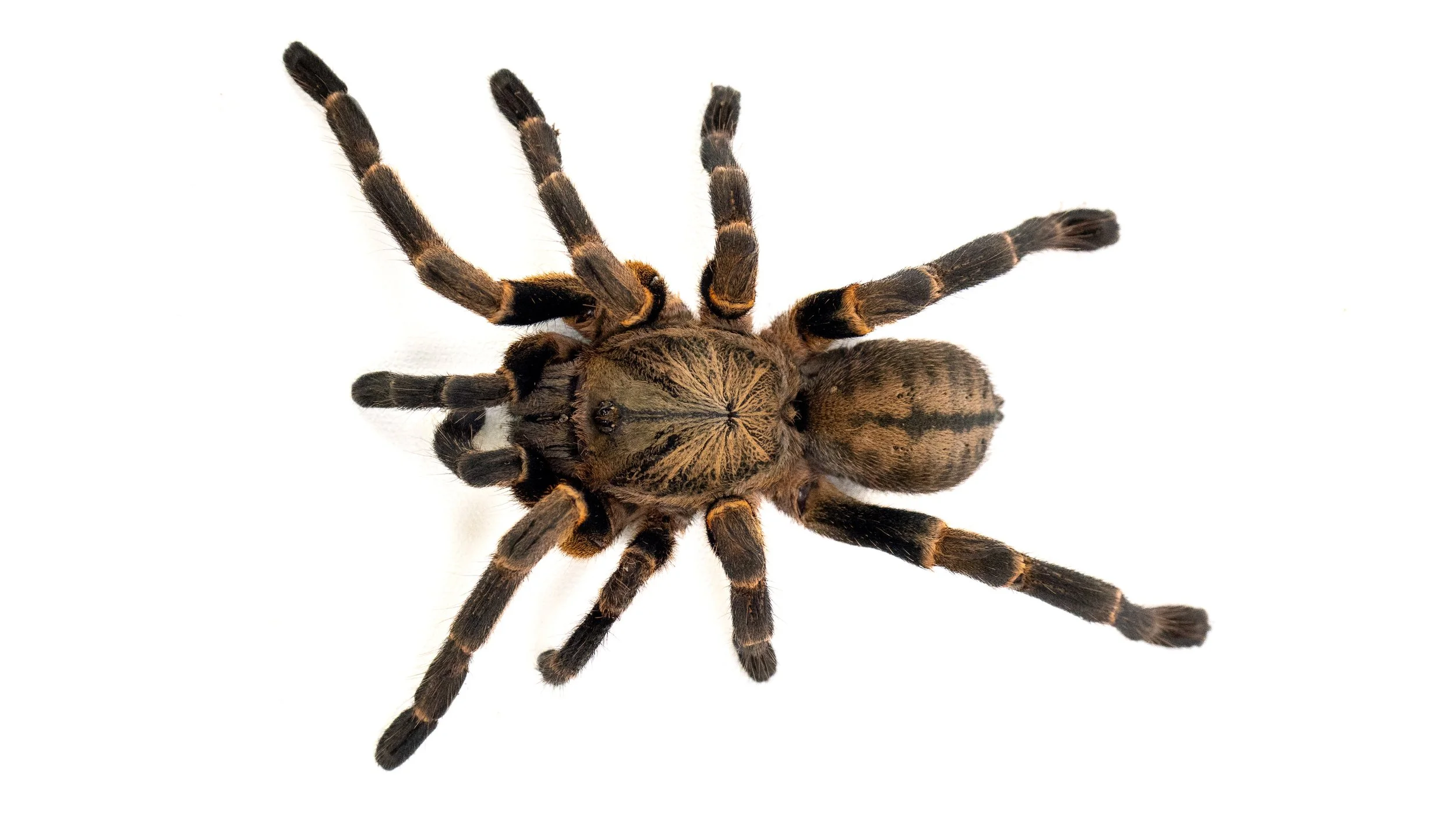
Ornithoctoninae sp. Veronica Dwarf – Veronica Dwarf Earth Tiger Tarantula
The Better Question
Are we providing a life that minimizes stress and respects their biology?
Because ethical keeping is not about projecting human emotion onto a spider. It is about understanding what the spider actually is and what the spider actually needs.
That answer may be less sentimental. But it is also a lot more honest.
Enjoying the free stuff?
If this article taught you something, answered a question, or stopped you from making a terrible enclosure decision, you can support Tarantula Collective here. Donations help fund videos, fieldwork, care guides, photography, and all the work that goes into keeping this site useful and ad-free.
Sources
Browning, H. (2022). Animal sentience. Philosophy Compass.
Birch, J., Burn, C., Schnell, A., Browning, H., & Crump, A. (2021). Review of the Evidence of Sentience in Cephalopod Molluscs and Decapod Crustaceans. London School of Economics.
Brereton, J., & Smith, R. (2025). Welfare Considerations for Invertebrates in Captivity. Wild Welfare.
Elwood, R. W. (2023). Behavioural Indicators of Pain and Suffering in Arthropods.
Walters, E. T. (2018). Nociceptive Biology of Molluscs and Arthropods. Frontiers in Physiology.
LoBue, V. (2010). And Along Came a Spider: An Attentional Bias for the Detection of Spiders in Young Children and Adults. Journal of Experimental Child Psychology.
Nascimento, D. L. et al. (2021). Research describing female mygalomorph spiders as sedentary and long-lived, spending most of their lives inside burrows.
Mason, L. D. et al. (2018). Research on long-lived mygalomorph spiders and burrow-based sedentary lifestyles.
