
Do Tarantulas Know Where They’re Going?
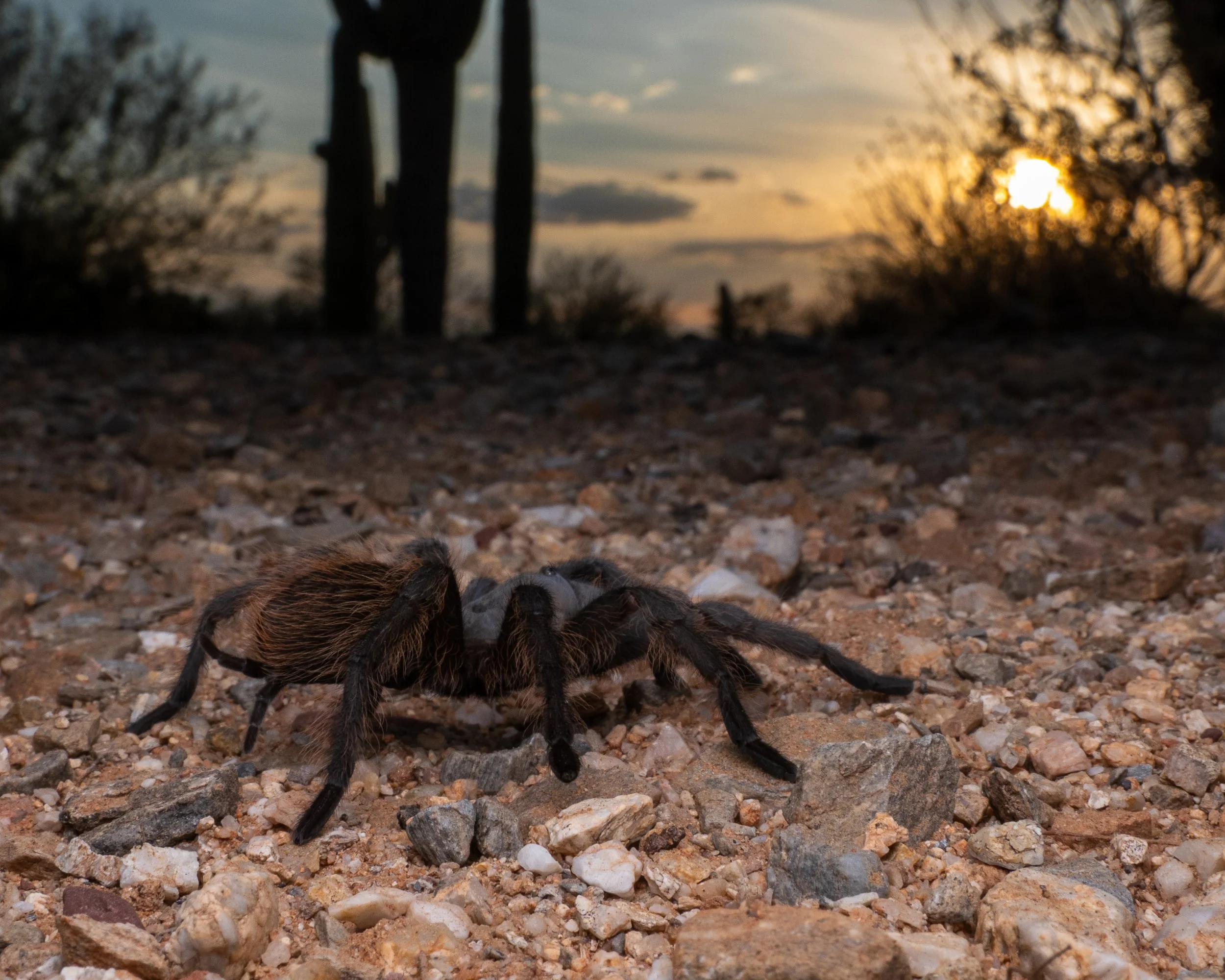
Aphonopelma vorhiesi - Tucson Bronze Tarantula or Madrean Red Rump Tarantula in situ
Most people think of tarantulas as pretty simple when it comes to movement.
They make a burrow, sit tight, and wait for prey to get stupid. And when something startles them, they are back in that hole so fast it makes your reaction time look embarrassing.
But a new paper co-authored by Rick C. West suggests there may be more going on than simple instinct alone. Based on nine field observations of tarantulas in the wild, the authors argue that tarantulas may be capable of more flexible, experience-based navigation than we usually give them credit for. Not proven in the strict experimental sense, but enough to make the question worth taking seriously.
That matters, because tarantulas have mostly been left out of these kinds of discussions. Research on spider cognition and navigation has focused much more on other spider groups, especially spiders studied in labs under controlled conditions. Tarantulas, and other mygalomorphs, have largely been ignored in that conversation. This paper is trying to push that door open a little.
What the Paper Actually Looked At
This paper is built around nine field observations of arboreal and fossorial New World tarantulas, including a blind cave-dwelling species. They use those observations to ask whether some of the behavior they saw might reflect spatial learning or other forms of flexible navigation rather than just blind instinct.
The paper is not arguing that tarantulas are little masterminds plotting routes like they have some miniature built-in GPS system running in the background. It is saying that some of their behavior in the wild is consistent with them learning useful routes, remembering prey-rich locations, and returning to safety in ways that are more sophisticated than we tend to assume.
The Simplest Way to Understand the Big Idea
A good way to think about it is this:
Imagine you leave your house, walk down the block, take a right, and head toward the pizza place because you already know that is where the good food is. Then something spooks you and you run straight back home without getting lost.
You could do that using a few different kinds of information. You might use landmarks, like a stop sign or a weird looking house. You might use your own internal sense of movement, like knowing how many blocks you walked and how many turns you made. Or you might use both.
That is basically what this paper is talking about in spider terms. The authors discuss allothetic cues, which are outside cues like visual, chemical, or vibrational information, and idiothetic cues, which are internal cues based on the animal’s own movements and body position. In plain English, one is more like using landmarks and road signs, and the other is more like using an internal step counter and turn-by-turn memory.
Arachnid navigation research more broadly has already shown that many arachnids are “central-place foragers,” meaning they leave a retreat or burrow and then return to that specific home base. Review work on arachnid navigation suggests path integration, basically keeping track of distance and direction during travel, is a major part of how many arachnids manage this.
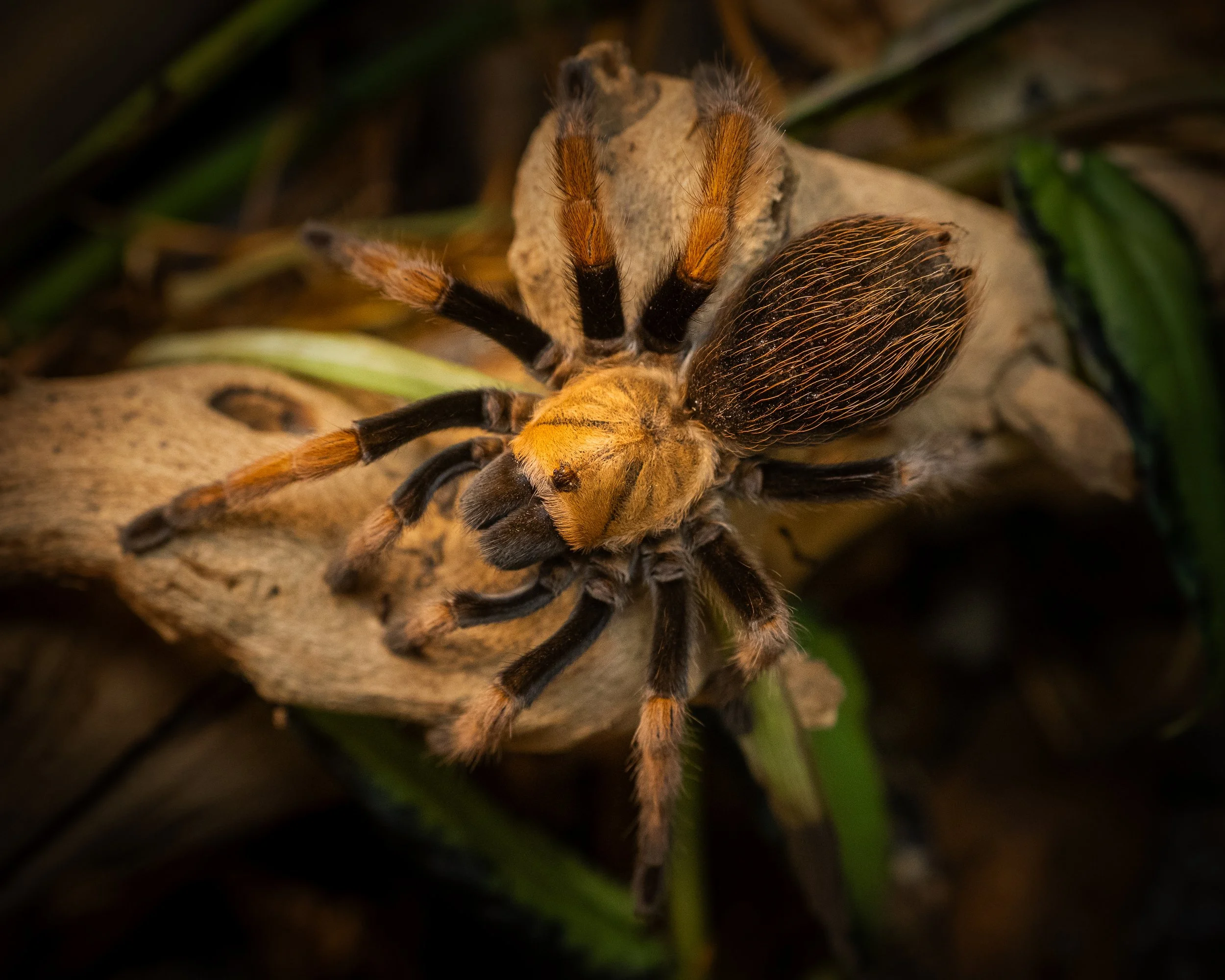
Aphonopelma bicoloratum - Mexican Blood Leg Tarantula
The Three Observations That Jump Out the Most
There are a lot of interesting details in the paper, but a few examples really stand out.
One of the clearest is an Avicularia avicularia in French Guiana that, for two straight weeks, left its retreat every night, traveled about two meters along a beam, made a right-angle turn, then traveled another two meters to a spot near a light where moths were gathering. That is not random wandering. That looks a lot like repeatedly heading to a spot where dinner is more likely to show up.

Avicularia avicularia - Guyana Pinktoe Tarantula
Another set of observations involved fossorial species like Aphonopelma iodius, Aphonopelma chalcodes, and Brachypelma klaasi. These tarantulas were found away from their burrows, apparently out hunting, and when disturbed they ran quickly and directly back home without hesitation or obvious disorientation. This is something I have observed myself many times trying to film Aphonopelma chalcodes in the deserts outside Tuscon, AZ. That by itself does not prove learning, but it does suggest they were not just stumbling around hoping to get lucky.
Then there is the cave species, Hemirrhagus sprousei. This one is especially cool because it is a blind troglobitic tarantula, meaning it lives in caves and has highly reduced eyes. Juveniles were found away from their retreats deep in the cave, well beyond the light-transition zone, and when disturbed they returned directly to their burrows without hesitation. That is hard to explain with vision, because vision is basically off the table.
That does not automatically mean they are “thinking” in a human way. But it does strongly suggest they are using some reliable system to know where they are and how to get back.
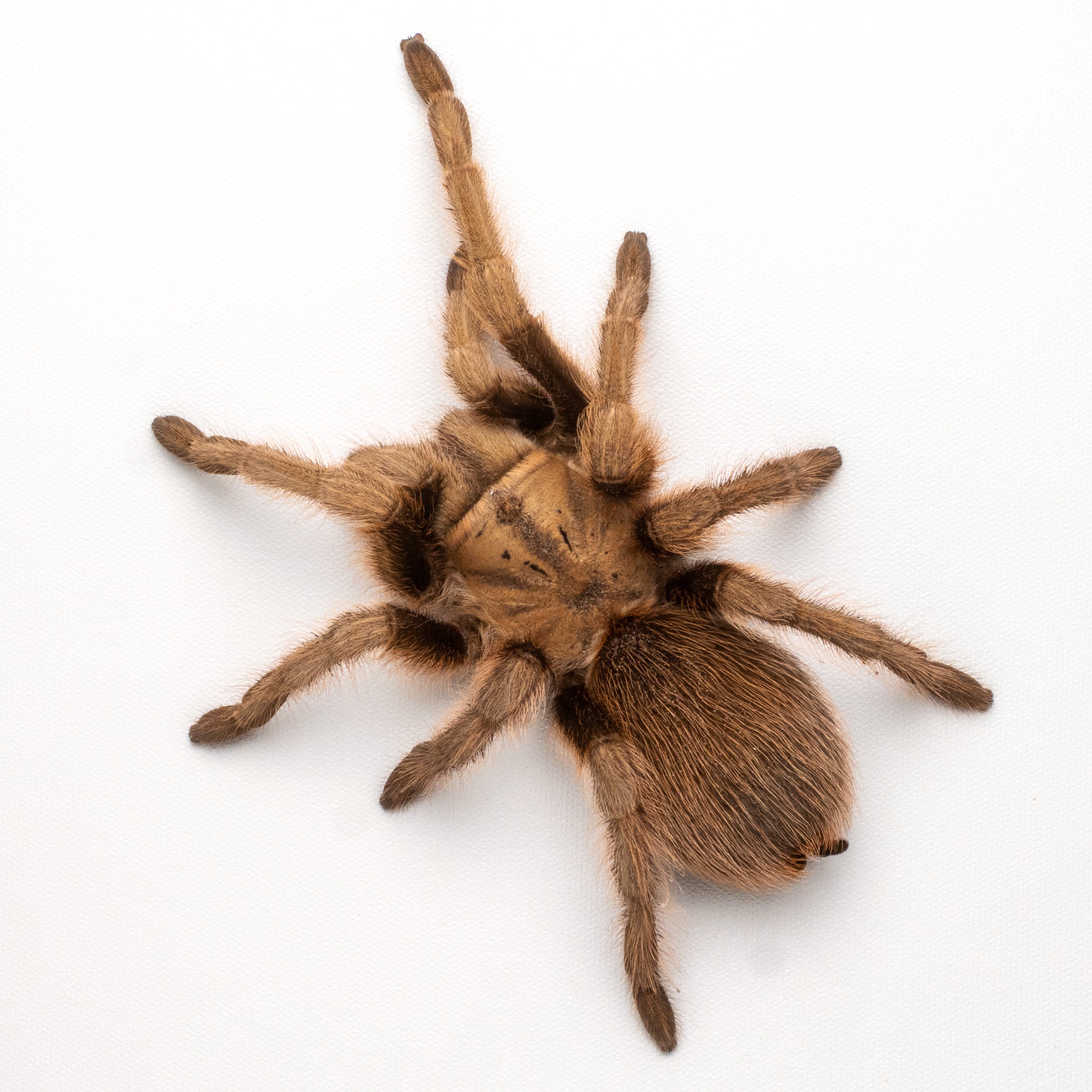
Aphonopelma chalcodes - Arizona Blonde Tarantula - Desert Blonde Tarantula
Why the Cave Tarantula Part Matters So Much
The blind cave tarantula is probably the most important example in the whole paper.
If you find a tree-dwelling tarantula going to the same place every night, it is fair to ask whether it is using vision, light, shape, or some obvious environmental cue. But when a blind cave tarantula does something similar in darkness, you are forced to consider other explanations.
The paper points to the possibility that these tarantulas may be relying heavily on idiothetic cues, basically internal information about movement, body position, and direction, along with mechanosensory input. In other spiders, including Cupiennius salei, experiments have shown that proprioceptive and mechanosensory structures can be crucial for navigation, even when vision is removed. In other words, they are not just using sight. They can also keep track of where they are by reading the feedback coming from their own body and legs as they move.
That is one of the reasons this paper is so interesting. It shows a case where one of the obvious explanations, vision, is much less likely to be doing the heavy lifting.
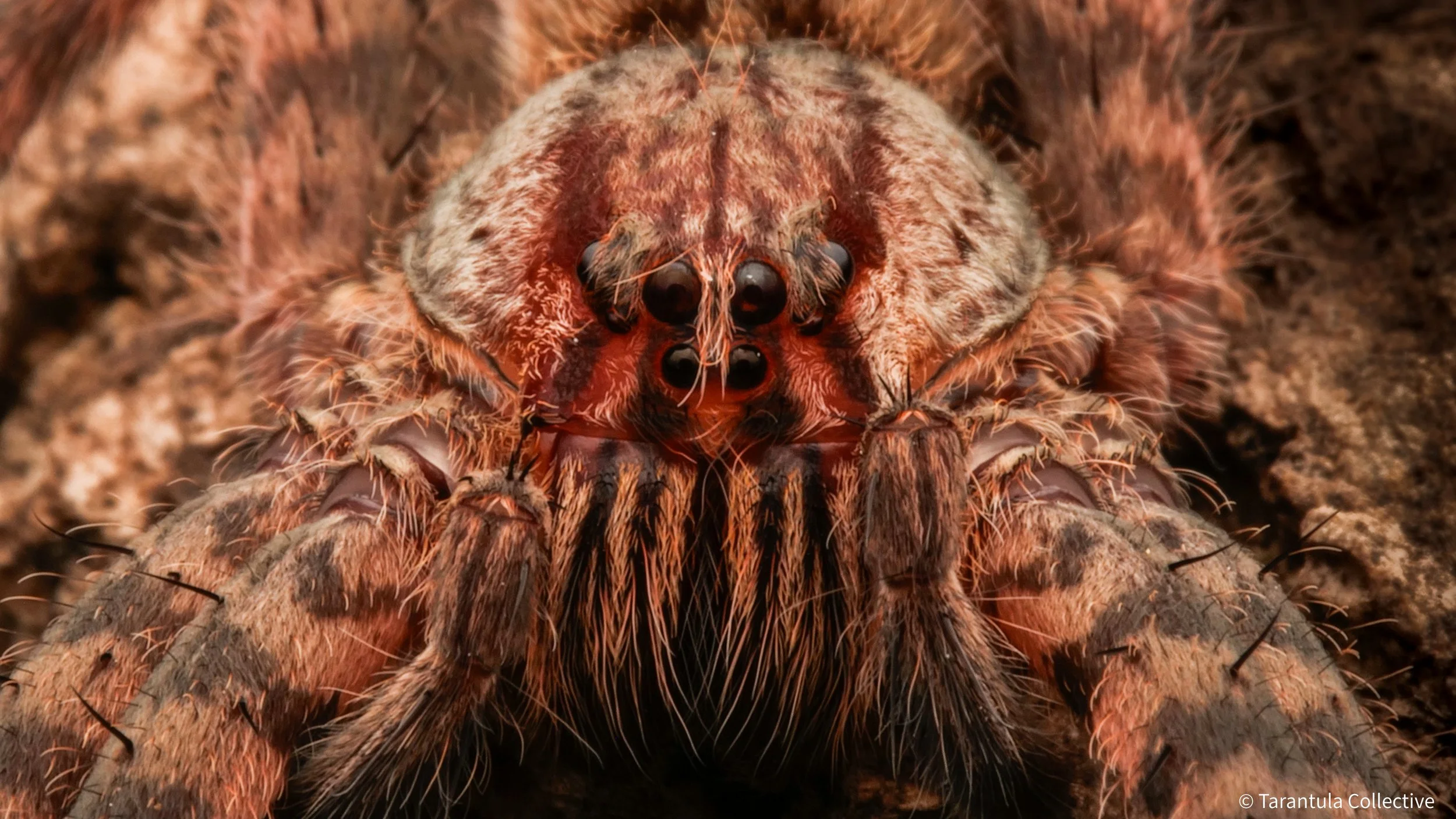
Cupiennius salei - Tiger Bromeliad Spider - Wandering Spider
This Does Not Mean Tarantulas Have Tiny Human Brains
The paper does not prove that tarantulas have human-like planning, abstract thought, or some rich internal map of the world the way people sometimes imagine when they hear words like cognition or learning. In fact, the authors are careful not to overstate things. They explicitly say the cognitive interpretation is preliminary and that these behaviors could also be explained, at least partly, by well-documented sensory mechanisms like chemical and chemo-tactile cues.
That means the paper is not making some wild clickbait claim. It is saying, very reasonably, that the behavior looks compatible with experience-based navigation, but we still need controlled experiments to sort out how much of that is learning and how much is cue-following.
In other words, this is not “tarantulas are secretly little geniuses.” It is more like, “we may have been underestimating how flexible their behavior can be.”
Why Chemical Cues Still Matter
Mygalomorphs are already known to use chemical and chemo-tactile cues, especially cues associated with silk, for things like retreat recognition and courtship. One study on Brachypelma vagans showed that females responded differently to previously inhabited burrows and to silk extracts, which strongly supports the idea that chemical cues can help tarantulas identify a burrow.
That means some of the “navigation” in this paper may not be navigation in the way most people picture it. A tarantula may be using a combination of route memory, body-based movement cues, silk draglines, chemical traces, and local environmental structure all at once. That is still impressive. It just means the answer is probably messier and more spider-like than any simple human analogy.
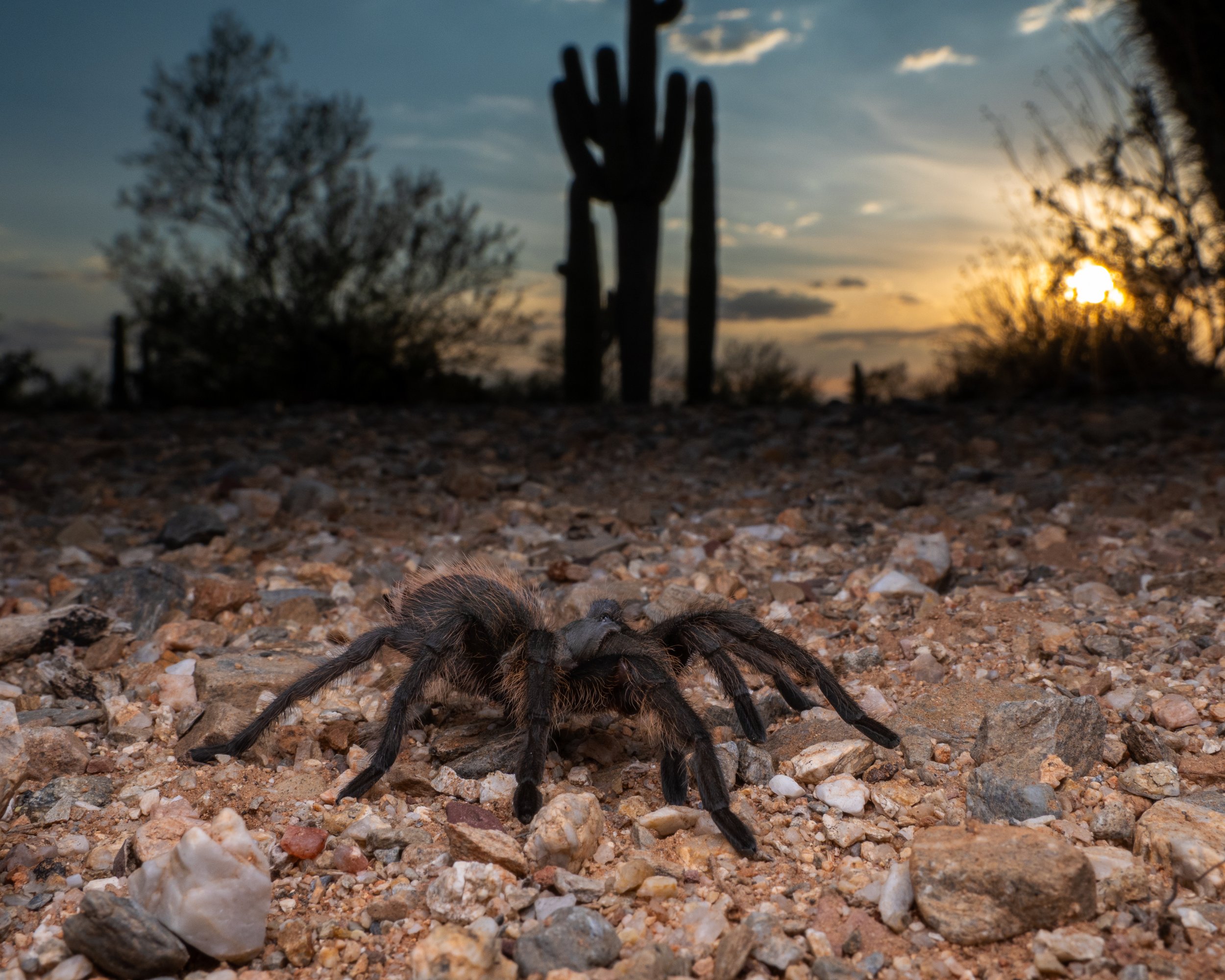
Aphonopelma vorhiesi - Tucson Bronze Tarantula or Madrean Red Rump Tarantula in situ
The Paper Also Fits With Older Work on Tarantula Learning
They briefly review earlier experiments suggesting tarantulas are capable of more learning than people usually assume. In one set of studies, tarantulas learned to avoid bright light and heat in a T-maze and also improved their performance in a more complex six-alley maze over repeated trials. In another, Aphonopelma chalcodes showed learned avoidance behavior, and the researchers linked that learning to changes in activity within the supraesophageal ganglion.
Those experiments are older and they are not the final word, but they do matter. They tell us that the idea of tarantula learning is not just some romantic projection from field biologists who love spiders. There is already experimental work suggesting tarantulas can learn and retain information under controlled conditions.
This new paper basically takes that idea and says, “Okay, but what might this look like in the real world?”
The Artificial Light Angle Is Really Interesting Too
One detail I really liked is the repeated observation of arboreal tarantulas heading to prey-rich spots near lights.
Artificial light is already known to change where some spiders choose to forage. Other spider research has shown that artificial lighting can create prey-rich patches and attract spiders or their webs to those areas. So when the paper describes tarantulas repeatedly traveling to lit areas where moths are gathering, that is not just random scenery. It fits into a broader pattern where spiders take advantage of places that concentrate prey.
That does not prove the tarantula was “planning” dinner in the human sense. But it does make the behavior look a lot more purposeful.
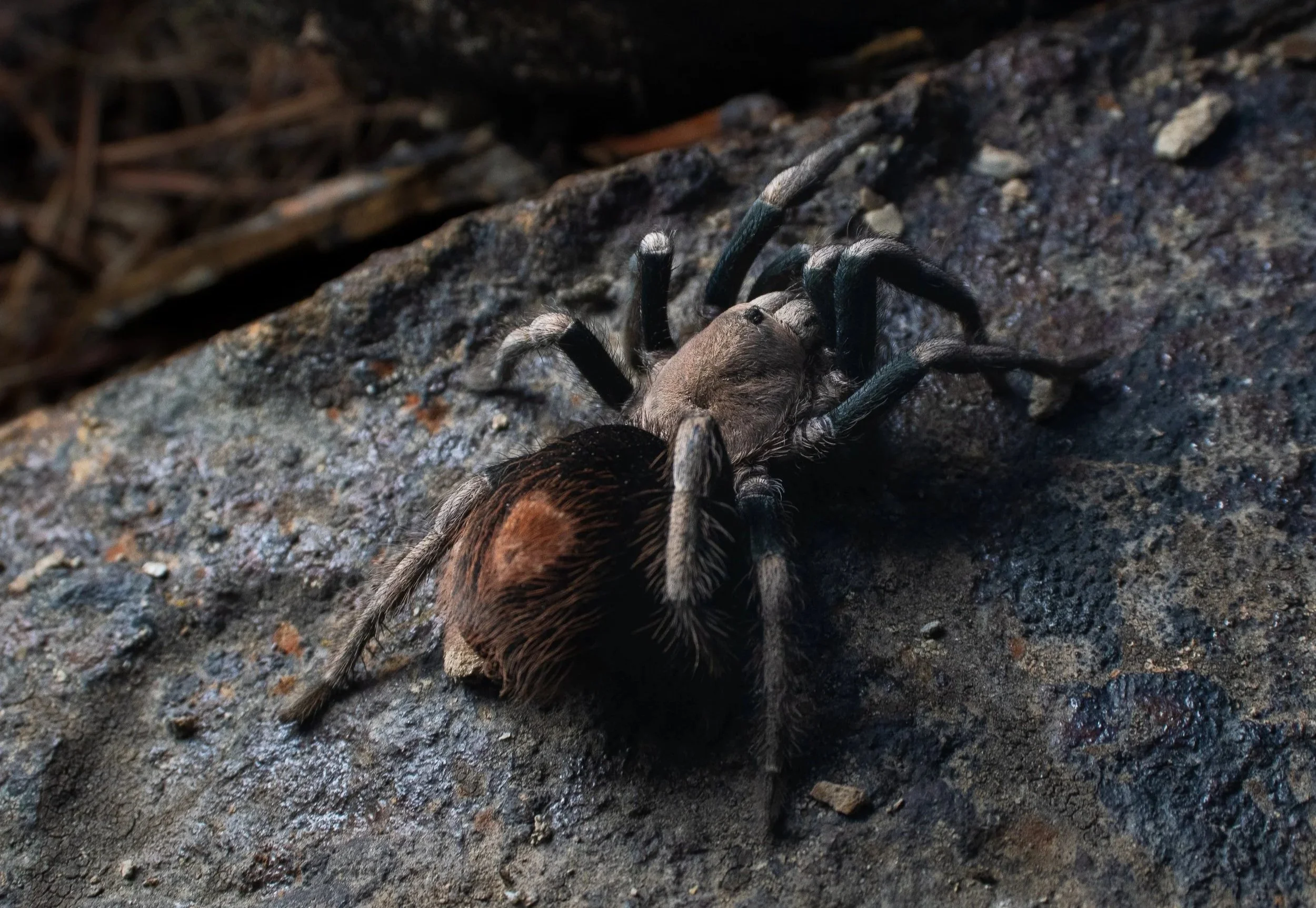
Hapalotremus sp. in situ Cusco Region, Peru
Why This Paper Matters
I think this paper matters for two reasons.
First, it pushes back against the lazy assumption that tarantulas are just hairy reflexes with fangs. No, this paper does not prove tarantulas are little eight-legged philosophers either. But it does suggest their day-to-day behavior in the wild may involve more flexibility, memory, and environmental awareness than most people give them credit for.
Second, it is a good reminder that field observation still matters! A lot of what we “know” about animal behavior comes from laboratory work, and lab work is incredibly useful. But animals do not live in boxes in nature. Watching what they actually do in the wild can reveal patterns that would be easy to miss if all you ever study is a simplified setup under controlled conditions.
The Bottom Line
What it does show is that tarantula behavior in the wild may involve more memory, flexibility, and environmental awareness than we have usually assumed. Across arboreal species, fossorial species, and even a blind cave-dwelling tarantula, the authors documented behavior that is consistent with experience-based navigation. In plain terms, some of these spiders appear to be doing more than just reacting blindly to whatever is directly in front of them. They may be remembering useful routes, returning to prey-rich areas, and getting back to their retreats in ways that are more behaviorally sophisticated than most people would expect.
At the same time, the paper is careful not to oversell any of this. The authors make it clear that these are still preliminary interpretations, and that chemical cues, silk-related cues, and other sensory mechanisms may explain at least part of what is happening. That kind of restraint is a good thing. It keeps the paper grounded, and it makes the argument stronger, not weaker.
That is exactly why I like this paper.
It is not trying to force some dramatic conclusion. It is simply making a very good case that tarantulas may be more behaviorally flexible than we have given them credit for, and that this is something worth testing properly with controlled experiments.
And honestly, if you have spent enough time watching tarantulas, that idea probably does not sound all that far-fetched at all.
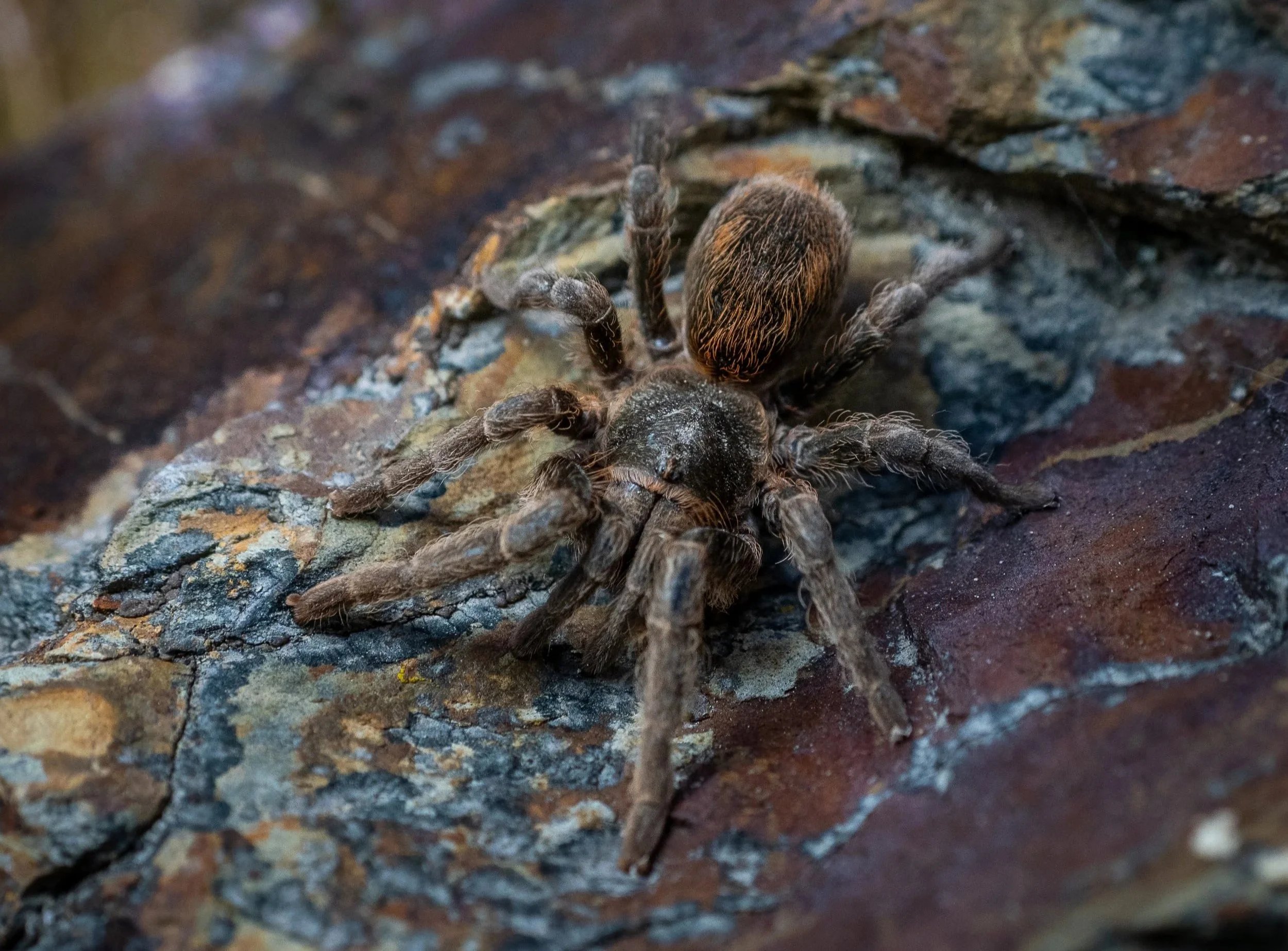
Bistriopelma sp. (undescribed) in situ Peru
Support Tarantula Collective
If this article helped you, you can support Tarantula Collective here. Donations help fund videos, care guides, fieldwork, photography, and the ongoing work of keeping this content free and the website free of obnoxious ads.
Sources
Zamani, A., & West, R. C. (2026). Insights Into Spatial Orientation and Cognition in Tarantulas (Araneae: Theraphosidae) Under Natural Conditions, With Notes on Possible Ontogenetic Niche Shifts. Main paper summarized here.
Gaffin, D. D., & Curry, C. M. (2020). Arachnid navigation – a review of classic and emerging models. Review of how arachnids return to retreats and use navigation cues.
Punzo, F. (2002). Reversal learning and complex maze learning in the spider Aphonopelma hentzi. Older experimental evidence that tarantulas can learn maze tasks.
Dor, A. et al. (2008). Chemically mediated burrow recognition in the Mexican tarantula Brachypelma vagans female. Evidence that tarantulas can recognize burrows using chemical cues.
Heiling, A. M. (1999). Why do nocturnal orb-web spiders search for light? Shows that some spiders exploit prey-rich artificial light patches.
