
Tarantulas and Humidity: Why We Overthink It
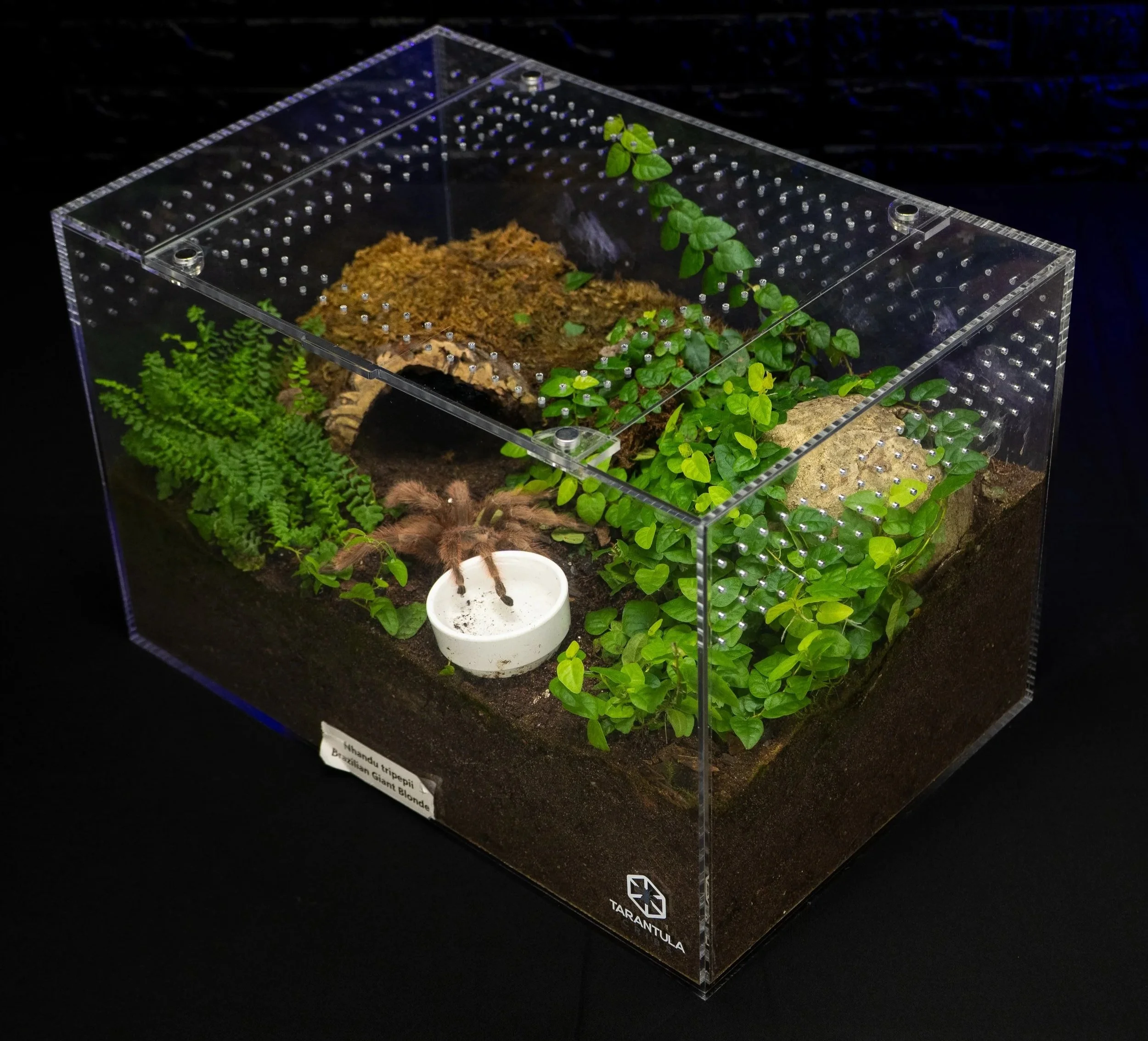
Nhandu tripepii - Brazilian Giant Blonde Tarantula bioactive enclosure
Humidity might be the most misunderstood and overcomplicated topic in the tarantula hobby.
Every week, new keepers message me asking some version of the same question: “What humidity should my tarantula be at? 68%? 72%? The care guide says 78% but my gauge says 65%. Is my spider going to die?”
First off, relax.
Your tarantula is not climbing out at midnight to check the hygrometer and judge your husbandry. And second, a lot of those exact humidity numbers people throw around in care guides are not nearly as meaningful as they sound. They get repeated so often that people start treating them like scientific fact, when really they are often just borrowed from general climate data and repeated until nobody questions them anymore.
That is the real problem. We have turned humidity into a number-chasing game when it makes a lot more sense to think about it in terms of environment.
The Problem With Humidity Percentages
Here is the truth: the exact humidity percentage listed in a lot of care guides is usually not based on what a tarantula is actually experiencing in the wild.
A species may come from Brazil, Peru, Arizona, or Mexico, and somebody looks up the average climate for that region and says, “Alright, this species needs 75% humidity” or “this one needs 80%.” It sounds scientific because it has a number attached to it. But that is not how tarantulas live.
A tarantula does not live out in the open next to a weather station.
They live in burrows, under leaf litter, inside corky bark, down in root systems, in crevices, under rocks, or tucked into hollows in trees. Those little pockets of space, the actual microhabitats they choose, can be very different from the general weather outside.
That is something you notice immediately once you start finding tarantulas in the wild. It might be brutally hot outside, bone-dry for you, and generally miserable. But inside a burrow, under a rock, or high up inside a tree cavity, the conditions can be noticeably cooler, more buffered, and more stable. In dry areas, the burrows often hold more moisture than the surrounding environment. In wetter environments, the retreat may be somewhat drier and more sheltered than the conditions outside. Tarantulas are not just surviving wherever they happen to be dropped. They are choosing microhabitats that work for them.
That is why obsessing over a 2% or 3% difference on a humidity gauge is mostly pointless. Tarantulas care about whether they have access to the kind of conditions they need, not whether your digital display says 62% or 65%.
What Tarantulas Actually Care About
A tarantula does not care about exact percentages the way a beginner keeper does.
What they care about is whether the substrate can hold a burrow, whether moisture is available where and when they need it, whether they have access to clean water, and whether they can move between slightly different conditions if they want to.
That is a much more useful way to think about husbandry.
Instead of asking, “How do I keep this enclosure at 74% humidity all day?” the better question is, “Have I built an enclosure that gives this animal access to appropriate moisture, stable conditions, and good airflow?”
That is a completely different mindset, and honestly, it is a much healthier one for both the keeper and the tarantula.
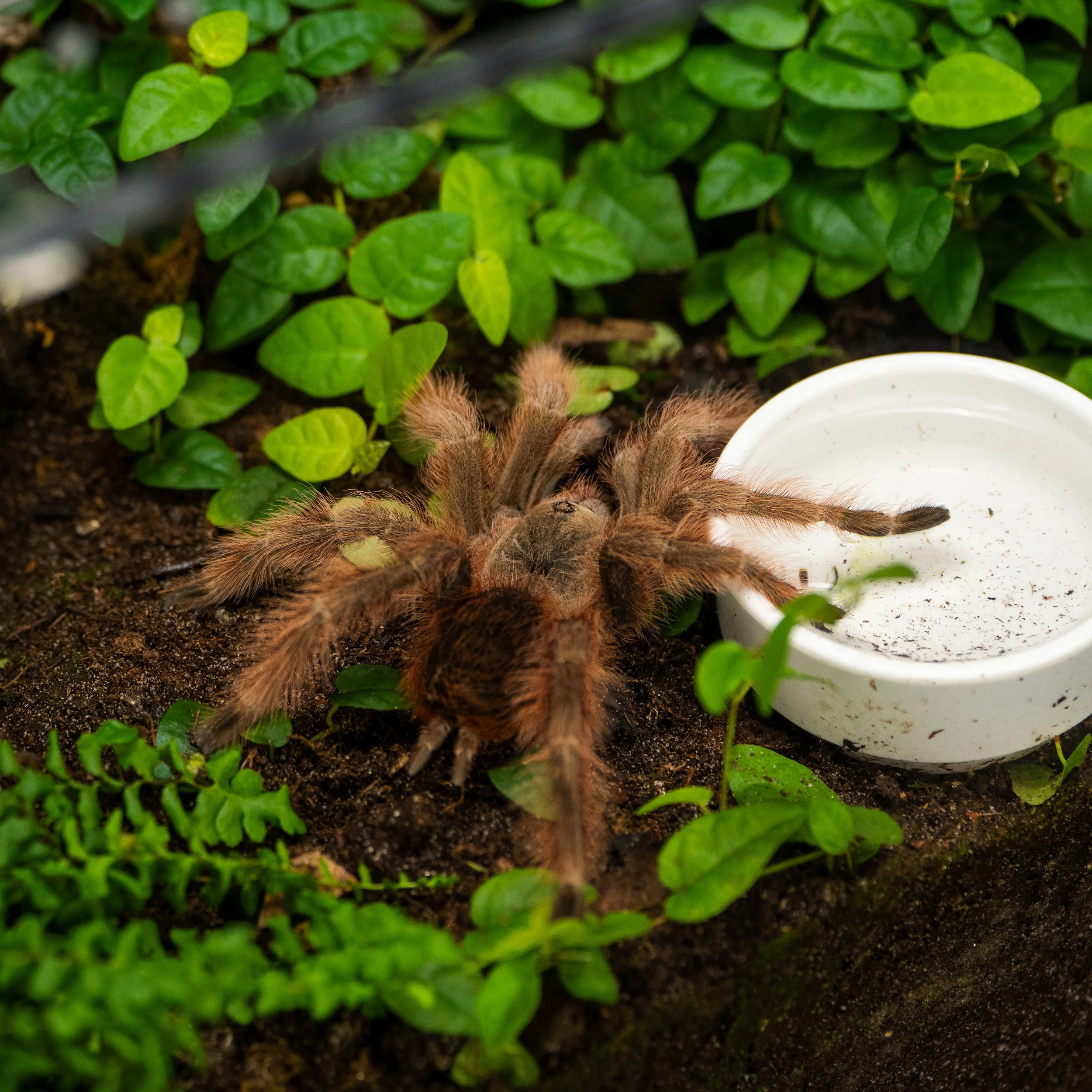
Nhandu tripepii - Brazilian Giant Blonde Tarantula bioactive enclosure by water dish
Hygrometers Mostly Suck
Now let’s talk about hygrometers.
Those little analog or digital humidity gauges people stick on the side of enclosures? Most of them are junk. The cheap ones can be wildly inaccurate, sometimes by 15% to 20%. And even if you buy a better one, a lot of them cannot be properly calibrated anyway. At best, many of them give you a rough general idea. At worst, they just give you a false sense of control.
And even if the reading is accurate, it still may not be telling you anything especially useful.
A hygrometer only tells you the humidity of the air right where that device is sitting. If it is stuck to the side of the enclosure glass, then it is measuring the air near the glass, not the burrow, not the retreat, not under the moss, not inside the cork bark, and definitely not the little pocket of substrate where the tarantula is actually spending most of its time.
That is like checking the weather app on your phone and assuming you now know exactly what your basement feels like. It does not work that way.
This is one of the main reasons new keepers get themselves worked up for no reason. They trust a cheap device more than the actual condition of the enclosure.
Why Beginners Obsess Over Humidity
A lot of beginners fixate on humidity because they are afraid.
That is really what it comes down to.
Everyone is worried about killing their first tarantula, and humidity feels mysterious because you cannot really see it the same way you can see an empty water dish, moldy substrate, or a broken hide. Because it is invisible, people latch onto numbers as if the right percentage is the one thing standing between success and disaster.
The internet makes this worse.
Spend ten minutes in a Facebook group and you will eventually see somebody blame humidity for everything. Tarantula died? Humidity. Bad molt? Humidity. Would not eat? Humidity. Started climbing the walls? Humidity. Somebody always wants a single easy answer, and humidity ends up being the scapegoat because it sounds technical enough to be convincing.
Meanwhile, the real issue might have been dehydration, poor ventilation, a fall, stress, genetics, or just plain bad luck.
Humidity gets blamed for a lot of things it probably had nothing to do with.
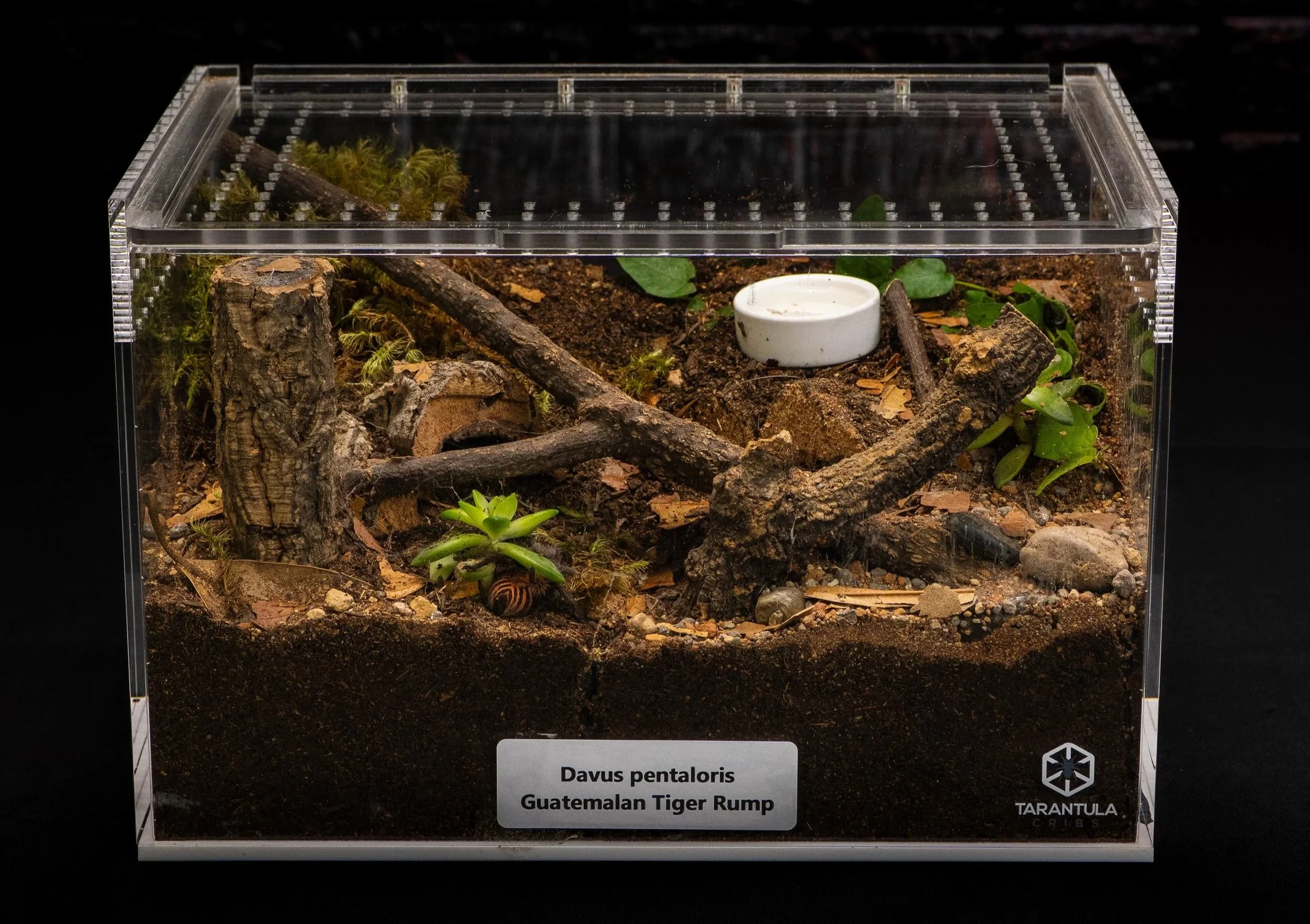
Davus pentaloris - Guatemalan Tiger Rump tarantula bioactive enclosure
A Simpler Way to Think About It
Instead of obsessing over exact numbers, I think it makes a lot more sense to break tarantulas into three simple environmental categories:
arid, temperate, and tropical.
That is it.
Not “74% by day and 78% by night.”
Not “panic if the gauge dips below 70.”
Just three broad environment types that actually reflect how we should be setting up enclosures.
Arid Species
These are your desert and scrubland tarantulas.
Think species like Aphonopelma chalcodes, Grammostola pulchripes, and many Tliltocatl species. For these, the substrate should stay mostly dry, and there should always be a water dish available. You can overflow the dish once in a while to give a small pocket of moisture if needed, but the overall setup should stay on the drier side.
That does not mean bone dry forever with no access to moisture. It means the enclosure should reflect a dry environment with pockets of access to water rather than trying to keep the entire thing damp.
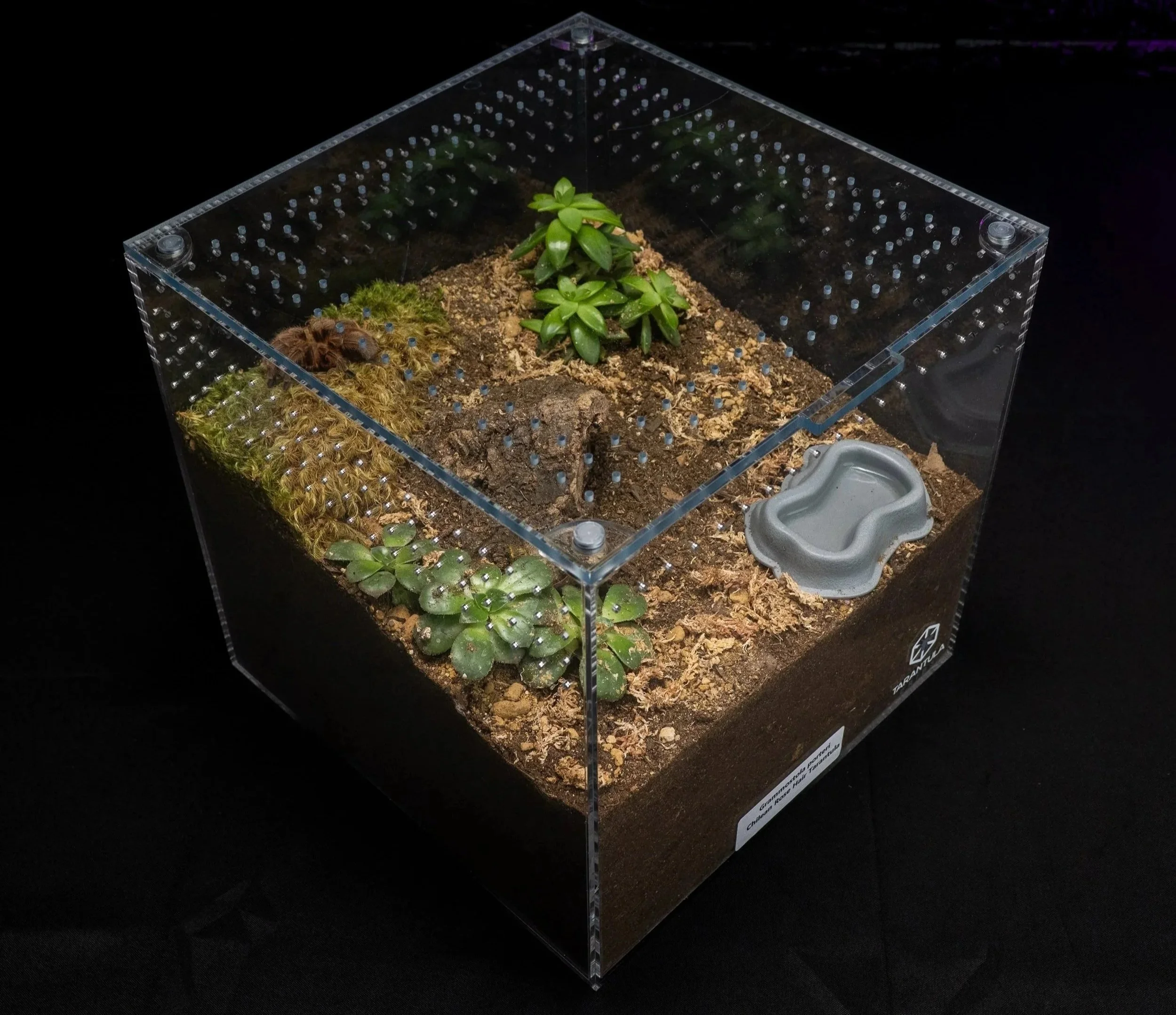
Grammostola porteri - Chilean Rose Hair Tarantula - Arid Enclosure
Temperate Species
Temperate species do best with more of a middle-ground approach.
These are the tarantulas that are not coming from extremely dry deserts, but they are not living in perpetually wet tropical rainforest conditions either. Species like Brachypelma emilia or Nhandu tripepii fit that kind of setup well. For these, I like to provide a moisture gradient: part of the enclosure slightly damp, part of it dry.
This is one of the most useful concepts beginners can learn.
Reptile keepers understand temperature gradients immediately. One side warmer, one side cooler, so the animal can choose what it needs. Moisture should be thought of the same way. One area a little damper, one area more arid, and the tarantula gets to decide where they are most comfortable.
That is much more natural than trying to keep the entire enclosure locked to one exact percentage.
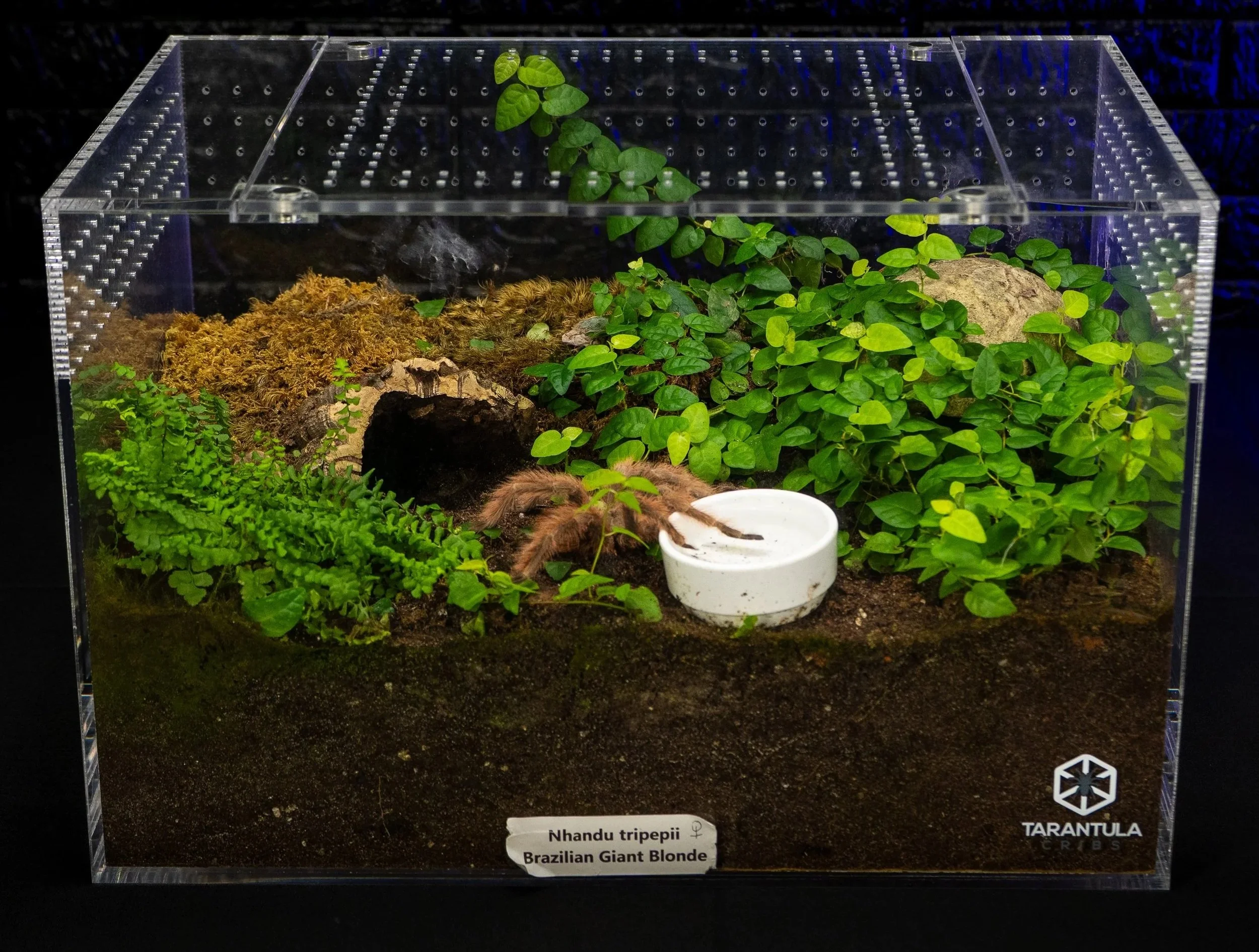
Nhandu tripepii - Brazilian Giant Blonde Tarantula temperate bioactive enclosure
Tropical Species
Then you have tropical species.
These are your rainforest and high-humidity tarantulas like Theraphosa, Pamphobeteus, Avicularia, and Caribena. For these, you want the substrate damp, but not soggy, with good ventilation so the enclosure does not turn into a swamp.
That last part matters just as much as the moisture does.
Too many keepers hear “high humidity” and think they need to keep everything wet and stuffy. That is how you end up with stale air, nasty substrate, and a setup that is more likely to cause problems than prevent them. Tropical species generally do well with substrate that holds moisture, enough dampness to support hydration and proper molting, and enough ventilation to keep the enclosure from turning foul.
A good rule of thumb is that the substrate should feel damp in your hand, but not so wet that you can squeeze water out of it.
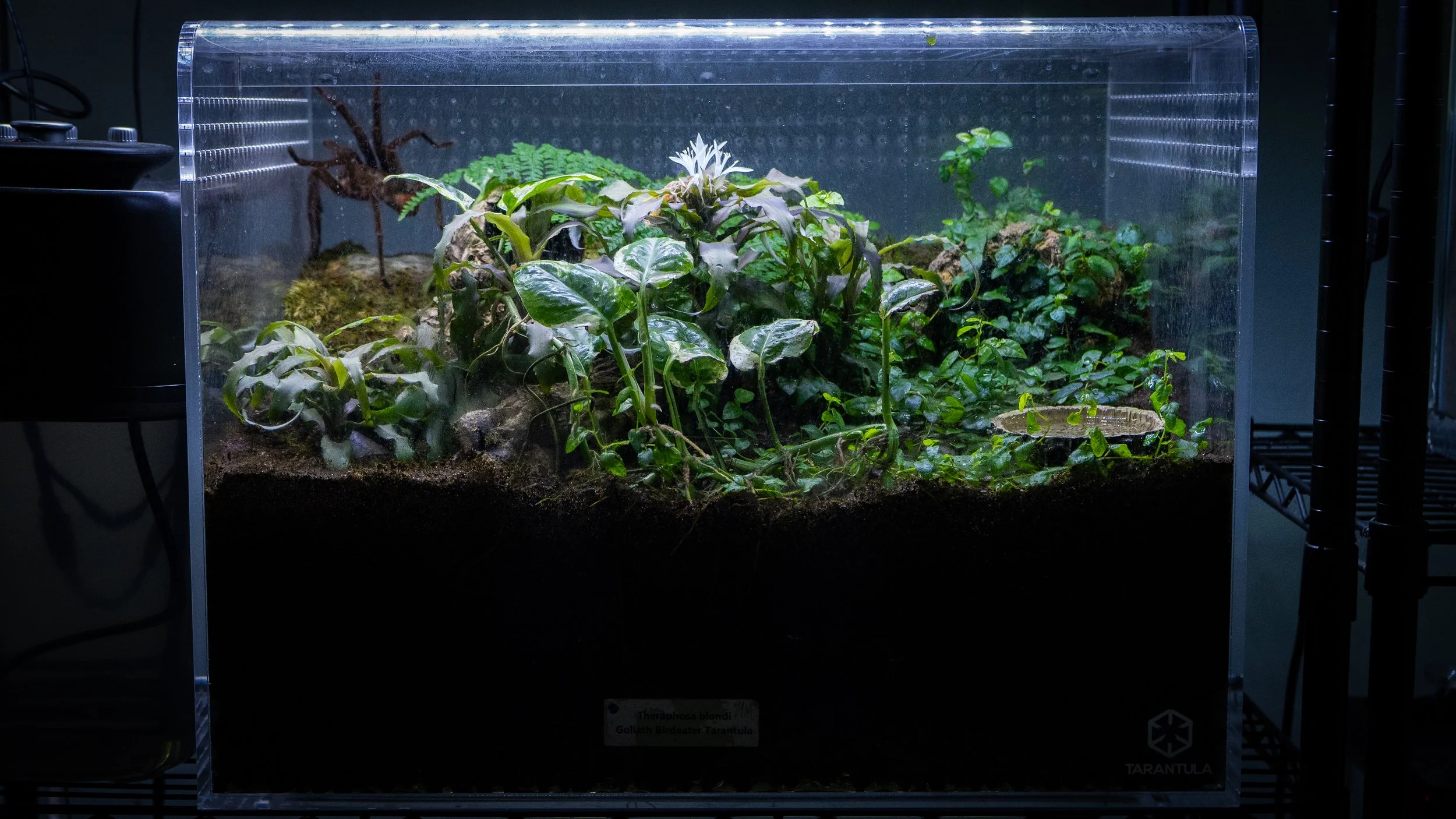
Theraphosa blondi - Goliath Birdeater Tarantula tropical bioactive enclosure
What Actually Matters
At the end of the day, tarantulas do not care about the number on a screen.
They care about balance.
What actually matters is:
Substrate: Does it hold burrows and retain the right amount of moisture for the species?
Water dish: Is there always clean water available?
Ventilation: Is fresh air moving through the enclosure?
Moisture gradient: Can the tarantula choose between damper and drier areas if the species benefits from that?
If you get those basics right, you are already doing far better than somebody obsessively checking a cheap hygrometer all day.
That is really the point. Husbandry should be built around what the animal actually needs, not around whatever random number a questionable device happens to spit out.
Think in Environments, Not Numbers
The more you keep tarantulas, the more obvious this becomes.
Tarantula keeping does not need to feel like a math exam. It makes much more sense to think in terms of environments rather than exact humidity percentages. Is this species arid? Temperate? Tropical? Does the setup reflect that in a practical way? Does the enclosure offer stability, access to water, airflow, and the kind of microhabitat the species would likely choose in nature?
Those are useful questions.
“Is my humidity 73% instead of 78%?” is usually not.
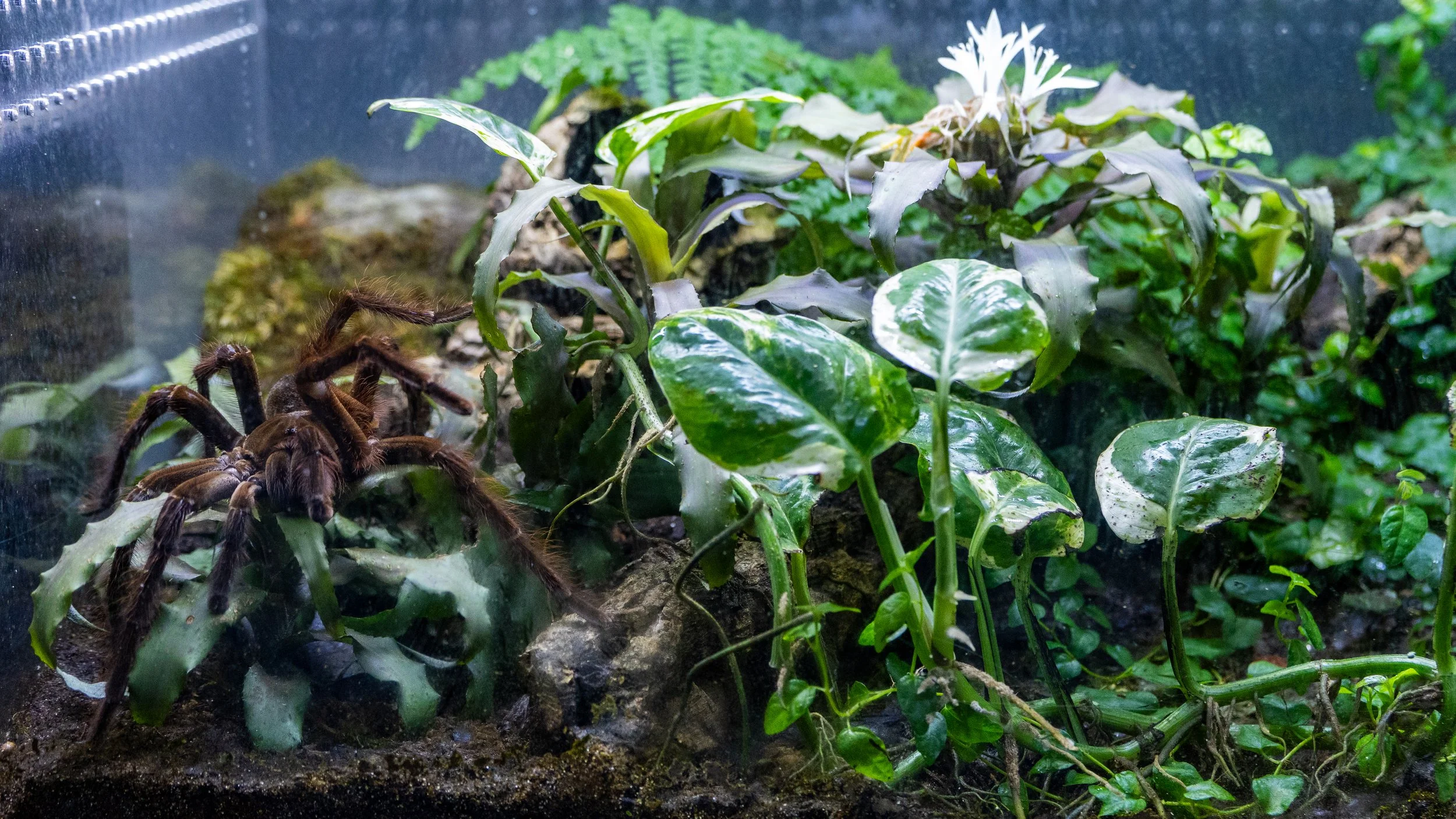
Theraphosa blondi - Goliath Birdeater Tarantula tropical bioactive enclosure
Final Thoughts
So the next time you see a care sheet that says “keep humidity at 78%,” laugh a little and move on.
Not because humidity does not matter.
It does.
But what matters is not the exact percentage. What matters is whether the enclosure provides the right kind of environment for that species. Arid, temperate, tropical. Dry, gradient, damp. Stable substrate, clean water, fresh air, and common sense.
Enjoying the free stuff?
If this article taught you something, answered a question, or stopped you from making a terrible enclosure decision, you can support Tarantula Collective here. Donations help fund videos, fieldwork, care guides, photography, and all the work that goes into keeping this site useful and ad-free.
